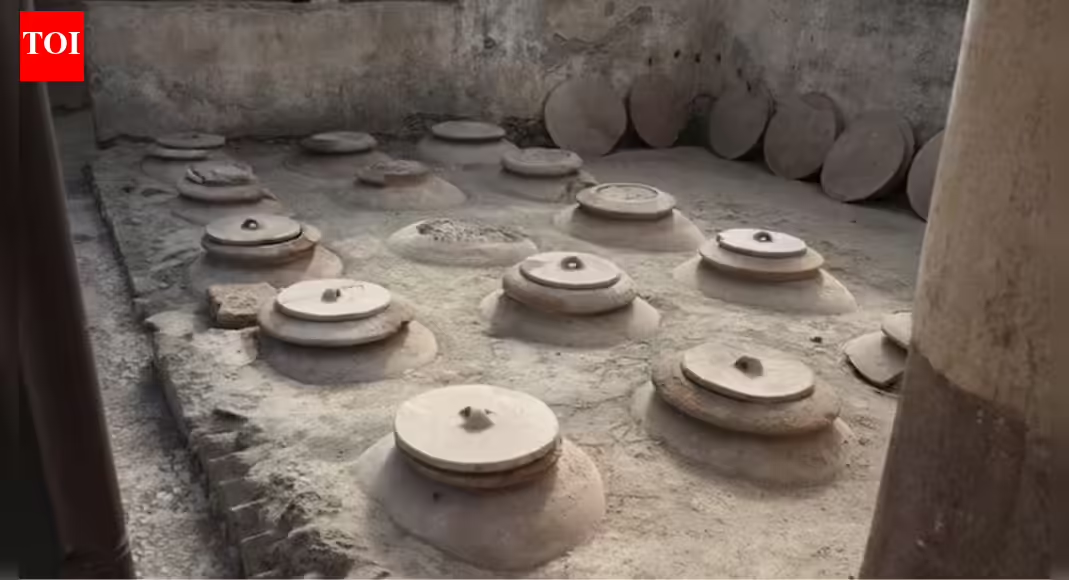
Ancient Roman wine has long been seen as a simpler, rougher version of what we drink today. But new research suggests the opposite. By studying how Romans fermented and stored wine in massive clay jars called dolia, archaeologists now believe Roman wine could have been more complex, stable and flavourful than previously assumed. The study, led by Dimitri Van Limbergen of Ghent University and Paulina Komar of the University of Warsaw, examined the role of these clay vessels in Roman winemaking. Instead of acting as simple storage containers, dolia functioned like complete production units where fermentation, settling and ageing could happen in the same place.
Roman wine may have tasted ‘spicy’ and nutty
According to the researchers, Roman wine likely had a noticeably different flavour profile from modern reds and whites. The findings suggest it carried a slight spiciness and aromas similar to toasted bread and walnuts. That sensory description adds weight to the idea that Roman wine was not just strong or sweet, but carefully crafted for taste, smell and texture.Van Limbergen said the work challenges modern assumptions about Roman techniques, suggesting Romans were capable of producing wines that were both enjoyable and consistent over time.
Clay jars shaped the wine during fermentation
The study also highlights how the physical design of dolia may have affected the final drink. These vessels often had narrow bottoms, which could help solids from crushed grapes separate naturally during fermentation. This process may have produced clearer wine and influenced colour, potentially creating amber or orange tones that do not fit neatly into today’s categories of red or white wine.The research notes that Romans likely recognised these effects and used them to their advantage, producing wines in a wide spectrum of shades, including yellow, gold, amber, brown, red and even dark varieties depending on grapes and treatment.
Evidence of a massive Roman wine industry
The widespread presence of dolia cellars across the Roman world, especially between the second and fourth centuries AD, suggests large-scale production that was more organised than many people imagine. Rather than small batches made only for local use, the infrastructure points to a sophisticated industry capable of producing and storing wine in enormous quantities.The researchers argue that this scale, combined with the sensory qualities of Roman wine, shows winemaking was not just a cultural habit but a technical skill that Romans refined over generations.
Similarities to ancient winemaking still used today
While most modern wine is fermented in metal tanks, the Roman method has surprising parallels with older traditions that still survive. The researchers compared Roman dolia to Georgian qvevri, large clay vessels used for fermentation that can also produce distinctive textures and flavours.This comparison suggests clay-based winemaking was not a crude historical phase, but a deliberate technology that shaped taste, stability and colour in ways modern steel tanks cannot replicate.
A new look at what Romans drank
Roman wine was not just a background detail in ancient life. It was part of religious rituals, social gatherings, trade and daily meals. Yet for years, the true nature of its flavour has been hard to pin down.By focusing on the vessels themselves, the new study offers a clearer picture of Roman wine as something more advanced than modern stereotypes suggest. If the researchers are right, Roman wine was not only drinkable, but surprisingly refined, with flavours and aromas that would stand out even today.