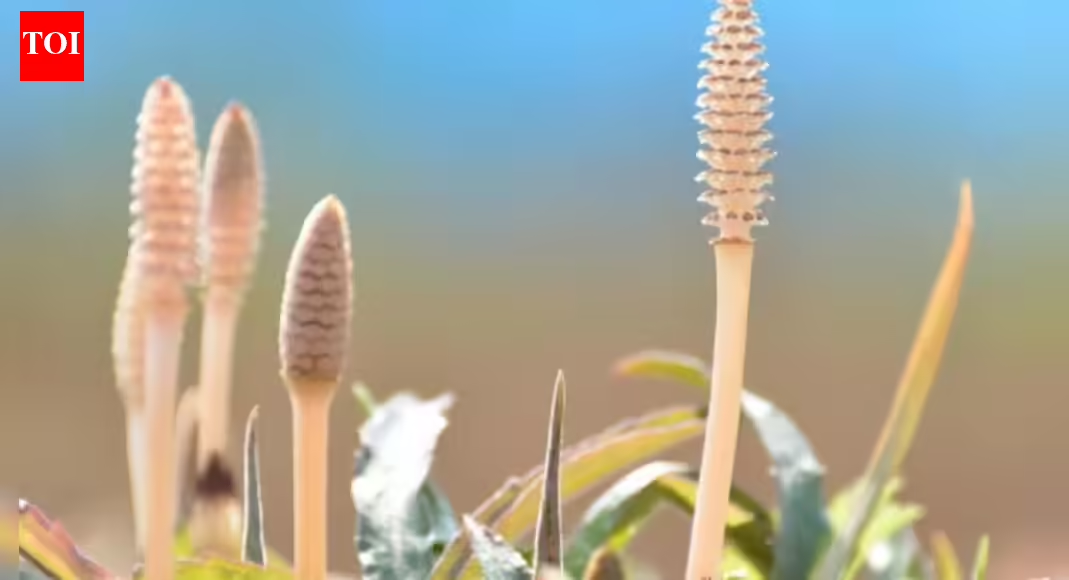
When one considers the scientific study of space, one of the first things that comes to mind is not likely to be the botanical sciences. Yet it appears that in the study of one of the oldest tribes of flora to exist on the planet, the science team examining horsetails has been able to discern that the process of the flow of water through the plant undergoes such intense natural filtration that the isotopic signature obtained has been so unusual as to have been mistakenly identified as having an extra- terrestrial signature. In other words, through the study of how water is processed through such plants, researchers may be able to discern the humidity levels of Earth’s climate when no recognisable natural ecosystem existed.
Horsetails survive 400 million years with extraordinary water transport
As reported by SciTech Daily, horsetails are part of a lineage that has persisted for over 400 million years despite several extinctions and climatic changes. Indeed, horsetails are quite smaller compared to their prehistoric counterparts, which stood at nearly 30 metres tall, but they remain very efficient inside, as their ancestor was. Their hollow stem is divided into joints, which help to move water inside these stems through an enormous number of minute holes, as explained by science as a brilliant piece of engineering that cannot be done inside a lab.In their research about smooth horsetails growing in the Rio Grande in New Mexico, scientists analysed oxygen isotope changes in water from the bottom of the horsetail to its summit. The oxygen isotopes in water are used as chemical tracers to reveal the origin and distribution of water in living bodies. To their great shock, the isotopes found in the water of the horsetails near the summit had values far lower than any detected in any other place on Earth, remarkably similar to those found in meteorites.
Horsetails reveal how plants adapt to arid environments through isotope separation
In ecology and environmental science concerned with climate study, the study of oxygen isotopes has been an important aspect in gaining insights into evaporation rates, humidity levels, and water origin. The phenomenon of transpiration has different effects on heavier isotopes compared to lighter isotopes; however, simulating this process has long proved challenging in arid environments. The data provided by the horsetails shows that these plants have an unparalleled ability to separate water molecules by stripping off their heavier isotopes.These discoveries can also shed light on the bizarre readings of isotope levels that have long been detected in other desert-dwelling plants. With more accurate information based on horsetails, scientists can also make more sense of the way in which plants react in conditions of extreme aridness. This has huge relevance in comprehending ancient environments in arid zones where climate information is hard to come by.
Horsetail Phytoliths: Nature’s ancient humidity recorders
Horsetails produce microscopic silica-based structures called phytoliths, which manage to preserve the oxygen isotope ratios for millions of years. These forms of silica serve the function of a natural humidity gauge, preserving the chemical composition of the surrounding atmosphere in which the plant thrived. Researchers believe that these fossilized forms might help them determine the level of atmospheric moisture in the age of the dinosaurs.This study also propounds horsetails as improbable but persuasive witnesses to the deep history of our planet. Through a combination of current observations on plants and fossil data, a promising avenue has now opened that enables researchers to examine prehistoric climatic conditions with an unprecedented level of detail. What initially constituted a provocative isotopic anomaly may thus radically change our perception of lost climatic environments on our planet.