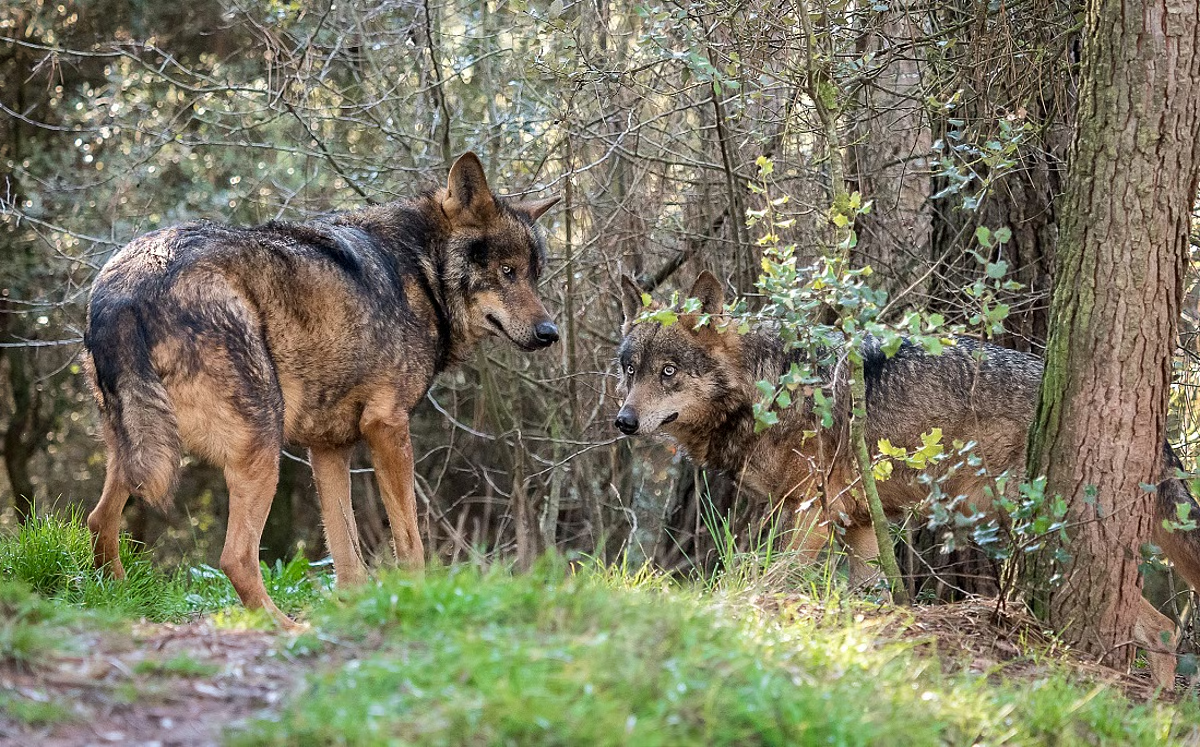
The Mediterranean Monk Seal (Monachus monachus) has been moved from Endangered to Vulnerable owing to improved population with a population under 1,000 individuals.
The authors said that updates to the IUCN Red List have also resulted in changes to population trends of CMS-listed species. “Excluding the ten entirely new species and subspecies that were added to the CMS Appendices at COP14, the overall proportion of CMS-listed species with an increasing or stable population trend has declined from 43 per cent (520 species) to 38 per cent (459 species) since the first State of the World’s Migratory Species,” it said.
They attributed the change to largely have been driven by the 67 Appendix II birds that have been re-assigned from the “stable” to the “decreasing” category, as indicated by the transitions.
“This indicates that many species that were previously considered to be stable are actually decreasing; importantly, the number of species considered to have an “unknown” trend has remained roughly constant,” it added.
The growth in the number of species with decreasing populations is likely to reflect the integration of additional long-term trend data within IUCN Red List assessments rather than abrupt decreases during the time period since COP14, the report stated.
It noted that among terrestrial, avian and marine CMS, the expansion of linear infrastructure such as roads, railways, fences, pipelines in addition to climate change, habitat loss, degradation and fragmentation have further pushed these populations at risk of further decline.
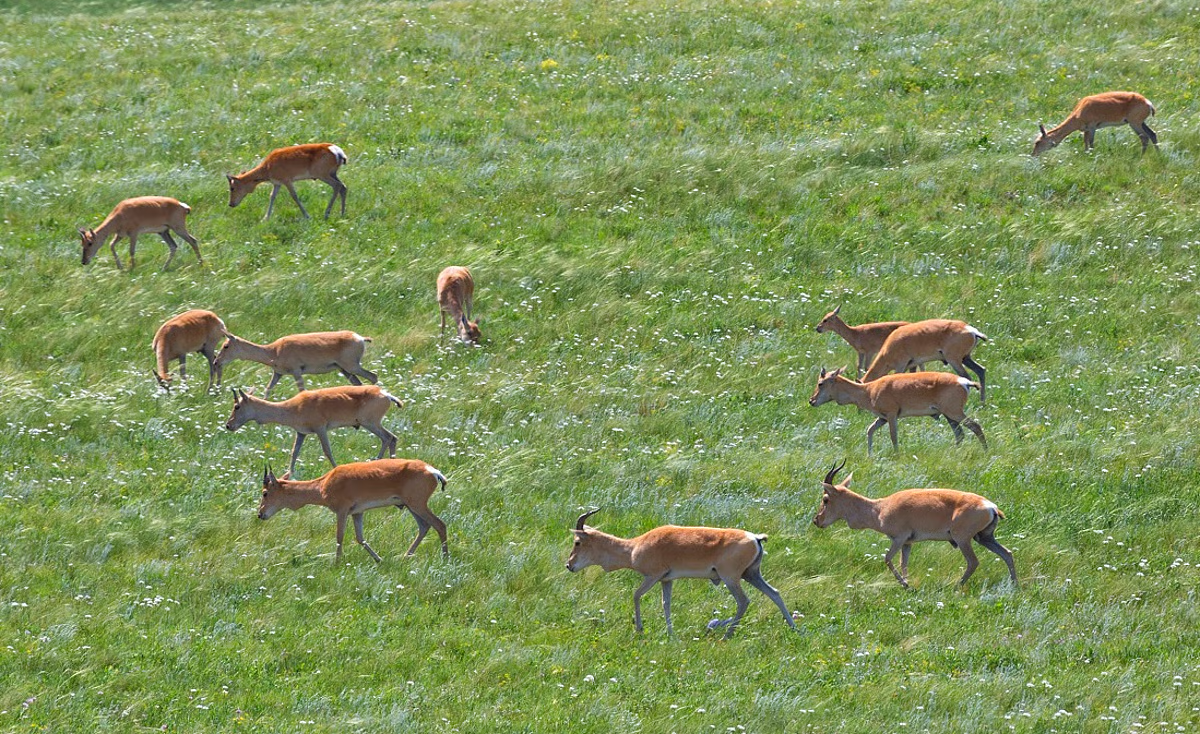
For instance, it said for example, between 2002 and 2021, mobility declined significantly for the Mongolian Gazelle (Procapra gutturosa), a nomadic species that makes some of the longest distance movements ever recorded. Increasing traffic volume leading to a loss of connectivity appears to be a key factor in the decline.
The Mara-Loita Blue Wildebeest (Connochaetus taurinus) population declined by 75 per cent since the late 1970s after land use changes were permitted throughout their range.
“The main pressures facing raptors in Africa and Eurasia are habitat loss and illegal taking, including hunting and trapping, intentional and unintentional poisoning, and taking for belief-based use, along with electrocution and collisions with energy infrastructure,” the report found.