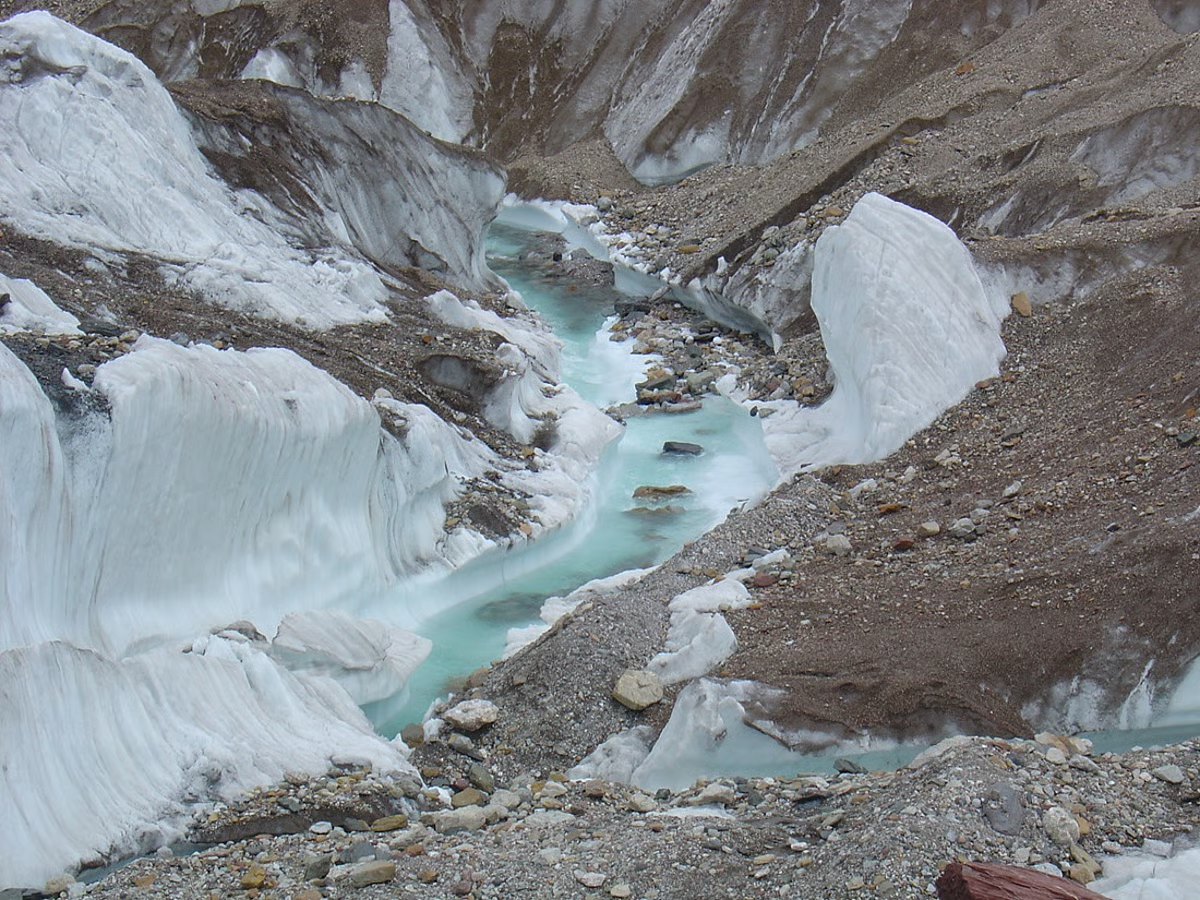
The glaciers in the Himalayan region — consisting of the western, central and eastern Himalaya as well as the Karakoram range — have lost the equivalent of nearly 24 metres of water depth in cumulative ice mass from 1973 to 2023, according to new analysis by the International Centre for Integrated Mountain Development (ICIMOD).
“While some sub-regions, like the Karakoram, exhibit complex behaviour, the overall trajectory points towards sustained glacier shrinkage under current warming pathways,” the report, Insights from 50 Years of Himalayan Glacier Monitoring, observed.
The Himalaya and the Karakoram range is part of 16 other mountain ranges, spanning eight countries, which make up the Hindu Kush Himalayan (HKH) region.
The HKH is dotted with over 60,000 glaciers, but only 38 glaciers have had long term observation, with the first glacial observation dating back to June 1974 on Gara glacier in Himachal Pradesh, India.
According to ICIMOD’s observation, glaciers in the eastern flank of the Himalayas — spanning from Bhutan and Eastern India and parts of China and Myanmar — show a higher negative rate of mass loss balance or ice loss.
“Many glaciers are losing mass at increasing rates, altering runoff patterns and contributing to the expansion of glacial lakes, with implications for Glacial Lake Outburst Flood (GLOF) risk and long-term water supply stability,” the report warned.
Of the 38 glaciers observed, Hamta glacier, in Western Himalaya, West Changri Nup in Central Himalaya and the Gangju La and Thana glaciers in the Eastern Himalayan flank showed highest ice loss ranging from 1.50 to 1.67 metres of water-depth worth of ice on average.
While the observations are damning, there is still a lacuna when it comes to full scale observation in the HKH region.
None of the currently available mass-balance series in the Himalaya qualifies as a ‘reference glacier’, which requires a minimum of 30 years of continuous measurements according to the guidelines of the World Glacier Monitoring Service (WGMS), the report said.
To address this issue, WGMS came up with a novel method — “benchmark glacier’ for glaciological mass-balance programs that have not yet reached the 30-year threshold but are located in regions lacking reference glaciers”.
Currently, in the Himalayan region, seven glaciers qualify as WGMS benchmark glaciers.
But some regions, like the Karakoram, Sikkim, Zanskar, and the Bhutanese Himalaya are still lacking in long term observations, the report said.
Why does it matter
Outside the polar regions, HKH — often called the Third Pole — holds the largest concentration of snow ice and is the source for multiple river basins, thereby playing the most critical role in sustaining the river ecosystem.