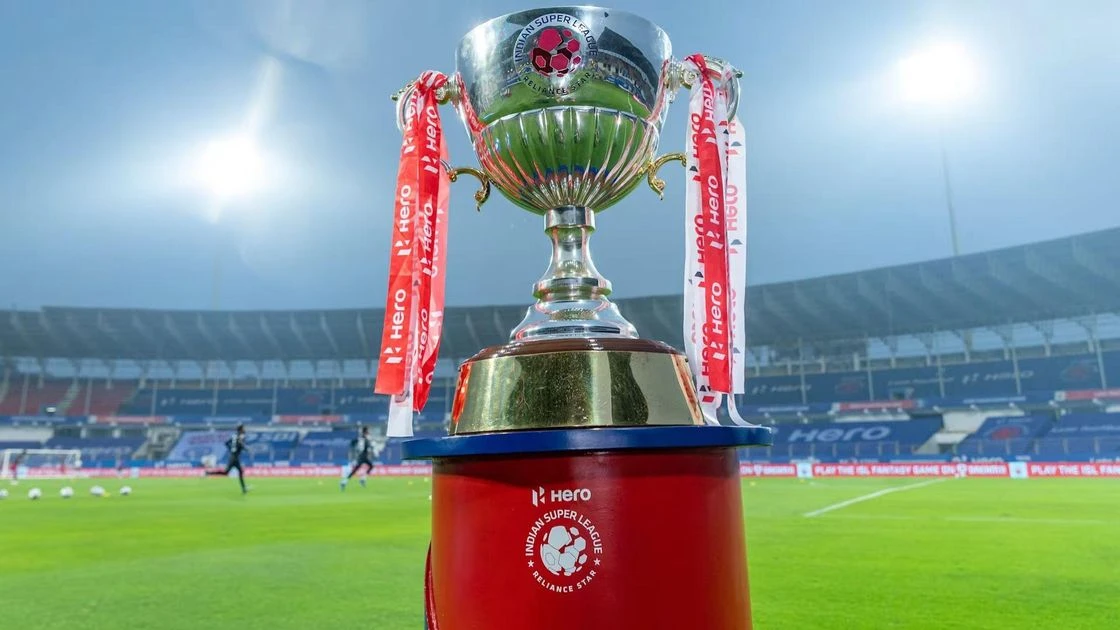
India’s flagship domestic league, the Indian Super League (ISL), is headed for its most dramatic structural overhaul yet, with the All India Football Federation (AIFF) putting forward a proposal to assume ownership and operational control for the next 20 seasons. The move stems from AIFF’s revised constitution, which seeks to consolidate governance, financial planning and long-term sporting direction under the national body. The proposal was finalised after formal dialogue with ISL clubs, signalling a shift from decentralised commercial administration to a federation-led model.
Promotion-relegation era begins
A central pillar of AIFF’s blueprint is the introduction of promotion and relegation starting next season, aligning India with global football structures. The sporting calendar for each ISL cycle will officially run from June 1 to May 31 the following year, mirroring FIFA’s seasonal window and licensing cycles. Federation inputs, paraphrased from internal comments, stressed that a dynamic league ladder would incentivise grassroots investment and reduce performance stagnation at the top tier.
Central budget backed by revenue shareholders
The proposal outlines a fixed Central Operational Budget (COB) for every season, funded through proportionate contributions from all stakeholders holding revenue rights in the league. This will be labelled the League Membership Contribution (LMC), a mechanism AIFF believes will create predictable annual financing for operations, club licensing compliance and capped prize money distribution. Internal briefings implied that unrestricted commercial expenses would remain under a league board that will function with limited autonomy, empowered by the AIFF General Body but bound by budgetary limits.
Participation fee model and reimbursement
All clubs will pay a standard participation fee of Rs 1 crore at the start of every season. Crucially, federation voices clarified indirectly that this fee is separate from COB calculations and would be fully reimbursed from central league revenue before net revenue distribution. Collectively, club participation fees will account for 20% of the COB, ensuring that operational scaling also scales club contribution. The proposal includes a built-in escalation clause—any 10% increase in the COB in future seasons would trigger a proportional rise in the participation fee.
Profit-sharing and commercial partner vacancy
AIFF’s model guarantees that any unspent league budget or operational surplus will be shared equally among revenue shareholders, distributed in proportion to their league revenue stakes. The first season’s total outlay has been projected at Rs 70 crore, of which 50% (Rs 35 crore) will come from clubs, 10% (Rs 7 crore) will belong to AIFF, and 30% is reserved for a future commercial partner. However, AIFF has yet to secure such a partner after a tender monitored by a Supreme Court-appointed panel yielded no bids. Federation sources indirectly conceded that a lower-than-projected COB could be sufficient this season due to fewer matches, ensuring continuity even without an external investor.
Earlier club proposal rejected, fresh talks under way
Prior to this, 10 ISL clubs submitted a request for perpetual commercial and operational ownership, which was turned down by the AIFF General Body on December 20. A committee was subsequently formed to conduct structured consultations with five clubs, including Chennaiyin FC, Mumbai City FC, Delhi Sporting Club, NorthEast United FC and Mohun Bagan Super Giant, with meetings scheduled between December 22 and 29. Additional rounds of discussions are slated for Sunday and Monday, reinforcing AIFF’s intent to maintain alignment rather than impose change.