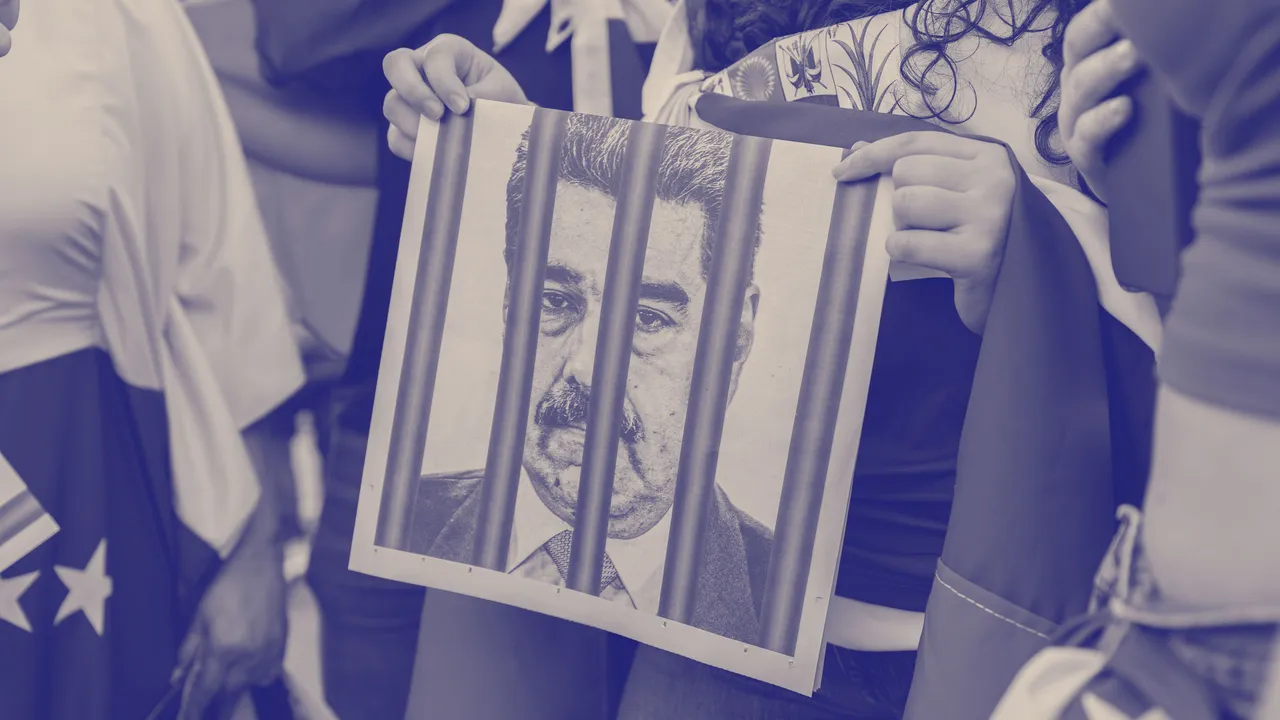
I think you’re making an important distinction. Chávez was so popular that he didn’t need to trade as many favors. Since Maduro didn’t have that type of popular appeal, he relied on forms of coöperation. He would say to his inner circle, “You have to be very loyal to me and I am in command. I am in command the way a C.E.O. is in command of a corporation, but I will, in return, give you all autonomies to run whatever unit of this system you’re going to be in charge of. So if you are doing military affairs, you get plenty of autonomy. If you are running the oil sector, you get plenty of autonomy. If you are a governor, you get plenty of autonomy.” This is how he did it. What occurs is that they’re all loyal to the main guy because the main guy is giving all these groups significant institutional autonomies. It’s almost like a king and an aristocracy in which the nobles have enough leeway to run things as they see fit.
So it’s not exactly a vertical system, like when Fidel Castro was in office, or when Stalin was in office. It’s a confederacy, in the sense that there is a central government, but the different federations have enormous leeway. That is why the regime doesn’t collapse when the top leader gets removed from it, because what you have is a leader with ancillary institutions and fiefdoms operating on their own.
This suggests that if what the Trump Administration wants is to have a more pliant government that gives oil concessions to the U.S., but can keep the country relatively stable in the short or medium term, then that’s a real possibility because the government will continue as it was before, to some degree.
That is correct. It depends on what concessions Trump is going to demand. One of the most important ones is that he wants to give more access to major American oil companies and bring them into the Venezuelan oil business. You don’t need regime change in Venezuela to get that. This is something that Maduro was already willing to grant, and I think the current leaders of Venezuela are all ready to provide it because this does not require regime change. And they had already made the decision that it had been kind of crazy for the regime to move away from the U.S. market. So they were already pretty ready to do this. If the only thing that Trump demands is more access to oil assets in Venezuela, that is something that Delcy Rodríguez and the rest of the regime will easily provide.
Do you see Rodríguez as an important figure going forward? What was her role under Maduro?
She was a very close and trusted political ally of Maduro and, as such, she had plenty of autonomy. She was running a number of affairs. She was Vice-President. She was running the oil business. She was in charge of relations with the private sector. Her brother was in charge of the legislature. They were perfect examples of what I was describing. They were very loyal, but they had quite a bit of autonomy. And, in many ways, she introduced important things that one would not have seen—policies, for example, that Maduro perhaps would have never implemented himself.
She has inherited a lot of power. Now, my only caveat with what I am saying is, every time you remove the strong man from any system, even this confederacy that I have described, you will inevitably have a discussion within the inner circles about who should really go next, who is more qualified, who has the better idea. I’m not sure if she’s going to survive an internal power struggle, if it emerges.
How would you describe the Venezuelan opposition, which is led by María Corina Machado? She won the Nobel Peace Prize, and it seems like the Trump Administration may have lost interest in her. There’s some reporting, from the Washington Post, about how her winning of the Peace Prize, which Trump thought was his, may have caused some resentment.
The Venezuelan opposition has been expanding significantly in Maduro’s time, but here is the problem. The government increased the number of obstacles to undermine the competitiveness of elections, the ability to run an organized campaign, and this has included not just terrible regulations, but arrests and prohibitions. Most members of the opposition started to basically give up on running because they were, like, “The cards are so stacked against us.” What Machado did in 2024, which is really extraordinary, is she changed her mind, and the United States helped. She was convinced that it made sense to compete even if the rules were stacked against them. And she was able to mobilize the most effective electoral campaign against an authoritarian regime that we have seen in a very, very long time. And she not only wins but she wins massively.
Just to be clear, she was barred from running herself.
Yes, her first choice for candidate was also barred from running, which gave her very little time to pick somebody else, and then she selected Edmundo González. Everybody in Venezuela who voted in that election for González was voting for her, though. Even the government said this.
So do you view that as her having some independent power base, or is it more that she was just the alternative to an unpopular government? Is there a unified opposition that you view as having a real power base and ideological component that one can grab onto?
Machado became a folk hero of the Venezuelan opposition between late 2023 and 2024. She has always been around, and she has a past that many people have criticized.
How so?
There were moments when she was very extremist in not wanting to make agreements with other members of the opposition. She was very hard-line, very intransigent. She was, like, “With this regime, we just are never going to negotiate anything.” And many folks thought that that was a type of dogmatism and inflexibility that was not productive. She also has very market-oriented economic policies. She wants widespread privatizations that not a lot of people want.
But she changed approaching the 2024 elections and she built a spectacular coalition. She was able to, for the first time, really gather a massive movement. Contrary to what President Trump said, the respect that Machado enjoys both in Venezuela and abroad is unrivalled in the history of the opposition to Chavismo.
Left-wing figures in Latin America have often used anti-Americanism politically, in many cases for good reasons since America has been supporting coups and attempting coups right up to the present day. How much of the politics of Chávez and Maduro was based on anti-Americanism? And is it a problem for Machado that, if she is ever going to take power, it seems like she’s going to have to kiss up to Trump and be seen by the White House as someone that they can control, and therefore, because of the association with the U.S. and what the U.S. has done in Venezuela, will become more toxic?