In this vacuum of meaning, the key Administration personalities have taken to network television and social media, offering their own post-facto theories of the case. They have been like the sweepers in curling, trying to coax a runaway stone onto an advantageous track. The runaway stone, in this case, being Trump’s decision to attack, and everything that will come after.
Among Trump’s advisers, Rubio’s vision is the clearest. His intent is anti-Communist. Cuban officials, Rubio told NBC, “are the ones that were propping up Maduro. His entire, like, internal security force, his internal security apparatus is entirely controlled by Cubans.” The previous day, at Mar-a-Lago, Rubio had said, “If I lived in Havana and I was in the government, I’d be concerned.” Was that a war plan for Havana? If so, the President didn’t exactly sound persuaded. On Sunday night, Trump told reporters on Air Force One that, when it came to Cuba, “I don’t think we need any action,” because the country was already “ready to fall.” Trump also made some critical comments about the Presidents of Colombia (“a sick man who likes making cocaine and selling it to the United States”) and Mexico (“has to get their act together”), which suggested that his gaze might be less methodically trained on the region’s Communist regimes.
Stephen Miller, meanwhile, indulged a grander historical view, of a renewed imperial program. “Not long after World War II the West dissolved its empires and colonies and began sending colossal sums of taxpayer-funded aid to these former territories,” he wrote on social media. “The West opened its borders, a kind of reverse colonization, providing welfare and thus remittances, while extending to those newcomers and their families not only the full franchise but preferential legal and financial treatment over the native citizenry. The neoliberal experiment, at its core, has been a long self-punishment of the places and peoples that built the modern world.” Speaking with Jake Tapper on CNN on Monday, he declared that the U.S. could seize Greenland if it wanted. “We live in a world, in the real world, Jake, that is governed by strength, that is governed by force, that is governed by power. These are iron laws of the world since the beginning of time.”
Are the President’s intentions actually colonial, or more simply a hostage-taking kind of gunboat diplomacy? According to the Financial Times, the brother of Rodríguez, Venezuela’s interim leader, had held talks last year with officials in Washington, a detail which offered a whiff of Cold War client-statism and raised the question of what Rodríguez might have promised them. Trump himself kept talking not about anti-Communism or narco-trafficking but about oil. On Air Force One, he said that “oil companies are going to go in and rebuild this system.” (The companies themselves said that they hadn’t been consulted; flooding the market with new supply would not be in the interests of corporate profits.) The President told the public that the rebuilding of Venezuela’s oil industry would take “billions” in infrastructure investment—in Venezuela, not the U.S. Curt Mills, editor of The American Conservative, observed, “Democratic talking points writing themselves right now.”
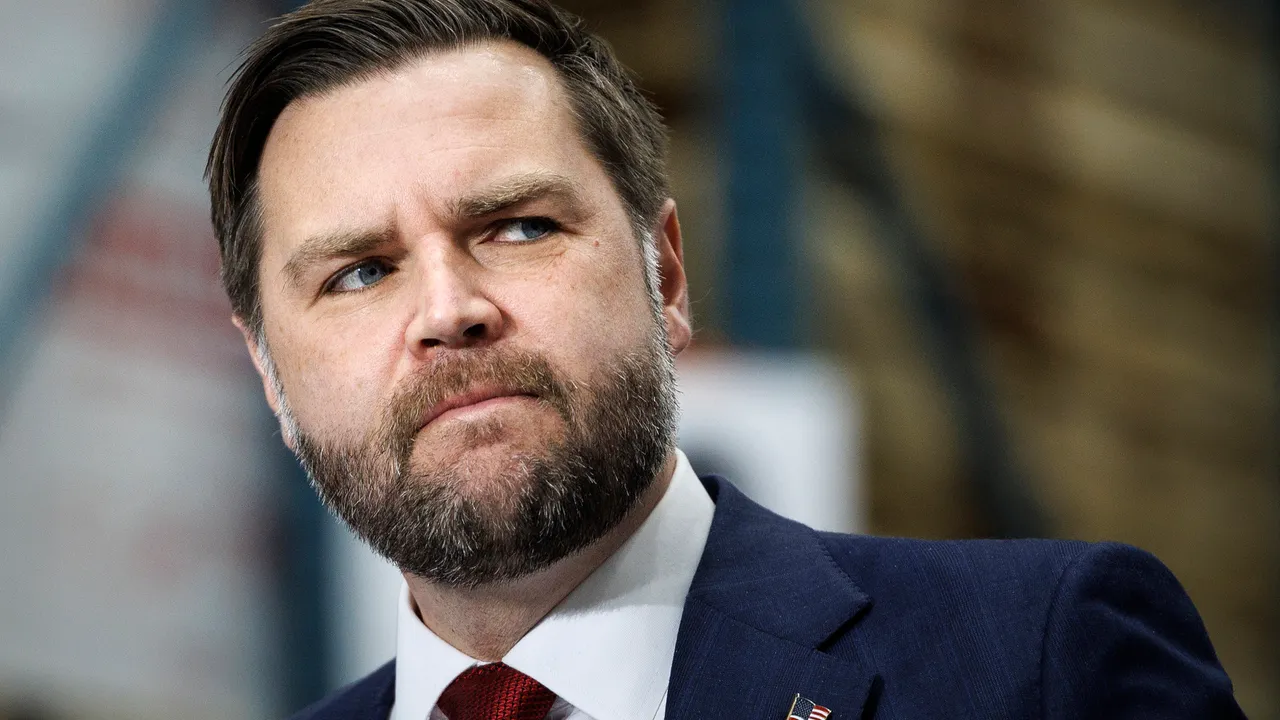
Vance’s general absence from the Venezuela initiative has been taken as an expression of his ideological identity. He is a dove, at least in the relative terms of Trumpworld, and this has been an operation for the hawks. But his more salient position may be as Trump’s political heir, and the Venezuela adventure is beginning to look like a very hard political sell. A CBS/YouGov poll taken before the attack found that seventy per cent of Americans opposed military action in Venezuela; a snap poll taken by YouGov just after Maduro’s capture showed that only thirty-six per cent of respondents “strongly or somewhat” supported the operation. If Trump means to persuade the American people of the wisdom of the attack by trying to bring them cheaper Venezuelan oil, then that will mean a far deeper entanglement in a conflict that he might prefer to treat as a hit-and-run. And then there’s the tricky international question of why, exactly, the U.S. is entitled to just take oil reserves off of Caracas in the first place. Rubio may have achieved a long-standing anti-Communist goal. Miller can celebrate a blow struck against the liberal order. But the likeliest person to inherit the Trump mantle was the one staying out of the frame. Vance had noted that there is a national anxiety “over the use of military force.” Grant that there is a moral dimension to that anxiety. There is also a political one. ♦