2026 could see a slew of annexation and territorial swaps. For example, Trump takes Greenland while Putin takes the Norwegian archipelago of Svalbard. After all, neither leader is terribly invested in international treaties and organisations.
A cynical deal could also be done to allow Putin to have his way with Ukraine. The ground would thus be prepared for a new world order in which Putin, China’s president Xi Jinping and Trump all have their , not just influence.
A smaller group of regional superpowers might also be granted their own spheres, with Middle East-based countries looming large in that accommodation alongside the other global superpower, India. The idea might be that a new group of ten-or-so countries would create their new standard operating procedures. Venezuela was just the start, in other words.
What all of this would mean for the Arctic region, if it came to pass, is multifaceted. But above all, European Arctic states would no longer have any security guarantees from the US.
Difficult choices
Whatever happens, the 1951 defence agreement is a cold war relic that did not protect Denmark from great power overreach. The US in the late 1950s without bothering to consult Copenhagen.
Nato unity has now been jeopardised, and Norway and the UK face some difficult choices. Norway needs the US (and Russia) to respect its sovereignty over Svalbard, and it needs the US not to abandon the Nato article 5 commitment to collective defence. Meanwhile, as the UK and Norway work closely on , they need to focus on deterring Russia, rather than having to deter a hostile US as well.
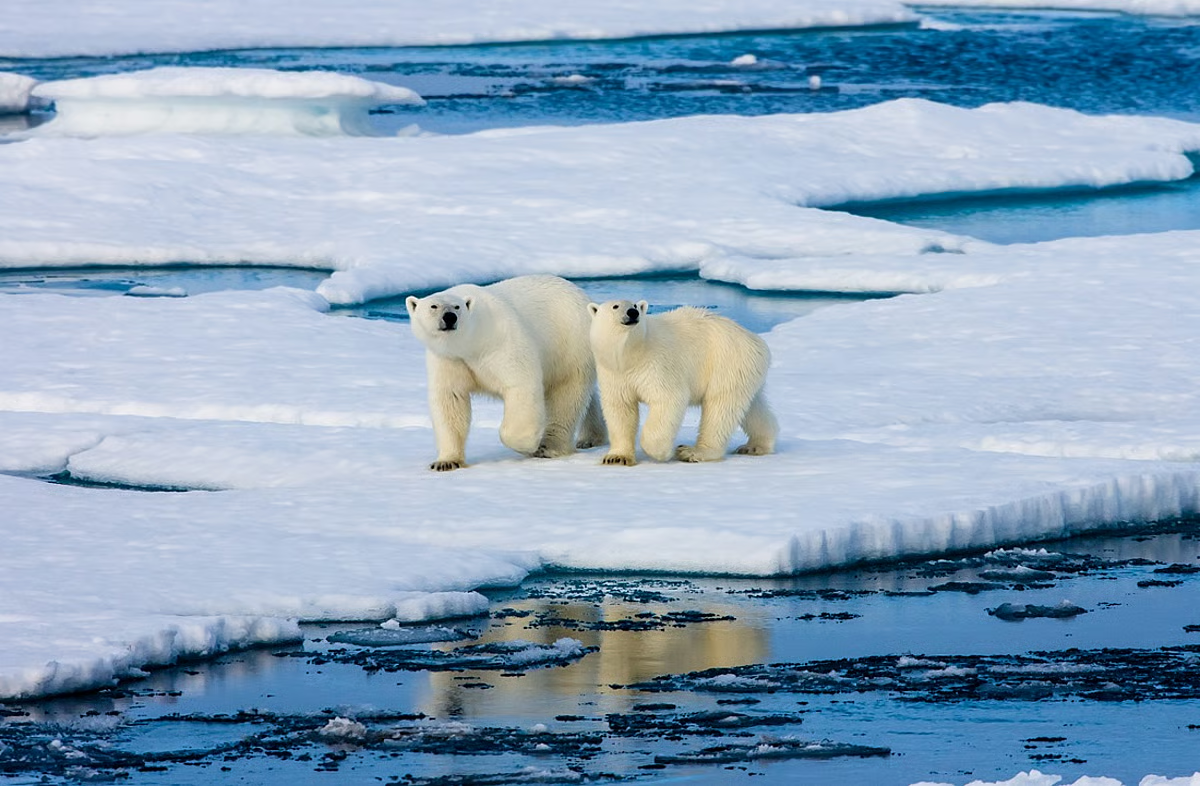
American dominance and Russian belligerence are clearly taking their toll — at a time when the is having increasingly adverse effects on local and regional ecologies, and Indigenous and other communities in the far north. The Arctic is melting, thawing and becoming — and geopolitical fuel is being added to the fire.