NEW DELHI/WASHINGTON: While there was no official Indian response to the White House announcement on Iran, govt sources said the 25% tariff on Iranian trade partners was likely to have minimal impact on India and that trade with Iran was likely to take a hit in any case given the global economic situation.But the new tariffs threaten to complicate India’s carefully balanced foreign policy, forcing a choice between preserving access to the $27 trillion US market and maintaining long-standing ties with Iran. Having already been hit with a 25% tariff for purchasing Russian oil (bringing the current total to 50% for many goods), the latest measure could push tariffs on Indian exports to the US to 75%.However, a govt source said that for India Iran does not even figure in the top 50 global trading partners. “Last year, India’s total trade with Iran was $1.6 billion, approximately 0.15% of India’s total trade,” he said, adding India’s trade with Iran is expected to fall further in the current financial year because of external economic factors.
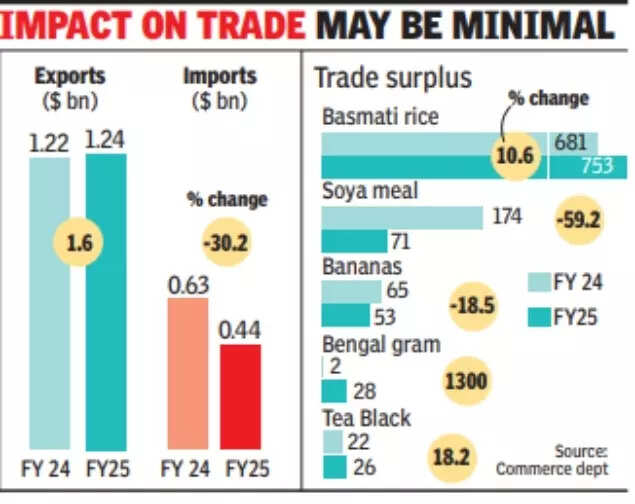
While India will be concerned about the likely impact on its investment in the Chabahar port, sources said it is already under restricted operations because of the sanctions waiver revocation by the US last year. For Iran, India remained an important trading partner earlier even after the latter stopped procuring crude from Tehran under pressure from the US. According to the Indian govt, major Indian exports to Iran include rice, tea, sugar and pharmaceuticals,while its imports consist mainly of dry fruits, chemicals and glassware.Indian exporters, barring those dealing in basmati, did not see the new tariff having a significant impact. Data showed basmati was the mainstay of India’s trade with Iran – which, at $753 million last year, was the third-largest market after Saudi Arabia and Iraq $850 million.