Former India captain Rohit Sharma has admitted that watching the T20 World Cup from the sidelines for the first time in his career will feel “strange”, as he reflected on life away from the format and the difficult decisions that shaped his leadership years. Rohit, along with Virat Kohli, now features only in the 50-over format, having retired from Tests and T20 cricket. India will begin the defence of their T20 World Cup title against USA on February 7 in Mumbai, with Rohit no longer part of the playing group.
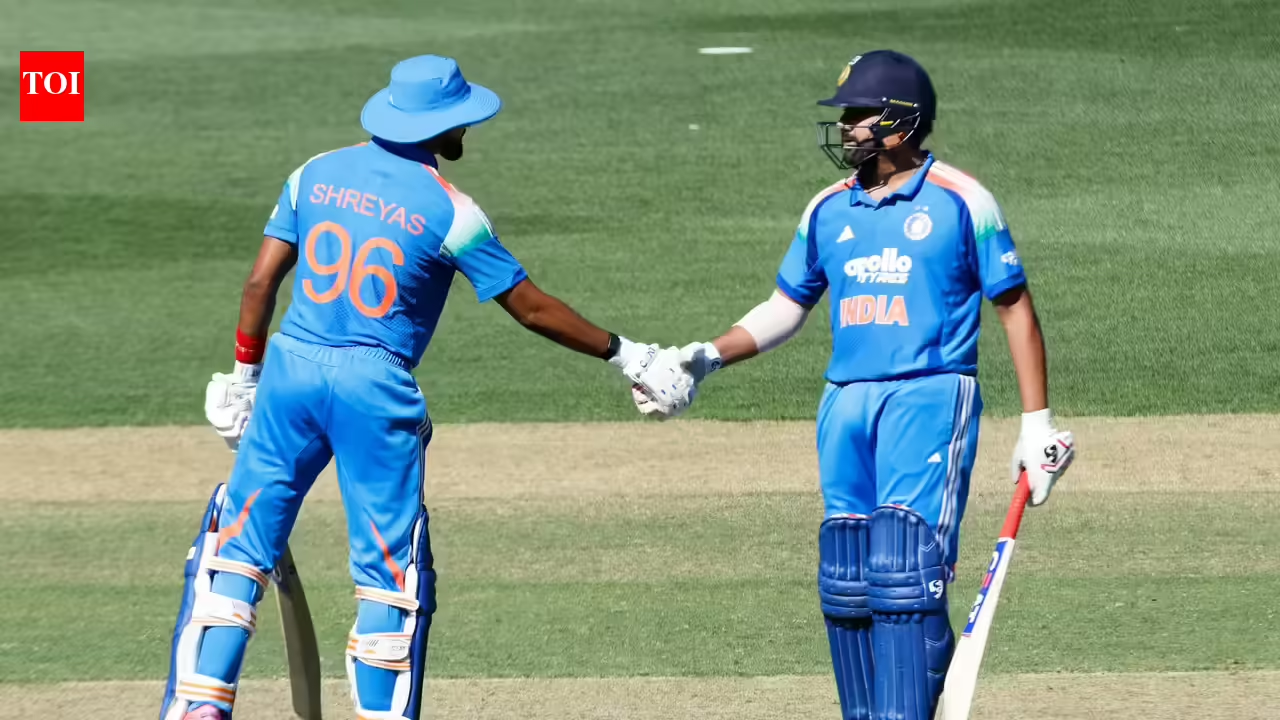
Speaking on a JioHotstar show, the 36-year-old said the reality of missing a global tournament hits far harder than being absent from bilateral series. “We were talking about this at home, that it will be strange watching it from home, especially the T20 World Cup. From the time it started until now, I have been part of every World Cup, so it will feel different,” Rohit said. He added that the finality of not being involved truly sinks in only during World Cups. “When you miss a World Cup, the reality really sinks in. That’s when you realise you’re not going to be part of it. However, I will be somewhere in the stadium. It won’t be the same, but it will be a different experience.” Rohit also used the conversation to reflect on his captaincy tenure and the challenges that came with leading India at the highest level. According to him, taking tough selection calls while maintaining trust within the dressing room was one of the most demanding aspects of the job. “There have been many such instances of taking hard calls before World Cups. You will not be able to please everyone, but it is important for the individual to know why a decision is taken,” he said. He pointed to Shreyas Iyer’s omission from the Asia Cup and the 2022 T20 World Cup in Australia as an example of how team balance often dictated decisions. “We felt we needed someone who could give us a little more with the ball. That’s why we went with Deepak Hooda, who was in good form at the time. Shreyas would have felt bad, Deepak would have been happy — that’s how it works,” Rohit said, adding that both he and then head coach Rahul Dravid personally spoke to Iyer to explain the call. Rohit said similar conversations were held with other senior players during his time as captain, including Mohammed Siraj, who missed out on the 2025 Champions Trophy, and Yuzvendra Chahal, who was not selected for the 2023 ODI World Cup. “For us, it is important to understand how we can make the best use of the 15 players in the squad. As long as you have a valid reason and you explain it properly, that is fine,” he said. Beyond selection decisions, Rohit stressed that building strong personal bonds was central to his leadership approach. He said creating an open and approachable environment helped players feel secure, even during difficult phases. “I always wanted an openness to discuss anything, not just cricket but life as well. There are no boundaries; there is always an open door,” Rohit said, adding that humour and mutual respect played a big role in keeping the dressing room relaxed. Looking ahead to the upcoming T20 World Cup, Rohit expressed confidence in the current Indian squad, highlighting stability and continuity as key strengths. “About 80 to 90 per cent of the squad has remained the same since the last T20 World Cup. They have been playing together for almost two years now, which creates strong understanding,” he said, noting that the average age of the group is close to 25. He concluded by underlining what matters most at a World Cup. “When you are heading into a World Cup, the only aim is to win it. For that, you need open conversations and sometimes hard conversations as well.” For Rohit Sharma, the next T20 World Cup will be watched rather than played, but his words offer a rare window into the realities of leadership, sacrifice and transition at the highest level of Indian cricket.