Crocodile expert Jailabdeen A, the director of the Gharial Ecology Project, is researching on and conserving gharials in the Chambal landscape of Rajasthan, Madhya Pradesh and Uttar Pradesh. He said saltwater crocodiles have highly developed olfactory sense and can smell blood.
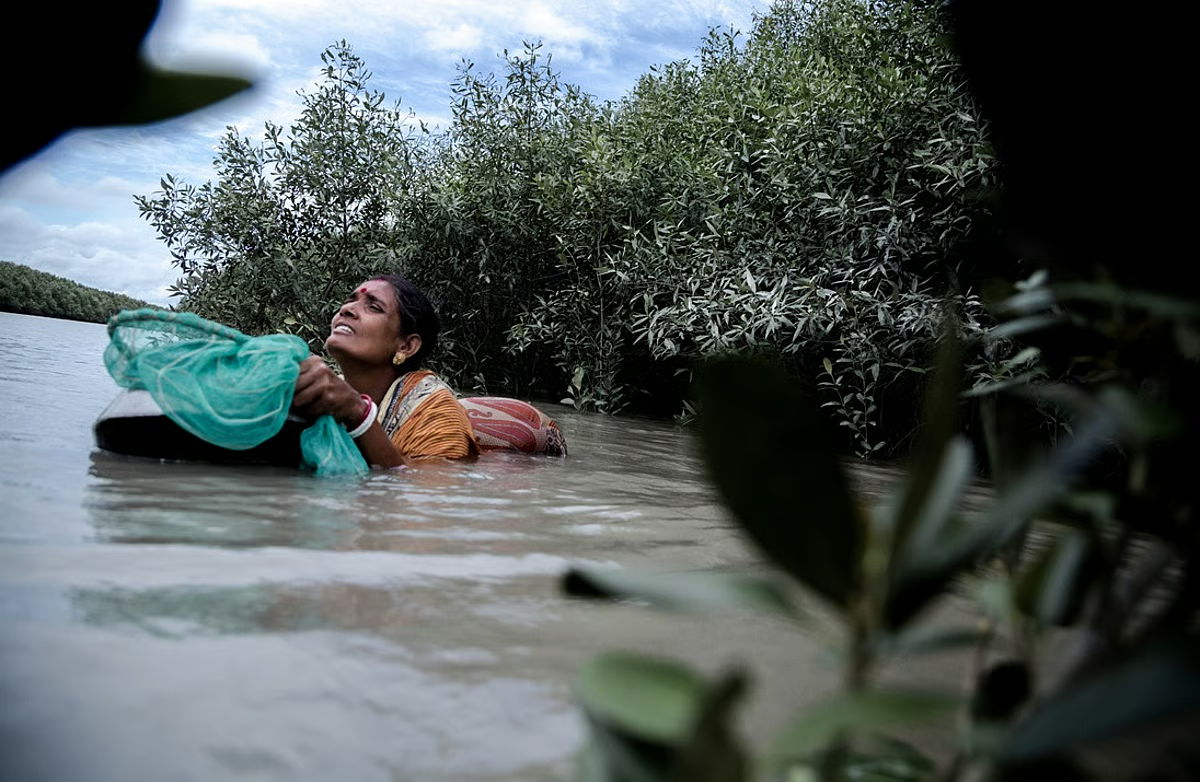
Every instance of crocodile attacks in the Sundarbans reveals the extent of the danger women undertake when they wade into the turbid water to collect meen, even during their periods.
As first reported by The Telegraph India, in October 2025, 37-year-old homemaker Pranati Pramanik battled a saltwater crocodile for 30 minutes while crab fishing near Bonshyamnagar in the Sundarbans, escaping with injuries by gripping a tree.
Unsurprisingly, many women in the Sundarbans have begun to abandon the practice of collecting meen, by switching to other livelihoods.
“Most of the meen used to get smuggled illegally to Bangladesh, but now its price has tanked because sales have dried up. So, many women have switched to catching crabs instead or are doing something else,” said local resident Chhittaranjan Ray, who lives in Gosaba. Ray recalled how, back in the day in Dayapur, a Sundarbans village, six to seven women lost their lives to crocodile attacks.
Kaushalya Sardar informed that she used to collect meen once upon a time but left due to the threat of crocodile attacks.
“I left collecting meen around two years back. Still, as I am a poor woman, I work in the paddy fields during harvest and look for other jobs as well. My husband does the same in Andhra Pradesh. Many women left after the attacks happened.” She lives in Birajmani under the Gosaba Police station limits. Sardar added that if a woman caught 1,000 meen pieces daily, she got around Rs 150-Rs 200. “Traders used to come, count and pay us.”
Kanailal Sarkar who works in the Kolkata-based non-profit Tagore Society for Rural Development noted that sharks also pose a threat alongside crocodiles. Probir Mahapatra, who heads the non-profit, added that the crocodilian activity may have increased due to the rise in sea salinity.
Sarkar informed that tourists spot many crocodiles either in the waters or basking on the banks. The Bhagabatpur crocodile project, a conservation breeding facility, was started in 1976 to revive the population of crocodiles in the Sundarbans.
Researcher Ujjwal Sardar, from the Rajshahi University’s folklore department, informed that rising sea salinity in the Sundarbans is driving crocodiles into villages and even village ponds. The intrusion of saltwater, exacerbated after cyclones Aila in 2009 and Amphan in 2020, has killed off some mangrove species and rendered farmlands unusable for many locals.
Sardar, a Baruipur resident about 50 km from the Sundarbans, is studying folk technologies on both sides of the mangrove forest. He noted that while riverside villages once suffered frequent shark attacks, no such incidents had been recorded in the past several years. He also highlighted cases of women who had survived crocodile attacks. “The meen collection disrupts the ecological balance. As collectors use nets to catch the seedlings, they end up killing other vital aquatic fish species.”
Jailabdeen added that it is not just menstruating women who are victims. “Any kind of activity can be sensed by them (crocodiles). So, even non-menstruating women can be attacked.”
Not just crocodiles
Other than crocodile attacks, women in the Sundarbans collecting meen may also suffer from cervical cancer because they rely on unhygienic cloth pads, informed Sumanta Biswas, a teacher who raises awareness about safe menstruation and distributes pads to women in need.
“Initially, they develop the pelvic inflammatory disease or PID, which can lead to cervical cancer. Most women cannot afford pads due to poverty. Cloth pads aren’t washed and dried properly, often leading to infections,” Biswas said. One in every five women globally suffering from cervical cancer is from India.
He had been several times to the Sundarbans and found out that shame around periods still persists in the region. Biswas noted that even in this day and age, social taboos related to menstruation still prevail in the Sundarbans. Sometimes, women are prevented from boarding boats when they bleed. At times, the boats are returned and washed.