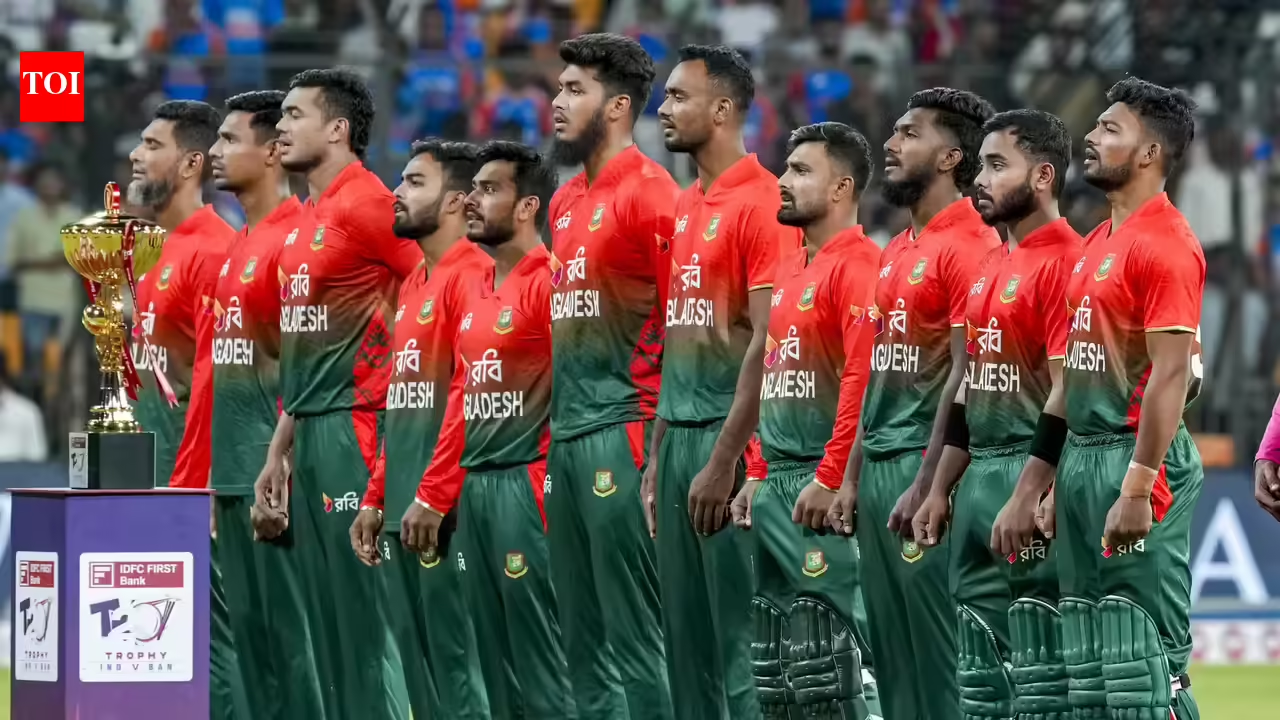
The International Cricket Council held its ground over Bangladesh’s refusal to travel to India for the 2026 ICC Men’s T20 World Cup after exhausting all possible avenues for dialogue, with the governing body determined to protect the integrity of the tournament and its fixtures. According to Cricbuzz, the ICC had given the Bangladesh Cricket Board ample time to reconsider its position, with CEO Geoff Allardice and other senior officials remaining in constant touch with BCB representatives. The ICC was keen to ensure that Bangladesh did not feel isolated within the global cricket ecosystem. At the same time, it was equally firm that allowing a member board to demand relocation of matches would set an unhealthy and potentially dangerous precedent.
Following the ICC board meeting on January 21, where all but two members rejected Bangladesh’s request to move its matches out of India, the global body issued a 24-hour deadline for the BCB to formally confirm its participation. That deadline passed without compliance. Instead, the BCB raised fresh objections and questioned the ICC’s security assessment, which had classified the threat perception for the Bangladesh team in India as moderate to low. The BCB reportedly countered that assessment, claiming the threat level was moderate to high. As noted by Cricbuzz, this stance raised eyebrows within the ICC, especially given that Bangladesh had toured Pakistan for the Champions Trophy last year despite a higher threat perception at the time compared to the current assessment for India. There were indications during the Bangladesh Premier League final on January 23 that the board might soften its position. However, those expectations proved misplaced, with the BCB continuing to push hypothetical scenarios rather than offering a clear commitment. Although the BCB eventually wrote to the ICC after the 24-hour deadline had elapsed, the governing body felt it had waited long enough. On Saturday, the ICC chief executive informed board members that, based on the January 21 resolution, the ICC was compelled to replace Bangladesh with Scotland in the tournament.