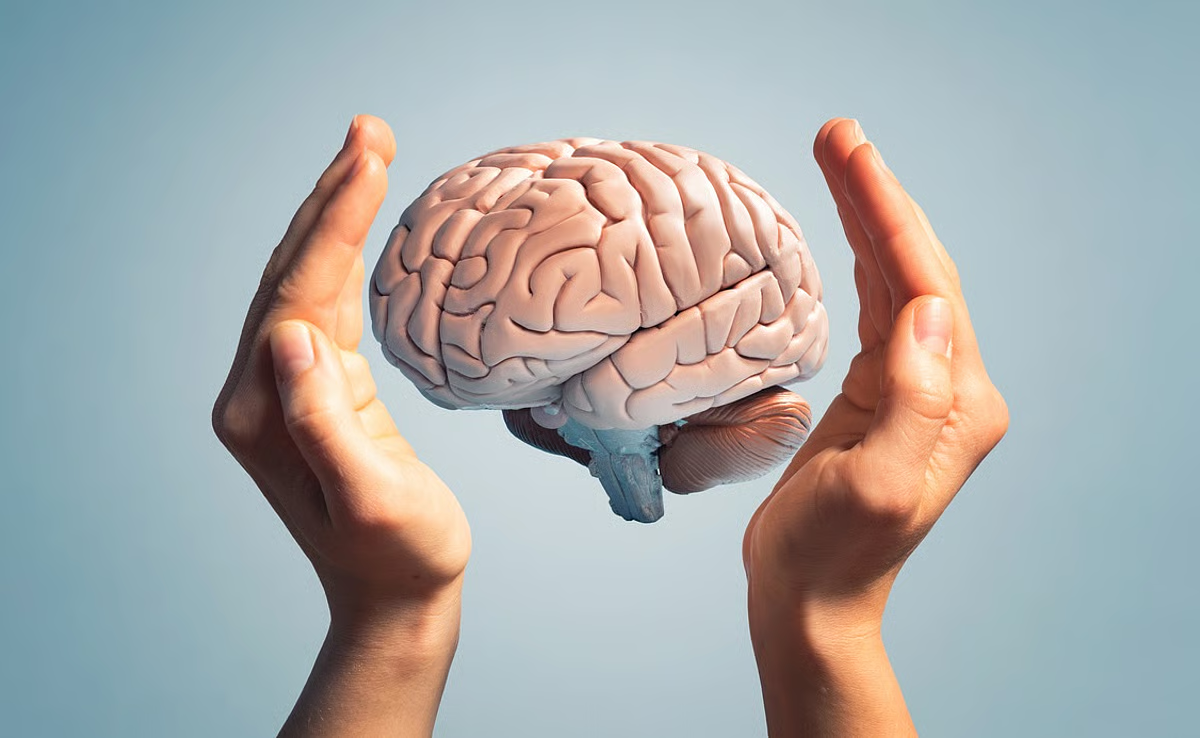
For much of the 20th century, scientists believed that the adult human brain was largely fixed. According to this view, the brain developed during childhood, settled into a stable form in early adulthood, and then resisted meaningful change for the rest of life.
Today, the concept of , the brain’s ability to change its structure and function in response to experience, is a central principle of brain science. The brain can change throughout life, but not without limits, not instantly and not effortlessly.
Neuroplasticity therefore reframes the brain as neither rigid nor infinitely malleable, but as a living system shaped by experience, effort and time.
The roots of neuroplasticity can be traced to the mid-20th century. In 1949, psychologist Donald Hebb proposed that connections between neurons, the brain’s nerve cells, become stronger when they are repeatedly activated together.
This principle later became known as . At the time, Hebb’s idea was considered relevant mainly to childhood development. Adult brains were still thought to be relatively unchangeable.
That assumption has since been overturned. From the late 20th century onward, studies showed that adult brains can reorganise in response to learning, changes in sensory input, or physical injury. Sensory changes include alterations in vision, hearing or touch due to training, loss of input or environmental change.