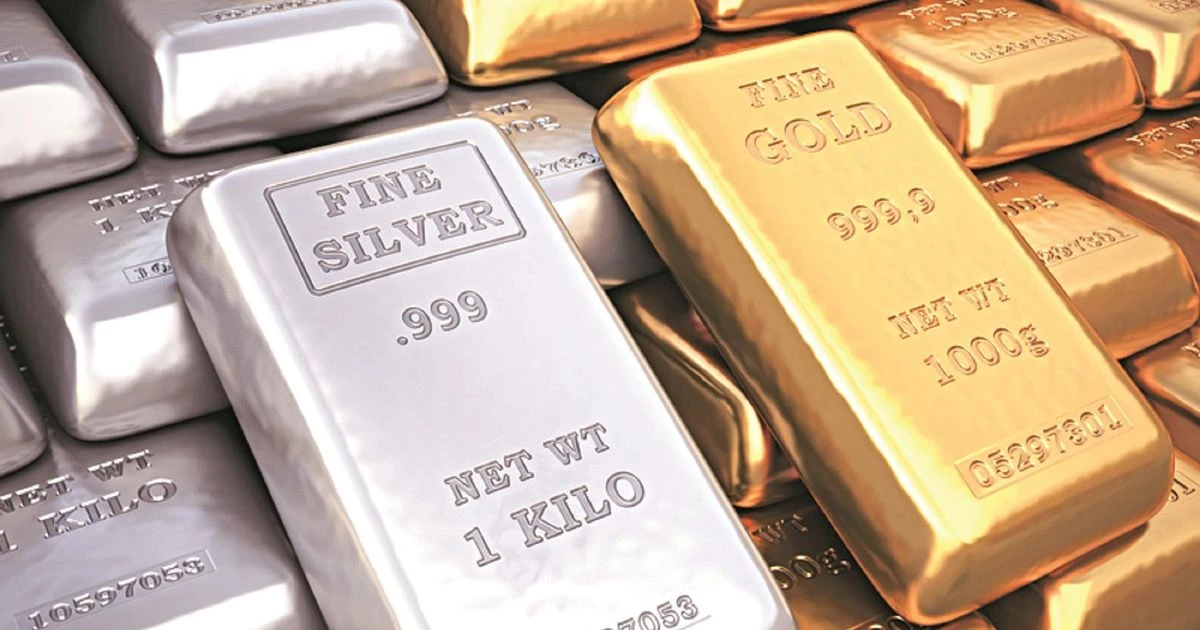
If you own silver today, chances are it feels like a great decision.
Over the past year, silver prices have surged more than 200%, sharply outperforming gold’s roughly 80% rise, making silver one of the best-performing assets globally. But according to a recent Motilal Oswal Financial Services (MOFSL) report, this very outperformance may now be the warning signal investors should pay attention to.
What Is the Gold–Silver Ratio—and Why Does It Matter?
The gold–silver ratio tells you how many ounces of silver are needed to buy one ounce of gold. Historically, this ratio has averaged around 65–70 over long periods.
At the peak of the pandemic in 2020, the ratio had blown out to over 125, signalling extreme undervaluation of silver relative to gold. Since then, silver has staged a massive catch-up rally.
Today, that ratio has compressed sharply to around 50, and at times even dipped below it. According to Motilal Oswal, when the ratio falls to these levels, a large part of silver’s catch-up trade is already done.
The Gold–Silver Ratio has a long-term average near 70 and is currently near 50, placing it near lower levels. S
Why Silver Now Carries More Risk Than Reward
Silver’s rally has been fast and volatile.
The report highlights that silver volatility has expanded significantly, with wider daily swings and sharper corrections, while gold has continued to move in a more orderly, trend-driven manner. In fact, since 2020, silver’s annualised volatility has been almost double that of gold.
That matters because in uncertain macro environments, risk-adjusted returns matter more than headline returns. Silver may still offer upside, but it also carries disproportionately higher drawdown risk at current levels.
This imbalance is already showing up in investor behaviour.
ETFs Are Sending a Quiet Signal
Despite strong silver prices, global silver ETFs have seen outflows of more than 3 million ounces since the start of 2026, according to the report. In contrast, gold ETFs continue to attract steady inflows.
This divergence suggests a subtle but important shift: capital is rotating away from higher-beta exposure toward defensive safety.
In other words, large investors appear to be locking in silver gains and reallocating toward gold—not exiting precious metals altogether.
Liquidity Is Rising, So Is Uncertainty
The backdrop matters.
Motilal Oswal points out that global liquidity is expanding rapidly. The US M2 money supply is near $22 trillion, while China’s M2 has crossed ¥340 trillion, growing at over 8% year-on-year. Excess liquidity tends to increase asset price volatility, not stability.
Add to that:
-
Geopolitical tensions in the Middle East -
Frictions involving Iran, Venezuela and global trade -
Delayed effects of tariffs and US fiscal uncertainty
Historically, such environments favour gold over silver in the short term, as capital moves toward assets with lower volatility and stronger defensive characteristics.
But Isn’t Silver Physically Tight? Yes—and That’s the Catch
Silver’s physical markets remain tight. The report notes that Shanghai silver prices are trading $10–11 above COMEX, and MCX prices are at over a 10% premium, indicating inventory stress.
However, tight supply does not automatically mean good near-term returns—especially after a 200% rally. Elevated premiums can also reflect stretched pricing, increasing the risk of sharp corrections if sentiment turns.
This Is About Rebalancing, Not Abandoning Silver
Motilal Oswal is careful to stress that this is not a bearish call on silver.
Silver still has strong long-term drivers:
-
Industrial demand -
Energy transition use cases -
Structural supply constraints -
But after a move from ₹60,000 to over ₹3,20,000, the report suggests that portfolio rebalancing by larger players is increasingly likely.
Their recommended approach is simple:
-
Trim silver exposure -
Tilt allocations more toward gold in the near term -
Maintain silver as a long-term core holding -
In one scenario outlined, a 75% gold and 25% silver allocation is suggested as a more stable way to stay invested in precious metals while managing volatility.
The core idea is simple:
Silver has done the heavy lifting already. Gold now offers better risk-adjusted returns.
Why Motilal Oswal Is Emphasising “Risk-Adjusted Returns”
One of the most important but subtle points in the report is that headline returns are no longer the right metric at this stage of the cycle.
Silver’s past returns look spectacular—but:
Volatility has doubled relative to gold
Drawdown risk has risen
Entry risk is now meaningful
Gold, by contrast:
Has lower volatility
Offers better protection during stress
Provides more predictable portfolio behaviour
What They Are NOT Recommending
Motilal Oswal is careful to avoid three common misinterpretations:
They are not recommending exiting silver entirely
They are not calling a top in precious metals
They are not advocating market timing
Instead, they are recommending:
-
Rebalancing after extreme divergence -
Respecting historical ratio signals -
Avoiding concentration risk
After a downward sloping channel (peak 59.88), the ratio formed a symmetrical triangle Upside breakout near 51 signals a potential near-term reversal