Just a few years ago, what athletes had to say about social issues reverberated beyond sports. Under some pressure—not only from events of the day but, it appeared, from the dominant culture—athletes were talking more and more about using their “platform” to fight injustice. Until this month, the last time a game had been postponed for reasons that intersected so directly with politics was in 2020, inside the N.B.A.’s bubble during the coronavirus pandemic, when members of the Milwaukee Bucks led a wildcat strike to protest police violence. That interruption had felt bold and clarifying—an extraordinary disruption of ordinary rituals, which seemed certain to have some effect. But that didn’t turn out to be the case. If anything changed, it was the perceived risk in making, and not making, political statements.
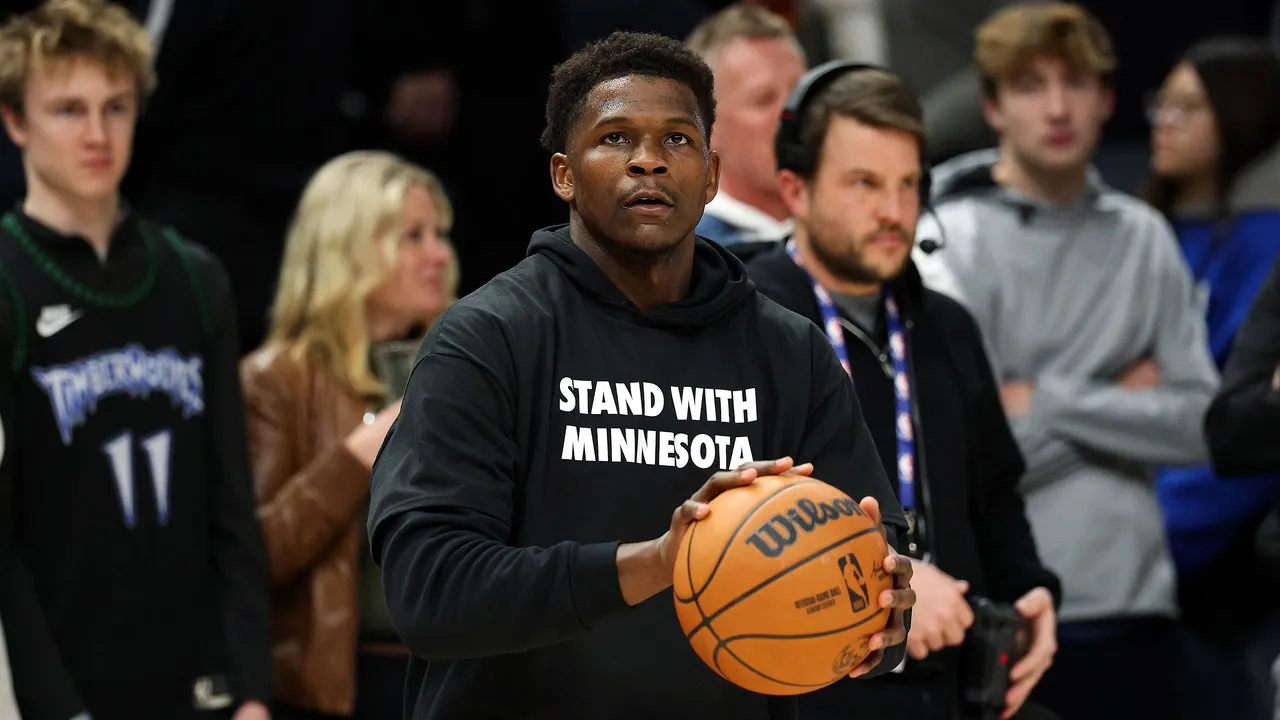
These days, many athletes are slower to talk about politics, and leagues are more circumspect. Social media, it turns out, does not represent the views of the larger public, and it has become increasingly toxic. The platforms are mostly for performance. Even many progressives now seem to feel that professional athletes—who tend to be young, devote themselves single-mindedly to their sports, and as a rule loathe public distractions—don’t have any special authority or obligation to weigh in on world events. Anthony Edwards is a charismatic, hyper-talented basketball player who once posted a blatantly homophobic video on Instagram. He has been accused of pressuring a woman he impregnated to get an abortion. (In a subsequent statement, Edwards said, “I made comments in the heat of a moment that are not me, and are not aligned with what I believe and who I want to be as a man.”) He is not the person to look to for civic leadership or a discussion of federal policies.
In some sense, athletes are freer to say what they really think—though, given the current government and corporate climate, there may be real costs to saying what’s on their minds. There are basketball players who spoke out about the killings in Minneapolis. Victor Wembanyama gave a passionate answer about how horrified he was by the news. Tyrese Haliburton plainly labelled Pretti’s death a murder. Larry Nance, Jr., wore an anti-ICE T-shirt, and the Players Association put out a statement in defense of civil liberties. Breanna Stewart carried an “Abolish ICE” sign during player introductions before an Unrivaled game (and many other women’s basketball players, as usual, waded more directly into political matters than their male counterparts did). But these were exceptions. The N.B.A. was silent, and so were many of its stars. At the end of last week, LeBron James, who once took a lead among athletes in decrying injustice, spoke out for the first time, sort of: he posted a new song by Bruce Springsteen, called “Streets of Minneapolis,” on Instagram. Despite his huge following, and however he feels, whether he denounces the actions of ICE or not probably makes little practical difference on the streets of Minneapolis. James knows, like the rest of us, that Donald Trump made it back to the White House even after James labelled him a clown.
None of this means, of course, that the players and staff weren’t affected by what was happening in their city. On Sunday, Minnesota’s head coach, Chris Finch, talked about how heartbroken the team was, and said he was glad that they hadn’t played on the night of Pretti’s death. The N.B.A. did not present the postponement of the game as an act of protest; the league said it was done “to prioritize the security and safety of the Minnesota community.” Either way, Finch said, “playing basketball just didn’t feel like the right thing to do.” Sports seemed beside the point.
In times of turmoil, what is the point of sports? I know plenty of people who would say there’s none—that professional sports are a bloated form of entertainment, a waste of time. An excuse to eat nachos and gamble. Are they merely an escape? Maybe. People want distractions from bad news. They want rituals. They want an occasion to drink beer and argue with strangers and friends. They want the reassuring rhythms of a long baseball season. They want examples of excellence. Some of them even want to watch the New York Jets. Of course, they don’t necessarily think about these things in terms of wanting. They don’t need sports to have a point. They care because they cared when they were young.