NEW DELHI: In one of the most significant updates to cricket’s rulebook in recent years, the Marylebone Cricket Club (MCC) has announced 73 changes to the Laws of Cricket, with the amendments — the first new edition since 2022 — set to come into effect from October this year. The governing body said the revisions were aimed at keeping the laws “up to date and fit for the modern game” while ensuring greater clarity and inclusivity across formats and levels.Go Beyond The Boundary with our YouTube channel. SUBSCRIBE NOW!Among the headline changes is a new rule mandating that the final over of a day in multi-day matches must be completed even if a wicket falls, a move MCC believes will preserve the drama and competitive balance of the game.The MCC explained that it was “unfair” when a fielding side took a late wicket but the batting team avoided sending out a new batter, adding that the unused deliveries only had to be made up the next day and often reduced the spectacle. Under the revised law, the over will now be bowled in full provided playing conditions remain suitable.
Key law changes announced by MCC
Mandatory completion of final over
- If a wicket falls during the last over of the day in multi-day cricket, the over must be finished.
- MCC said the change restores drama and prevents incoming batters from escaping a testing period late in the day.
Wicketkeeper positioning clarified
- Keepers will no longer be penalised for having gloves marginally ahead of the stumps during the bowler’s run-up.
- The law now states that the wicketkeeper must be wholly behind the stumps only after the ball is released, aligning it with fielder positioning rules.
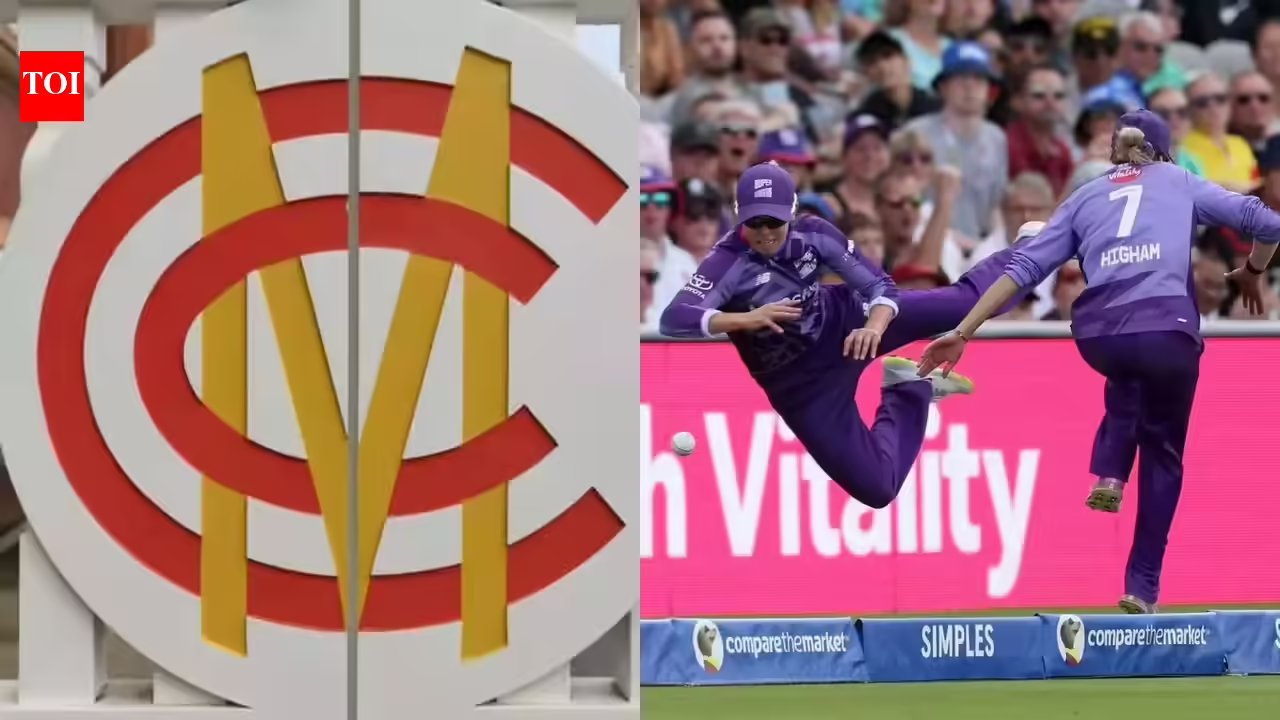
‘Bunny hop catch’ removed
- Fielders going beyond the boundary may touch the ball only once while airborne and must then land fully inside the boundary for the remainder of the play.
- If a fielder parries the ball from outside to a teammate inside and then steps out again, it will be ruled a boundary.
Laminated bats legalised in open-age cricket
- Laminated bats — made by bonding multiple pieces of wood — are now permitted beyond junior levels.
- MCC believes the move could help tackle rising bat costs, though elite players are still expected to use traditional single-willow bats.
New ball sizes for women’s and junior cricket
- The governing body introduced Size 1, Size 2 and Size 3 balls.
- While Size 1 (traditionally used in men’s cricket) remains unchanged, uniform margins now create clearer categories tailored to different levels of the game.
Overthrow defined for the first time
- An overthrow is now officially described as a throw at the stumps to prevent runs or attempt a run-out.
- Misfields near the boundary will no longer be treated as overthrows.
Fielding captain’s role in deliberate short runs
- The fielding side gains additional authority to decide which batter faces the next ball in cases of deliberate short running, expanding existing provisions.
Ball considered ‘finally settled’ sooner
- The ball will be deemed settled when held by any fielder or stationary on the ground.
- It no longer has to be in the bowler’s or wicketkeeper’s hands.
The MCC said the sweeping revisions were shaped through consultations at its World Cricket Connects forum, including input from current and former women’s players as well as equipment manufacturers.(With inputs from PTI)