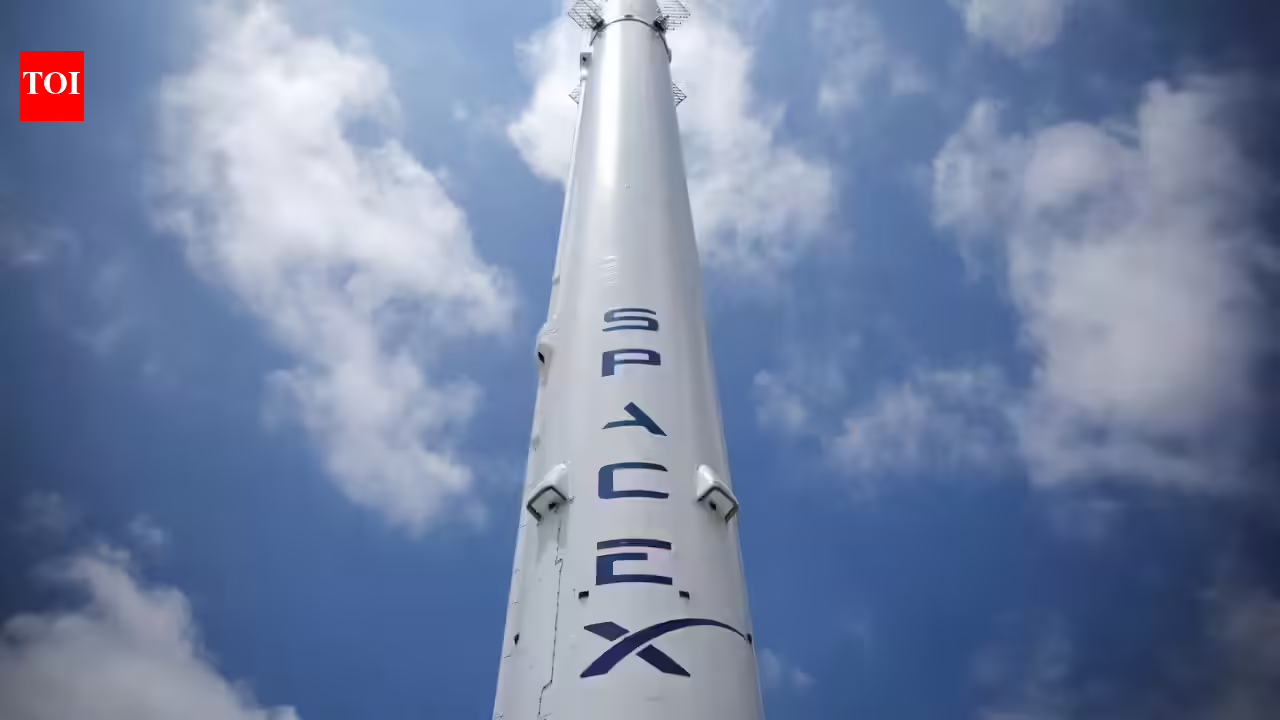
SpaceX appears to be putting its Mars plans on hold for the time being. According to the Wall Street Journal, the company is now prioritising the Moon instead. The current goal is an uncrewed lunar landing scheduled for March 2027, with no astronauts aboard initially. Elon Musk had previously aimed to send an uncrewed mission to Mars by the end of 2026, but that now seems likely to be delayed. Experts say the shift may be to allow more focus on the Starship rocket, which is still under development and undergoing extensive testing. Starship is a large, stainless-steel spacecraft designed to be fully reusable and capable of carrying both humans and cargo to the Moon, Mars, and beyond.
SpaceX is focusing on lunar missions before attempting Mars: Reports
Starship has been under construction and testing for years. Musk wants it to serve multiple purposes, including satellite launches, Moon missions, and eventually Mars trips. Experts say delays are expected. It seems shifting focus to the Moon first makes sense. The Moon is close, communication is instant, and missions are more manageable. Mars is far away. SpaceX’s plan is reportedly now step-by-step from the Starship landing on the Moon, then to Mars. Some analysts think this is a practical approach. It gives SpaceX a chance to learn in a safer environment before tackling the far harder challenges of Mars.The timeline for Mars is not dead. Musk’s Mars mission might still happen, just later than initially planned. It seems investors and engineers both see the logic in waiting until Starship is fully ready.
SpaceX’s Moon plans and tech experiments
The US is not alone in lunar ambitions. China is also working to return humans to the Moon this decade. No one has been there since Apollo 17 in 1972. The pressure to succeed in lunar missions might have influenced SpaceX’s decision to focus on the Moon first.SpaceX is also expanding into other areas. The company reportedly acquired xAI, valuing SpaceX at $1 trillion and the AI company at $250 billion, as reported by WSJ. Musk seems to be blending rocket science with artificial intelligence. It’s not clear yet how AI will help lunar or Mars missions, but the potential is there.