- The Big Book of Wild Poop talks about how animal droppings impact our ecological systems.
- The invisible DNA inside animal droppings tells the story of how animals live, think, feel, migrate, communicate and evolve.
- It focuses on India’s animals and ecology researchers working on excreta of wild animals.
For human beings, the topic of excreta is considered a subject of disgust and embarrassment. The Big Book of Wild Poop, written by Shweta Taneja, sets out to change the narrative of how humans, children in particular, view poop. In the animal world, excreta is not waste but information, food, camouflage and defence, the book says. For a dung beetle or a worm, it is a source of multivitamins. Some spiders disguise themselves with it to escape predators, while hoopoe mothers use it to protect their chicks.
“Poop is a shushed subject for kids. We want to bring it out into living rooms, into play areas and schools and talk about this subject openly, without shame,” says Taneja. “It’s not disgusting, it’s scientific.”
Taneja, known for writing science and fiction for both children and adults, makes an unglamorous subject like excreta palatable, by blending humour with science. The book takes an easy, humorous approach to explaining how ecosystems function. It shows how animal droppings help disperse seeds, recycle nutrients and even support climate processes by aiding forest regeneration.
Publisher: WWF -India, Juggernaut and Indian Pitta
Print length: 80 pages
Publication date: January 23, 2026
Genre: Nonfiction
The Big Book of Wild Poop introduces children ages nine to 13 to the taboo topic of poop, using humour to share the science of how animal droppings reveal behaviour, diet, ecology and more. It is one of the first books on wild animal scat exclusively focusing on India.
The book, published by WWF-India, Juggernaut and Indian Pitta, is aimed at children between ages nine and 13. However, the book makes for an informative read for adults too. Older readers may find themselves wanting more detailed explanations to the topics covered in the book. Nonetheless, the book serves as an entry point, which will certainly spark curiosity in the topic of wild animals and the importance of their poop. As an adult reader, the only criticism I had was that the 80-page book ended a little too quickly.
The illustrations by Sunaina Coelho play a crucial role in the book’s appeal. Bright, lively and whimsical, the illustrations are a major reason why the book would keep a child hooked. To keep things interesting, Coelho also introduces a “poop superhero” character named Superscat that directly addresses the reader with fun facts and tidbits.
One of the book’s key features is its focus on researchers who study poop. Taneja draws on interviews with researchers working on the ground, including Uma Ramakrishnan, who studies tiger scat to track populations; Arjun Srivathsa, who examines dhole droppings to understand diet and behaviour; Pooja Pawar who works on hornbills; and Bibidishananda Basu, who studies civets and the ecological importance of their feeding habits.
Poop is information
The book makes a strong case that poop is, in fact, data. After all, the invisible DNA inside animal droppings tells the story of how animals live, think, feel, migrate, communicate and evolve.
Take for example, the study of tiger scat. From the cells in a single scat sample, Uma and her team can read the genetic code of that tiger, and find the tiger’s family members across the country. A tiger’s DNA also helps Uma study genetic variations in India’s tiger population.

Poop also acts as social media for some animals. Indian rhinos, for instance, use poop like social media. They visit special communal sites called latrines, where many rhinos leave their dung. A rhino will sniff the pile carefully before adding his own. From the smell, he can tell which rhinos are nearby, their age and gender, and whether a rival male is a threat. He can even sense if a female is ready to mate. By leaving his own dung behind, he sends a message too: this is my territory.
Animal excreta also helps cool the planet. In the oceans, whale poop feeds phytoplankton — microscopic plants which absorb large amounts of carbon dioxide and release oxygen, helping regulate Earth’s climate. On land, elephants spread seeds through their dung, allowing new trees to grow and capture more carbon dioxide.
Last thoughts
Climate conversations often focus on large, dramatic symbols such as melting glaciers and burning forests. But The Big Book of Wild Poop instead looks at something seemingly insignificant, and shows how even the most overlooked aspects of nature play a role in sustaining life on Earth.
At a time when many urban Indian children are growing up far removed from forests, wildlife and insects, books like this can play a significant role in shaping how the next generation in India thinks about the environment and conservation.
Read more: The insect muses that have shaped our world [Book Review]
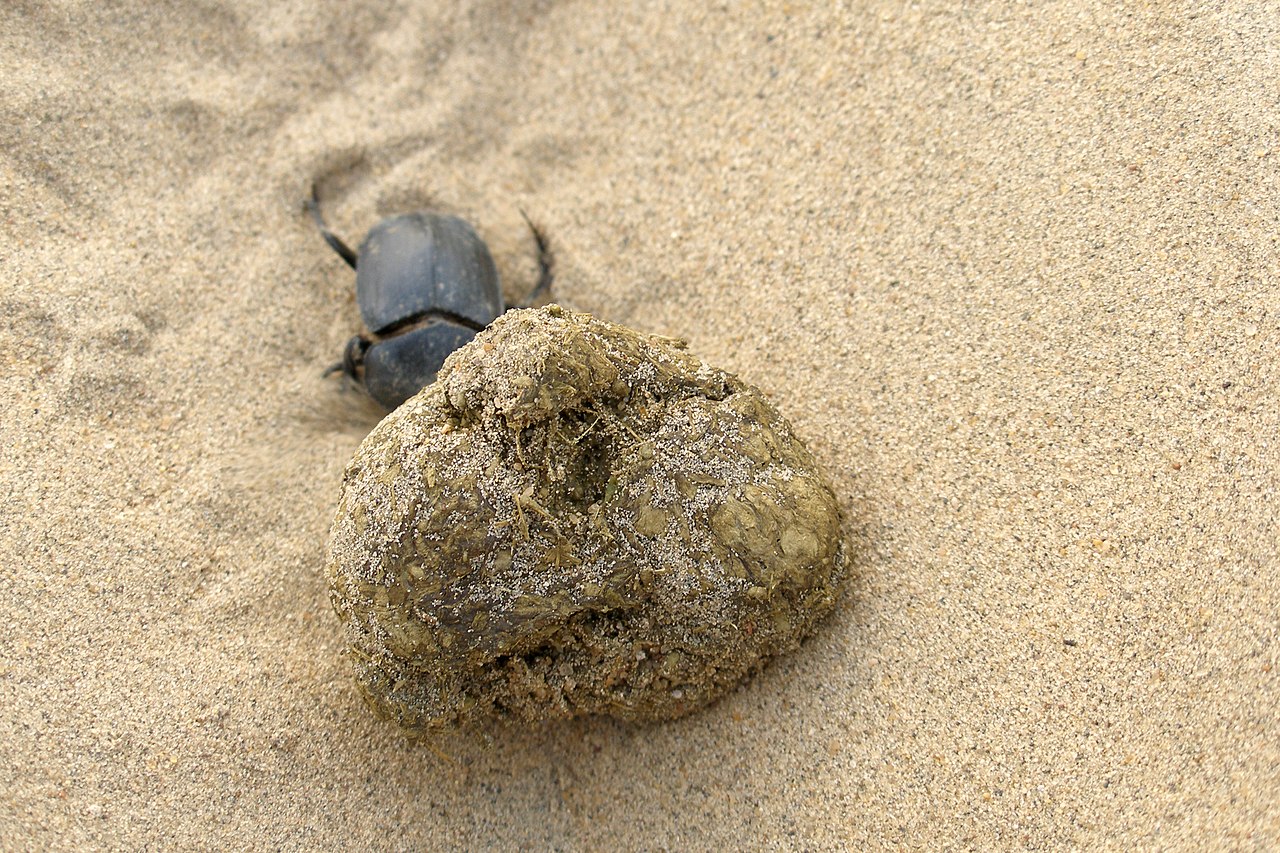
Banner image: A dung beetle in the Thar desert. Image by Vyacheslav Argenberg via Wikimedia Commons (CC BY 4.0).