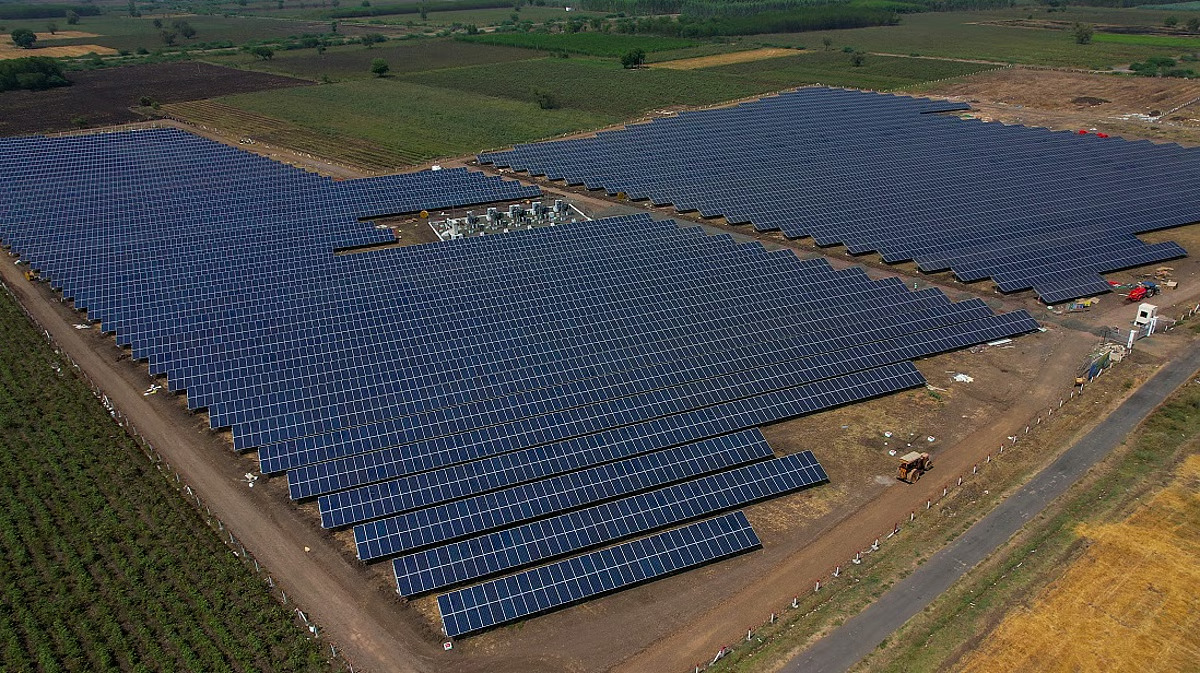
Within this aggregate, the electricity sector commands prominence. According to Scenarios towards Viksit Bharat and Net Zero-Sectoral Insights: Power, the power system will demand multi-trillion-dollar investments across renewable generation, battery storage, green hydrogen integration, transmission expansion and grid flexibility. Electricity demand is projected to grow substantially as transport, cooking and segments of industry electrify. The design of these investments will determine whether employment is geographically concentrated in already-advantaged regions or strategically deployed to coal-dependent districts in need of diversification.
The employment question is inherently dual. Decarbonisation destroys certain jobs even as it creates others. As per the report World Energy Employment 2024 by the International Energy Agency, in 2024, global energy employment reached approximately 67 million jobs, with clean energy sectors accounting for most of the net job growth. Solar photovoltaics, battery manufacturing and grid infrastructure have emerged as significant sources of labour demand. However, these aggregate gains conceal profound regional asymmetries. Without domestic manufacturing strategies and skill alignment, India risks importing equipment while exporting employment opportunities.
This tension is stark in coal-bearing states such as Jharkhand, Odisha and Chhattisgarh. Coal continues to serve not only as an energy source but as a fiscal and employment backbone. As per the Public Sector Undertakings chapter of the Annual Report 2025–26 by the Union Ministry of Coal, Coal India Limited alone employs 214,333 workers (including subsidiaries) as on January 1, 2026, with many more engaged indirectly through contract labour, transportation and ancillary services. Mining royalties and associated revenues underpin state finances. An unmanaged transition — marked by premature plant closures or abrupt procurement shifts — would risk precipitating localised economic distress, urban migration pressures and social unrest.