We have the technology. So what is holding us back?
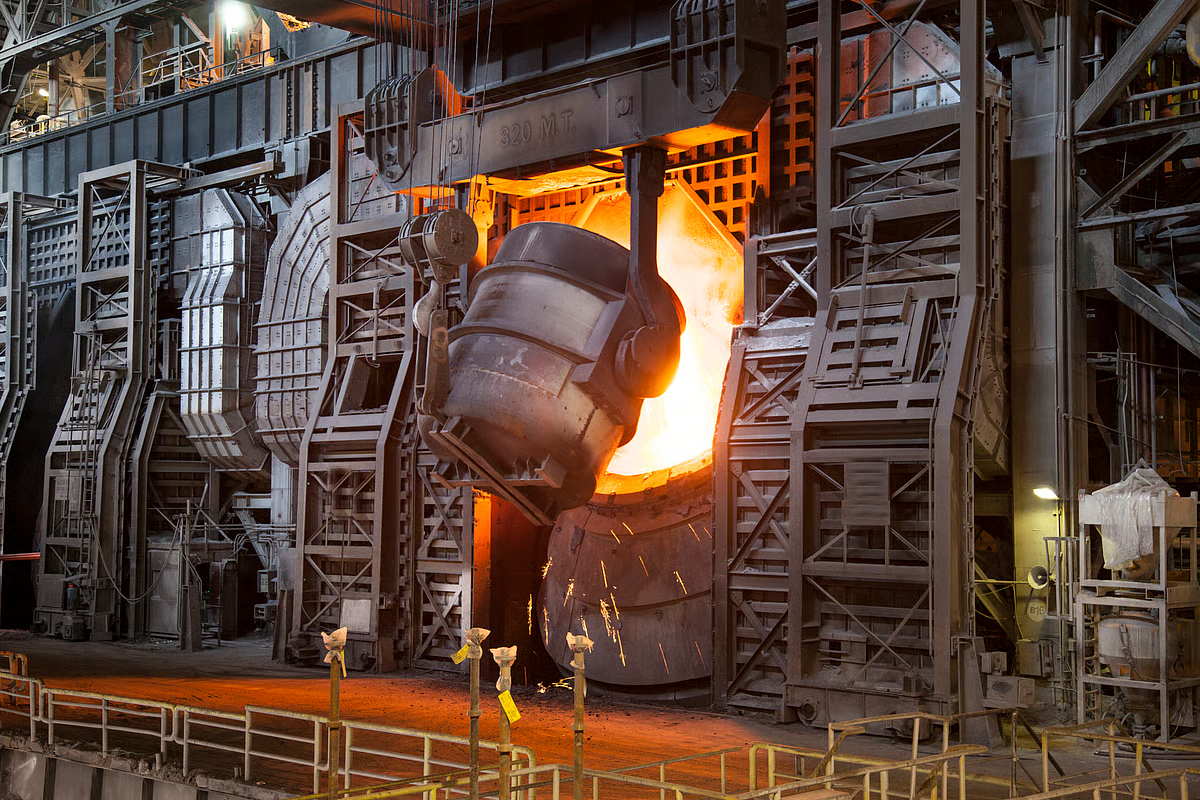
The main practical way to make green steel is through the Hydrogen-based Direct Reduced Iron (H-DRI) process combined with the Electric Arc Furnace (EAF) route. In H-DRI, hydrogen is used to reduce iron ore instead of coal to produce sponge iron. This greatly lowers carbon dioxide (CO₂) emissions.
In the EAF process, both sponge iron and scrap steel are melted, refined, and cast into crude steel. If the electricity needed for EAF comes from renewable energy sources, the carbon emissions can be reduced even further.
India already has enough EAF capacity for this method to work. The next step is to increase the use of renewable energy to power these furnaces.
In comparison, the traditional coal-based DRI-EAF route in India emits nearly 3 tonnes of CO₂ equivalent per tonne of crude steel (CO₂e/tcs). Using H-DRI along with renewable-powered EAF could reduce emissions by more than 95 per cent, bringing them to below 1 tonne CO₂e/tcs.
In traditional cement production, about 60-65 per cent of emissions come from a process known as calcination, in which limestone (CaCO₃) is heated to about 900 degrees Celsius. This produces lime (CaO) and CO₂. A further 30-35 per cent of emissions result from burning coal and 5-10 per cent from grid electricity use.
Unlike steel, eliminating these process emissions cannot simply be achieved by changing the fuel mix or introducing renewable energy. It requires altering the composition of cement through the addition of SCM. By reducing the proportion of lime, blended cements can cut the carbon footprint of cement by 20 per cent or more.
The Bureau of Indian Standards has now approved several types of blended cements, including the new calcined clay limestone cement , developed through laboratory testing with multiple Indian research institutions. This innovation significantly reduces emissions without compromising structural integrity.
The primary obstacle is what is known as the “green premium”, which is the difference in cost between environmentally friendly production methods and traditional ones. The green premium for steel is estimated to be around 20-40 per cent above the normal price of steel, while for cement it is much lower, typically around 5-15 per cent.
Although these premiums exist today, they are expected to decline over time as demand rises and production scales up. At present, however, demand for green steel and cement remains extremely small, almost non-existent. This is where the mandate of Green Public Procurement (GPP) becomes crucial.