There was a prominent spike shown on the Real-Time Snickometer technology used in Australia, but it appeared three or four frames before the ball passed Carey’s bottom edge. Chris Gaffaney, the TV umpire, said that the spike was “before the bat” and that the ball appeared to have “gone well under” the bat: “There’s a clear gap, no spike.”
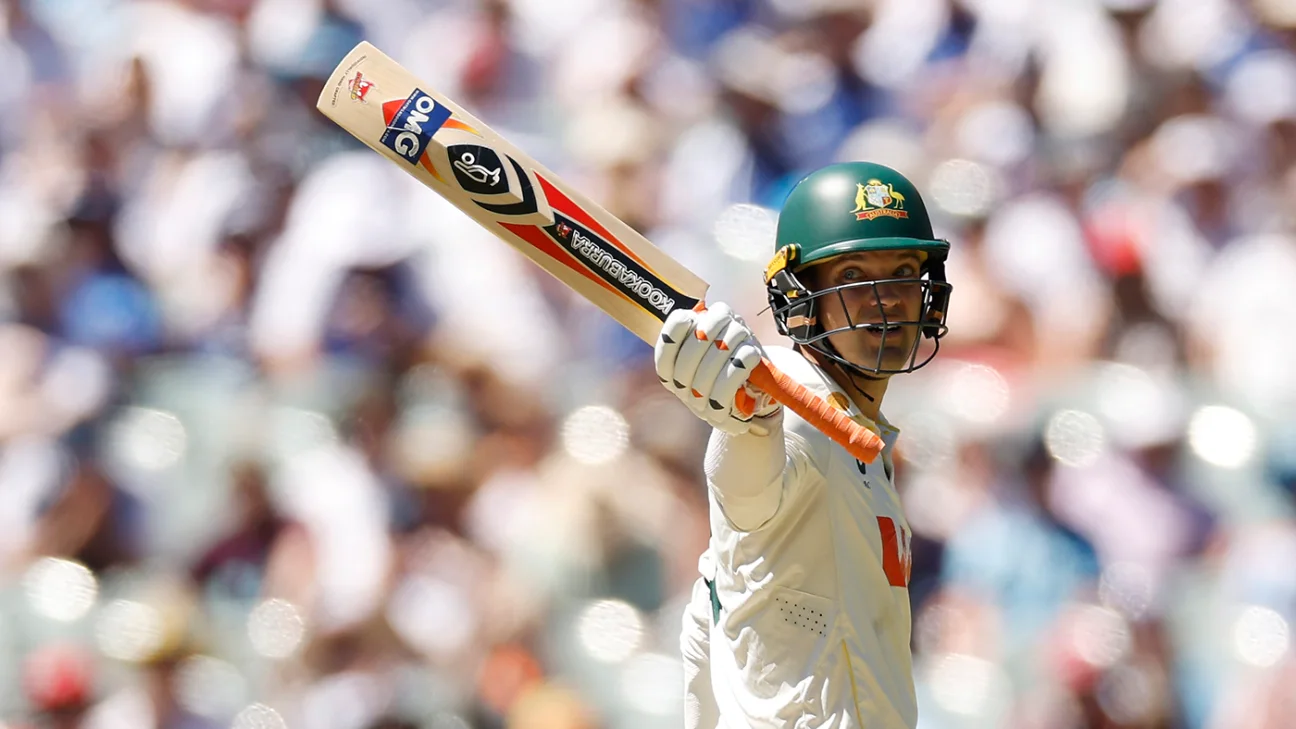
But Carey, who added a further 34 runs after his reprieve, suggested that he had hit it: “I thought there was a bit of a feather or some sort of noise when it passed the bat. It looked a bit funny on the replay, didn’t it, with the noise coming early? If I was given out, I think I would have reviewed it – probably not confidently though. It was a nice sound as it passed the bat, yeah.
Carey said that he was “clearly not” a ‘walker’, and added: “Snicko obviously didn’t line up, did it? That’s just the way cricket goes sometimes, isn’t it? You have a bit of luck, and maybe it went my way today.”
The ICC has two approved “sound-based edge detection technology” suppliers: Real-Time Snickometer (RTS), which is used in Australia, and UltraEdge, which is used in the rest of the world.
“The confusing element here for everyone was that the spike occurred at least a couple of frames before the bat, which was just amazing,” Taufel said. “I have never seen a spike like this occur without the bat hitting something like a pad, or the ground, or the ball hitting the pad.
“My gut tells me, from all of my experience on-field, and also as a TV umpire, that I think Alex Carey has actually hit that ball and the technology calibration hasn’t been quite right to game the outcome that it was looking for.”
“The boys were pretty confident he hit it,” Saker said at the close of play. “I think the calibration of the Snicko is out quite a bit, and that has probably been the case for the series. There’s been some things that don’t really measure up.
“At that stage, it was a pretty important decision. Those things hurt, but you get through it. In this day and age, you’d think the technology is good enough to pick things up like that.”
Saker added that England will consider making representations to Jeff Crowe, the match referee: “I don’t think we’ve done anything about it so far but after today, maybe that might go a bit further,” he said. “There have been concerns about it for the whole series. We shouldn’t be talking about this after a day’s play, it should just be better than that. It is what it is.”
“I thought there was a bit of a feather or some sort of noise when it passed the bat. It looked a bit funny on the replay, didn’t it, with the noise coming early?”
Alex Carey
According to the ICC’s playing conditions, the match referee has final oversight on the technology to be used in a given match, in consultation with the ICC technical official, ICC management, and the relevant national governing bodies (in this case, Cricket Australia and the ECB).
BBG Sports, the company that operates RTS, also supplies the Hot Spot technology that was once commonly used as part of the Decision Review System. But host broadcaster Fox Sports explained last year that it had been dropped after “constant criticism” and amid fears about its reliability in hot weather.
Saker said that the day was “pretty even”, adding: “It’d be nice to knock them over really quick in the morning and then bat very big. It’s pretty important our first innings is a big innings because I don’t think the wicket will get easier [at the] back of day four and five.”
Matt Roller is a senior correspondent at ESPNcricinfo. @mroller98