It is a centuries-old Japanese tradition, steeped in ceremony, with roots deep in the ancient faith of Shintoism … and it also happens to be super popular on TikTok.
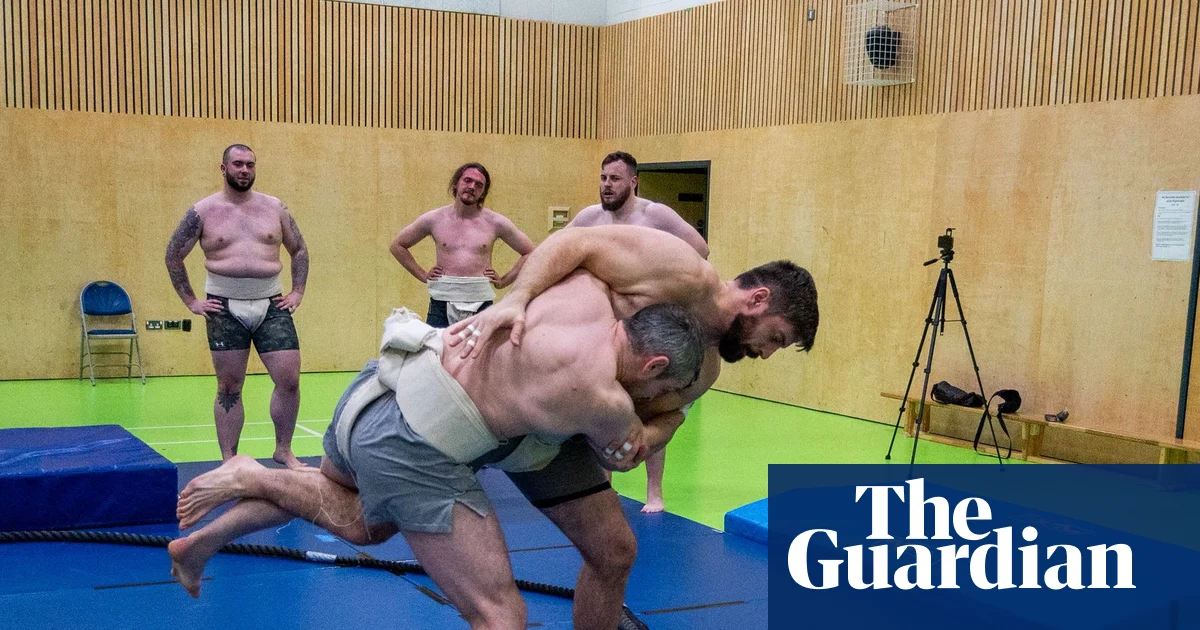
Sumo is finding a new audience in the UK and, not only that, many Britons are now donning a loincloth – or mawashi – and taking up the sport themselves. So much so, in fact, that amateur wrestlers from across the UK and Ireland are gearing up for the first ever British Isles Sumo Championships, due to be held in six weeks.
It comes after sumo’s elite professionals captured hearts in October when they visited from Japan for a grand tournament at the Royal Albert Hall in London. They were pictured wholesomely visiting Horse Guards Parade, enjoying Platform 9 ¾ at King’s Cross station and riding Lime bikes around London.
The competition, only the second time it has taken place outside Japan, sold out immediately and fans were treated to bouts from the most famous wrestlers in the sport. This included two grand champions – or yokozuna – Japan’s Ōnosato Daiki and his rival, the Mongolian Hōshōryū Tomokatsu.
“The last time the Grand Sumo [was] in the UK was 30 years ago and the same thing happened, it caused a little bit of sumo mania,” said Jonathan Templeton, who runs Sumo na hÉireann in Belfast, the first Irish club.
“I think social media probably is playing a part [too]. People who like, for example, boxing or UFC or something, their algorithm might start feeding in a little bit of sumo content and I think it’s maybe growing that way as well.”
Templeton, who began watching sumo when it was shown on Channel 4 in the 1990s, said: “It’s amazing. I watch a lot of sport, I watch a lot of martial arts and combat sports as well. And for me sumo’s the most fun to watch.
“It’s the most spectator friendly, because each match lasts roughly 10 seconds or less, so it’s very consumable. You don’t need to invest 90 minutes or 60 minutes, just 10 seconds. Maybe that’s something to do with the popularity, with the short form media generation, YouTube and TikTok. It’s very TikTok-able.”
The core of the sport is, in essence, “pushing somebody out of a circle”, Templeton said, though the moves themselves are complex and there are many ways to win.
The UK is beginning to produce some of its own talent – earlier this year 15-year-old Nicholas Tarasenko became only the second Briton to join the professional sport in Japan, after winning amateur tournaments and demonstrating a commitment to learning Japanese – and more amateurs than ever are getting in on the action too.
There has been a “huge increase in interest” over the past three years and even more so since the grand tournament, said Richard Riggs, the northern vice-president of the British Sumo Federation.
“In that time we’ve trained new coaches and opened new clubs across the country, with more planned for 2026 and beyond. People from all walks of life, shapes and sizes are wanting to give sumo a go because of its unique ethos, which is heavy in Japanese shinto tradition but also fast paced, technically intricate and a hard-hitting wrestling style.
“Sumo is probably one of the most inclusive martial arts and is open to anyone regardless of size, gender, background or ability,” he said.
The amateur competition is different from what we see on our screens. Firstly, there are weight classes, so anyone can compete with a similar-sized opponent.
Templeton said: “I would be 85kg, that’s lightweight, and it goes right up to anything over 115kg, which is heavyweight.”
This contrasts with the professional sport, where bigger is often better, leading to the enormous wrestlers that have come to be synonymous with sumo.
Also, unlike the professional league, where the only competitors are men, women are welcomed. “There’s no change in pace between the women’s matches and men’s matches. It’s just the exact same kind of pace, it’s fantastic,” Templeton said.
“Absolutely anyone can compete, but it is a very rough sport,” he warned. “If you’re there for a laugh and someone’s training for the next competition, you could find yourself getting thrown around.”
Templeton said work was under way to get sumo included in the Olympic programme, but he added: “Our overall goal is to change the perception of sumo from the fat guys and nappies kind of stereotype, to show people that it’s for everyone.”