- A new global assessment identifies freshwater migratory fish as one of the most threatened vertebrate groups.
- The report identifies the Ganga-Brahmaputra-Meghna systems as priority basins for conservation because they support important migratory fish populations but are under pressure from dams, altered flows and river fragmentation.
- The report discusses the need for basin-level and cross-border cooperation, including better monitoring and stronger coordination on harvest and river management.
Freshwater fishes are among the “most imperilled vertebrates”, according to a new global assessment prepared for the Convention on the Conservation of Migratory Species of Wild Animals (CMS), which lays the legal foundation for internationally coordinated conservation measures throughout a migratory range. The Global Assessment of Migratory Freshwater Fishes report 2025 notes that many migratory freshwater species are declining because of “loss of connectivity, flow alteration, habitat degradation, exploitation, pollution, and interacting pressures across borders.”
Out of 349 migratory freshwater fish that may qualify for protection under the CMS, only 24 are currently listed — leaving 325 still without legal protection, of which about 205 concentrated in Asia.
The report identifies the Ganga-Brahmaputra-Meghna river system as one of the priority regions, pointing to its “high biomass of migrants” and threats from “dams and hydropeaking”, marking it as a region where CMS cooperation is both “necessary and feasible.” For India, this warning comes at a time when rivers are already fragmented by dams, barrages and altered flows, raising questions about whether migratory fish and river-dependent communities are being adequately considered in river planning.
The Convention on the Conservation of Migratory Species of Wild Animals is a legally binding international treaty under the United Nations which provides a global platform for the conservation and sustainable use of migratory animals and their habitats. CMS brings together countries through which migratory animals pass or that have jurisdiction over a geographical area a migratory species inhabits, crosses, or overflies.
Transboundary rivers, fish, and pressures
The global report states that migratory freshwater fish are especially vulnerable because the pressures they face build up across entire river corridors. Their routes can stretch from hundreds to thousands of kilometres across jurisdictions, while barriers and flow alteration disrupt connectivity. While the different life stages of the fishes may depend on habitats from headwaters to estuaries and coastal waters, the recovery depends on restoring connectivity, improving water quality and environmental flows, and coordinating habitat and harvest measures across states and countries, the report notes.
Zeb Hogan, a fish biologist and the lead author of the report, said the Ganga-Brahmaputra-Meghna systems are “among South Asia’s great migration landscapes,” linking “the Himalayan headwaters, foothill rivers, floodplains, and estuaries to the Bay of Bengal.”
These rivers support “anadromous, potamodromous and catadromous fishes, including hilsa, mahseer, eels and large catfishes,” across India and neighbouring countries, Hogan said in an email response to Mongabay-India. “These rivers are particularly important because of hilsa. Hilsa is not just another migratory fish; it is one of the most economically and culturally important fishes in South Asia.”
Stressing on the need for basin-level cooperation, he added, “That is exactly why basin cooperation matters: the stock is shared, the migration pathway is shared, and the pressures are shared.”


Dams, barrages and broken migration routes
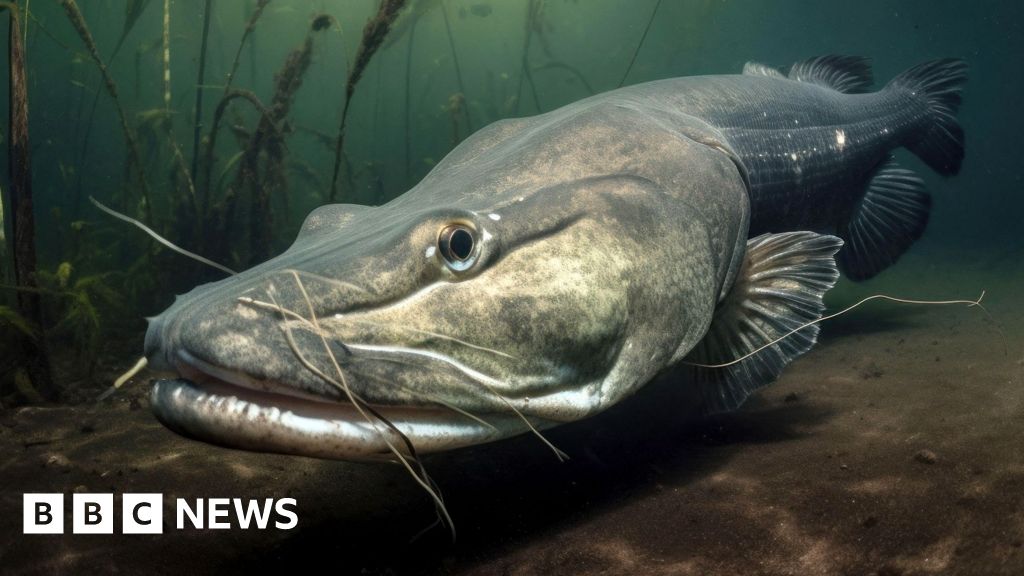
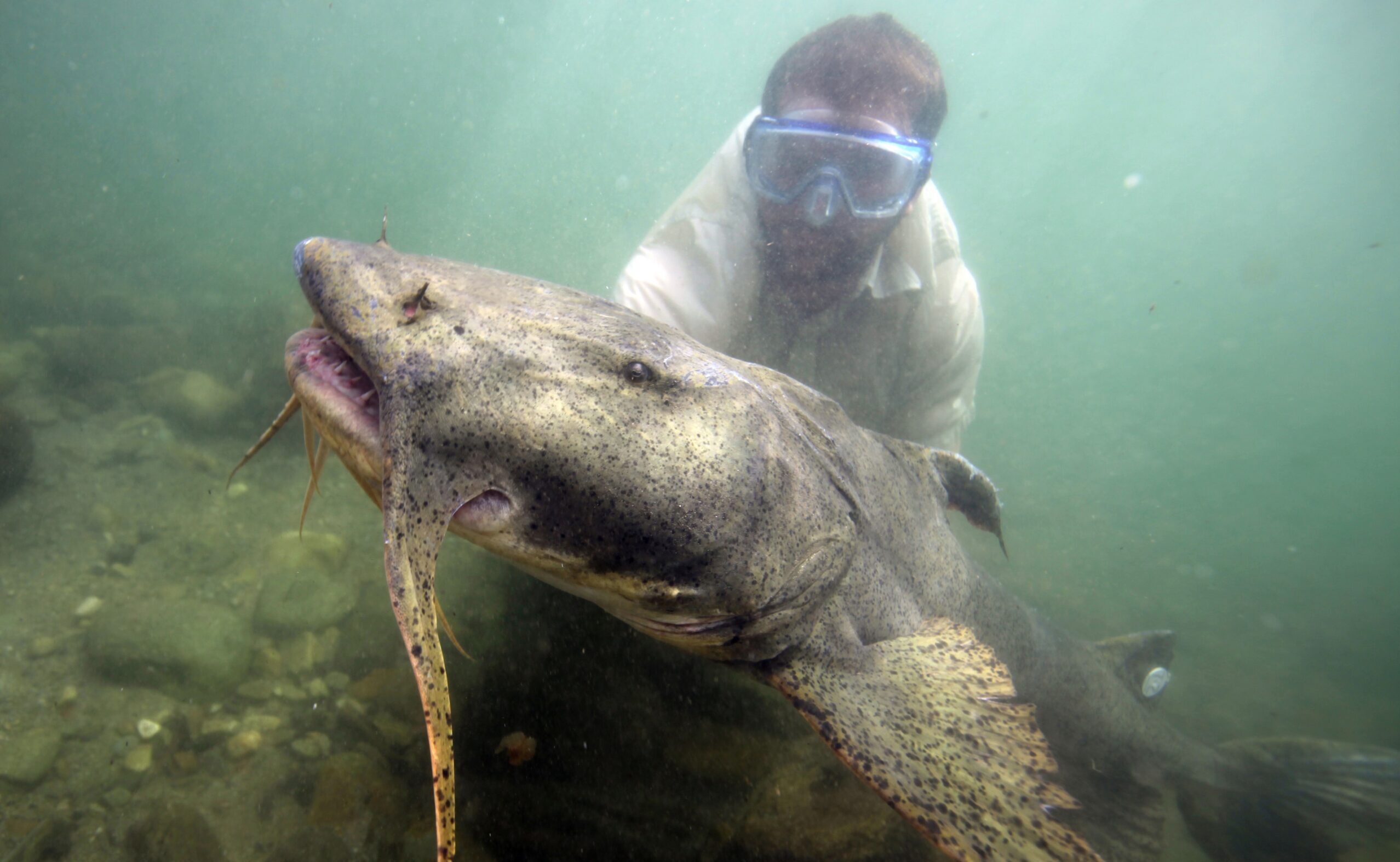
The report identifies several India-linked species of concern, including hilsa, golden mahseer, Indian mottled eel and goonch. Hogan said, “Dams, barrages, altered flows and habitat fragmentation are very serious threats for these species. For all four taxa, river connectivity is central to their life history and survival.” On hilsa, Hogan said dams and barrages can “physically block or delay runs, change flows, alter estuarine salinity structure, and concentrate fishing effort at bottlenecks.”
The report places these threats in a broader context. It states river fragmentation and altered flows caused by dams, weirs and withdrawals can block or delay migrations, reduce floodplain access and sediment transport, and homogenise flow regimes. It also calls for freshwater fish to be integrated into CMS work on ecological connectivity and infrastructure, including technical guidance on fish passage or screening and environmental flows tied to migration.
Himanshu Thakkar, a coordinator at the South Asia Network on Dams, Rivers and People, who is not associated with the report, said the issue is not limited to a few cross-border rivers. “CMS report is mainly for transboundary rivers, but what we are discussing applies to all rivers, not just transboundary rivers,” he told Mongabay-India. “Dams and barrages definitely have the biggest impact on riverine biodiversity, not just fisheries, actually, in a number of ways.”
Thakkar also noted that an impoundment, and how that impacts a river is a challenge. “In the upstream of the dam, the water is no longer flowing. Stagnant water for large stretches of the river, and there are many days downstream of the river, there is no water,” he added.

Environmental flows remain weak
While noting that environmental flows in India are not understood well, Thakkar argues, “India’s regime of environmental flows is very, very poor.” Even where some water is released, he said, it often does not help fish or biodiversity move up and down the river.
“One of the key aspects of that environment flow is to ensure continuity of water flow for the biodiversity, but the environment flow, even when it is released, it’s not released in a way that will help the fish and the biodiversity to migrate up and down,” he said.
“Environment flows are not just water,” he said. “The river flow includes the silt flow, the nutrient flow and the biota flow.” These factors have implications for river management. Thakkar said structures such as fish passes and fish ladders are important where dams interrupt migration routes, but they are rare in India.
“You need something called fish pass, or fish ladder, or something like that, which are hardly there in four or five dams in India, and even where they are there, we have done surveys, and it seems none of them are functioning properly,” he said.
Pointing to the Farakka barrage on the Ganga as a key example, Thakkar said, “Farakka is supposed to have a fish pass, actually, but it’s not functioning,” he said. Hilsa once travelled much farther upstream, including to Kanpur, Allahabad, Varanasi and tributaries in Bihar, he said.
According to Thakkar, the first gap is not technical but institutional. “Step one is to acknowledge that the dams and barrages have an impact. The second step is to assess the impact. The third, is to see what are the possible options available for ensuring continued migration,” he said. Those options, he said, could include fish passes, fish ladders and environmental flows. But in some cases, he added, retrofitting may not be realistic because dams are too high. In such situations, he said, environmental flows should at least be mandated in an environmentally-friendly way.

Fish fall through policy gaps
Discussing the institutional challenges, Hogan noted, “Freshwater fish remain under-recognised in river management. Water management and hydropower often take priority over biodiversity and food security.”
“Migratory fish still tend to fall between the cracks,” he said, because their management is “not usually captured in water infrastructure planning, nor the focus of biodiversity policy, or the focus of transboundary diplomacy.”
He also pointed to gaps in data. “There are many local studies, but not enough coordinated basin-scale monitoring across borders,” he said.
The CMS report also notes that many tropical systems still lack strong documentation of migratory freshwater fish. Cross-border management will require multiple sources of evidence, including telemetry, genetics, basin inventories, and expert or local knowledge.
Thakkar also argued from the perspective of river governance and livelihoods in India. “No project has ever assessed the impact of the dam or the hydropower project or such barriers on livelihoods,” he said. Once the impacts are properly measured, it becomes possible to ask what the actual losses are and whether compensation, rehabilitation or mitigation are needed, he added.
Pointing to the Narmada river as an example of how these impacts extend beyond the structure itself, Thakkar said, “The Sardar Sarovar project did not even assess the downstream impacts. At least 10,000 fisherfolk families lost their livelihoods in the Narmada estuary.”
“There are 55 transboundary rivers between India and Bangladesh,” he said, adding that similar questions arise for rivers shared with Bhutan, Nepal, China, Pakistan and Myanmar.
He noted that existing transboundary mechanisms remain too narrow in scope. “All of these bodies only look at the water issue,” he said. Sometimes, he added, they also look at floods. “But in terms of the impact on the transboundary fish and transboundary livelihoods or such other impacts, there hasn’t been much (research).”

Cooperation on river-altering projects
The CMS report discusses international cooperation as a key part of protecting migratory freshwater fish. Hogan said the Ganga-Brahmaputra-Meghna systems are priority basins because they “hold major shared stocks of migratory fishes, connect estuaries to floodplains and headwaters across borders, and are also among the most fragmented and flow-regulated river systems in South Asia.”
The report calls for coordination across borders. “Near-term actions could include shared stock monitoring, coordinated seasonal restrictions in key stretches, and joint evaluation of the impacts of water and flow management on these species,” Hogan said.
Thakkar added that the first response should be built into law and project clearance systems. “It should be mandatory legally, that if any dam comes up, any obstruction comes up, or any project comes up, which affects the riverine fish, then there should be impact assessment, both environmental impact assessment and social impact assessment,” he said.
He also pointed to the need for closer scrutiny of existing projects and river regulations. He said Farakka should be independently reviewed, and argued that the Ganga’s environmental-flow notification should be monitored by an independent body rather than government agencies alone.
Calling for a similar approach in all river-altering projects as well, Thakkar said, “Every such project which has an impact on the riverine fisheries and riverine fisher people, there should be an assessment first step, first impact assessment and then mitigation about what needs to be done about the impacts.”
Read more: Global trade in ornamental freshwater fish drives invasion and conservation challenges [Commentary]
Banner image: A goonch catfish. Image by Zeb Hogan.