Types of mines
The mines most people picture, like those seen in films such as “,” are floating spheres tethered to the seabed, with small protrusions called Hertz horns that trigger the mine when it makes contact with a ship. These are called .
In the film, characters use a small wooden boat to sweep mines without triggering them because the mines responded to a metal-hulled ship’s magnetic field. Detecting magnetic fields is characteristic of , which respond to a ship’s magnetic, acoustic or pressure signature, as opposed to simple contact mines that detonate when ships run into them.
Modern mines typically combine multiple sensing modes. Some are designed to detonate only , allowing them to ignore smaller vessels or minesweeping attempts and target higher-value ships. Examples include the Iranian , which uses both magnetic and acoustic sensors.
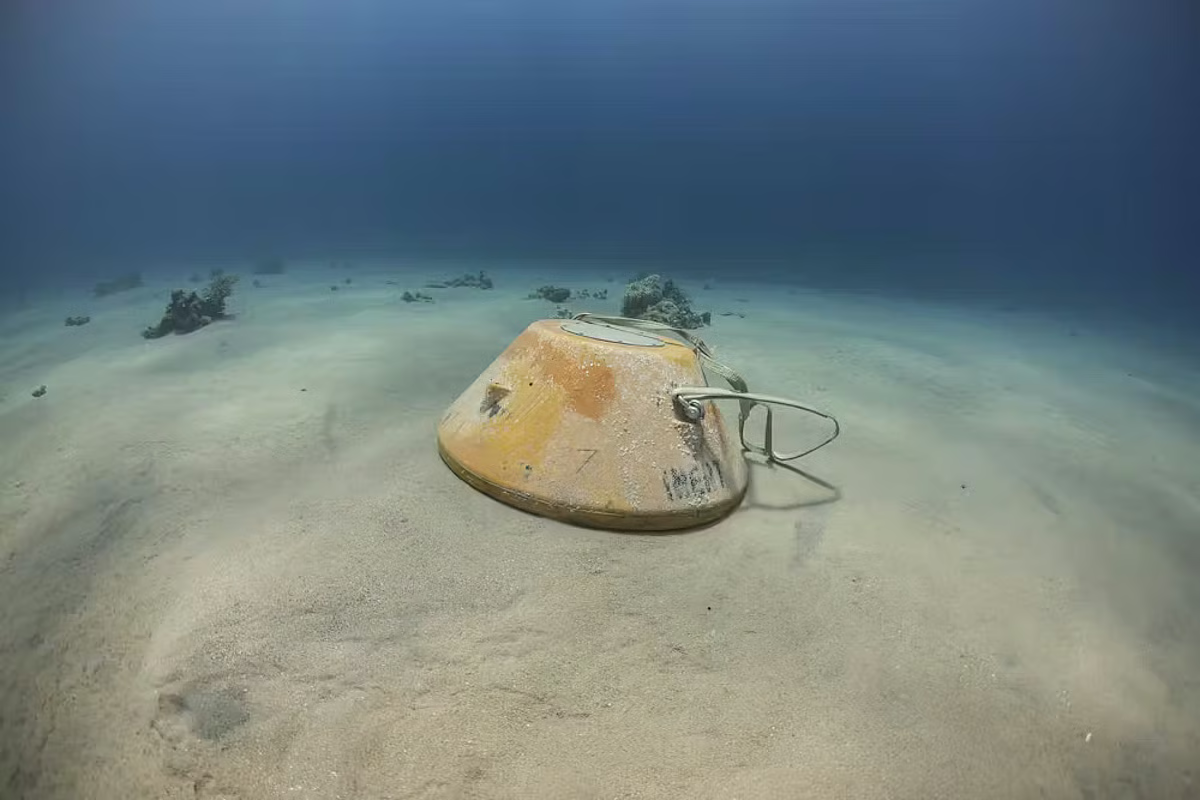
Not all mines float. Many modern mines instead sit on the seabed. These mines are most effective in shallow water, where ships pass closer to the seabed. Some bottom mines sit exposed on the seabed, while others are partially or completely buried in sediment. Examples include the Iranian and the , a low-profile bottom mine used by Iraq during the 1991 Gulf War. These mines can be deployed by small vessels or laid from aircraft, making them relatively easy to place. They are triggered when they sense a ship passing overhead.
Many modern mines are cylindrical or torpedo-shaped, allowing them to be deployed from aircraft or submarines and descend in a controlled way before settling on the seabed. More advanced designs include so-called , which sit on the seabed and launch upward toward a target once it is detected.