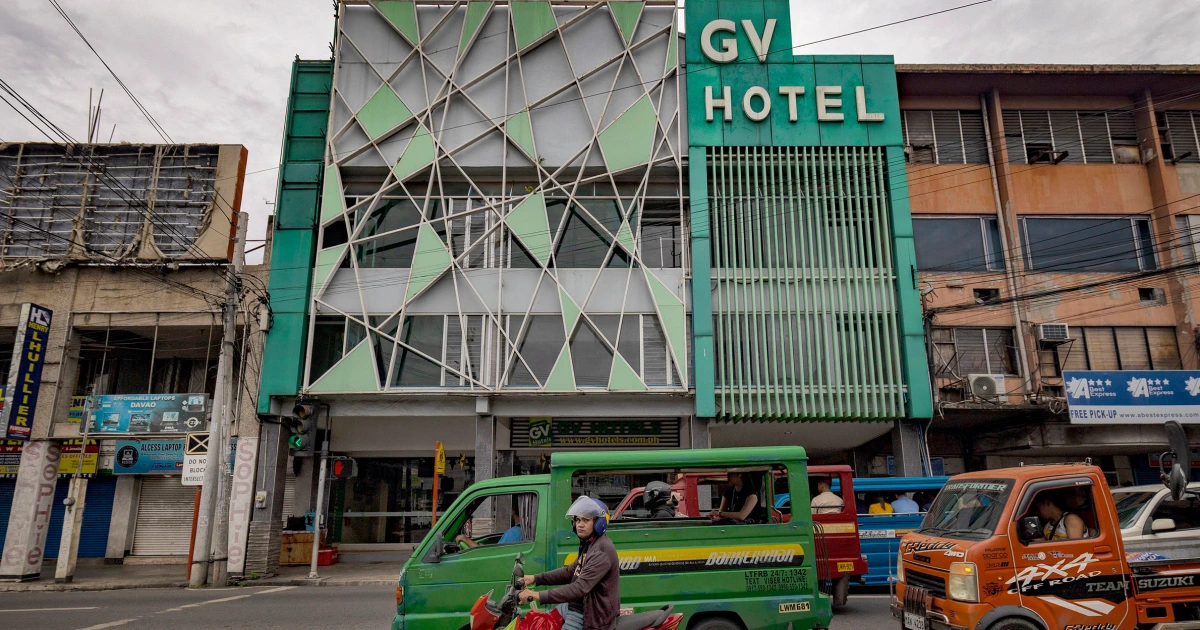
Officials have offered few details about the trip.
New South Wales police said the pair’s travel hadn’t triggered any security alerts, though Australian counterterrorism officials confirmed they had investigated the son for six months in 2019 over potential extremist associations.
Officials in the Philippines say there is no evidence the pair received military-style training during their November trip, and have vehemently rejected suggestions their country is a hot bed for terrorism.
“A mere visit does not support allegations of terrorist training and the duration of their stay would not have allowed for any meaningful or structured training,” national security adviser Eduardo Año said Wednesday.
Pockets of extremism remain, experts say
Though terrorism has declined massively in the predominantly Catholic country, especially since a sweeping anti-terror law passed by then-President Rodrigo Duterte in 2020, dozens of fighters supporting ISIS ideology remain fragmented around Mindanao, experts say.
“Just because the insurgency has gone away doesn’t mean that these hundreds of Islamic State true believers have gone away,” said Greg Barton, the chair of global Islamic politics at Deakin University in Australia.
Mindanao was colonized by the Spanish, the United States and Filipino Christian settlers, reducing its Muslim majority population to a minority. In recent decades, the resource-rich area has suffered from violence that killed about 150,000 people, with bloody battles over land and political power.
Mindanao also became a stronghold for radical Islamist groups, who during the late 1980s and ’90s pledged their allegiance to Al Qaeda. As Al Qaeda was stamped out, many remaining fighters turned their allegiance to ISIS.