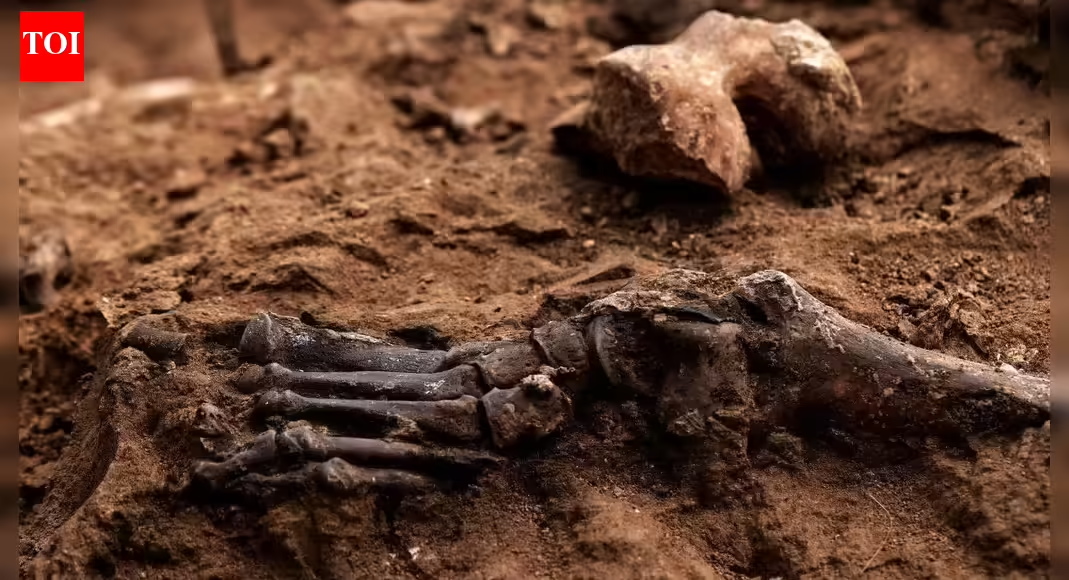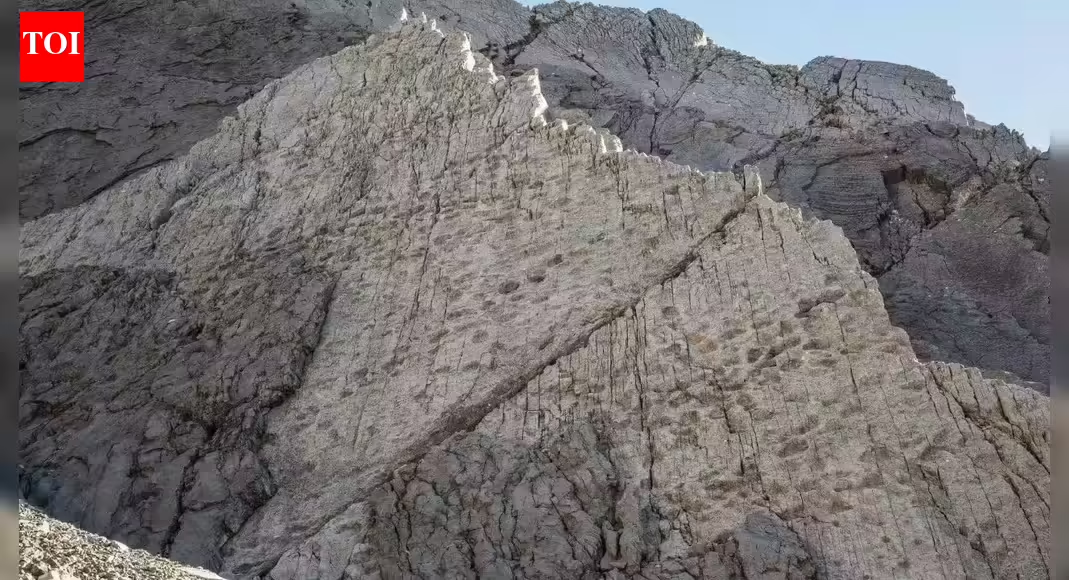
In the north of Italy, high up on a rocky cliff face, a casual observation has revealed one of the greatest discoveries of dinosaur tracks on the European continent. It all began when a wildlife photographer went up into the mountains looking for images of deer and vultures. Instead, he discovered the wakes of life from 210 million years ago. Carved into the rock face in the Stelvio National Park are thousands of dinosaur wakes from the Late Triassic period. It is a phenomenal find not only because of the number of wakes but also the information they hold about how these prehistoric creatures lived. Researchers think the wakes depict the quiet flow of the dinosaurs together, possibly in a group.
Triassic dinosaur footprints discovered in Italy’s Stelvio National Park
The footprints were unearthed by a wildlife photographer named Elio Della Ferrera while he was working in the mountain ranges near Bormio, close to the border with Switzerland. In September, while taking pictures of wildlife at a distant point, his camera’s lens pointed at a vertical rock wall at a height of 600 meters above the road. Something peculiar caught his eye. It took some strenuous climbing to reach the point; however, his findings surprised him beyond measure. Thousands of ancient footprints can be noticed in the rock face. This region was declared a component of Stelvio National Park, but had no record of any dinosaur footprints in the past.It is estimated by palaeontologists that there are as many as 20,000 footprints, covering an area of approximately five kilometres. According to palaeontologists of Milan’s Natural History Museum, this is one of the largest recorded numbers of dinosaur footprints dating to the Triassic period. The original landscape was coastal, which was quite different from the Alpine landscape of today. The ground had risen due to geological processes, marking an occurrence of millions of years, to retain footprints so effectively. The footprints are up to 40 centimetres in width, and scratch markings of claws can also be seen.
What the dinosaur tracks reveal about Triassic behaviour and group movement
The trails have been attributed to large, long-necked herbivorous dinosaurs similar to Plateosaurus. The species was biped, measuring a maximum of ten metres long, and weighing a maximum of four tonnes. The length and stride of the species are uniform across the trail, implying that the species that tread across the trail were the same. The uniformity of the trails also implies that the species trod the trail at a calm pace, hence providing critical information regarding the behaviour and environment of the species.One of the most interesting parts of the discovery is the way in which it reveals the life patterns of the dinosaurs. Biologists have found clues that suggest that the creatures moved in packs. In certain parts of the fossil site, the creature tracks are found in circular patterns. This might suggest that the dinosaurs came together at times, which could have been the case if they were reacting defensively or if they were taking the chance to rest. This type of definitive evidence is very uncommon.A restricted-access hidden site. The footprints are found on a north-facing rock wall between 2,400 and 2,800 meters above sea level. It is a relatively shaded area, which has led to its continued existence without notice despite its plain visibility. While it has been welcomed as a symbolic gift to Italy before the 2026 Milan Cortina Winter Olympics, it is not likely that it will open to tourism anytime soon. The location is quite far and dangerous, especially during winter.