Not only professional investors, but also beginners who focus on so-called “safe” investments must deal, day after day, with the risks associated with this sector.
Price swings, market fluctuations, capital risk, inflation risk, liquidity risk: the numbers of dangers to contend with is considerable and trying to eliminate them is not only impossible, but also counterproductive. It’s worth remembering that the level of risk is always directly proportional to potential returns: as one increases, so does the other. On the other hand, however, investment risks can lead to missing financial goals, suffering substantial capital losses and experiencing strong negative emotional reactions.
For these very reasons, before investing, it’s always recommended to define – ideally with the support of authorised professional – the level of risk you can handle, both emotionally and financially, without serious consequences. Even when you build your portfolio with Moneyfarm, and therefore with industry experts, you still need to take all these aspects into account. It’s also helpful to understand the real impact that short-term and long-term risks have on investments.
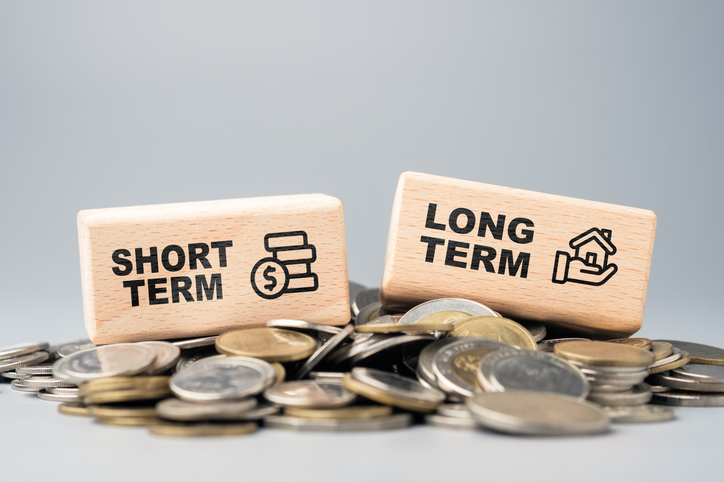
Beginners often tend to focus more on short-term risks, which are usually more visible and immediately felt, rather than on long-term risks, which unfold gradually and are harder to interpret. Below, we’ll explore – without technical jargon – how people perceive short- and long-term risks and how to keep judgements errors under control.
Short-term risks: the emotional impact
Financial news outlets, trading apps with real-time updates and market trends available online with just few clicks: all these tools allow even non-professional investors to stay informed about price movements and market fluctuations. While this may seem advantageous – helpful for keeping investments under control and making well-informed decisions – it can also trigger anxiety, fear and impulsive reaction.
Of course, not everyone panics when faced with a sudden drop in market values, rushing to close open positions and sell their holdings. This behaviour is more common among those who are naturally predisposed to it, or more generally, among people who have not properly assessed the level of risk suitable for their investment profile. In such cases, the typical short-term volatility is perceived as a genuine threat and the decline in portfolio value is seen as permanent and catastrophic – enough to cause panic and prompt irrational decisions. Overwhelmed by the emotion of the moment, predisposed individuals may end up selling their assets at the worst possible time, turning a potential loss into a real one.
How long-term risks are perceived
While short-term risks – easy to spot and monitor – tend to generate anxiety and stress, leading to impulsive actions, long-term risks often remain invisible to non-experts and therefore receive far less attention.
Long-term risks, including inflation or missed opportunities, often work quietly in the background and have and effect that is both less visible and slower to emerge. Capital can slowly be eroded, for instance by a decline in purchasing power which, even if it doesn’t reduce the nominal value of invested capital, limits the assets one can buy and the portfolio’s growth potential. All of this allows investors to sleep soundly, unaware of potential losses, which may sometimes also stem from underperformance.
Short- and long-term risks: how to evaluate them properly
Understanding risks and learning to assess it objectively is not easy, especially for beginners. To avoid mistakes that might, on the one hand, lead to excessive stress and risky transactions and, on the other, result in overlooking important issues, it’s wise not to become obsessed with minor price fluctuations.
Rather than checking the performance of shares, bonds and ETFs in the portfolio all the time, it can be helpful to rely on industry experts and turn to them for ongoing guidance on which assets to buy or sell, the timing of transactions and the appropriate attitude to adopt in the face of sudden swings or rising inflation.
Naturally, as already pointed out, it is equally important to carefully define your risk profile. This should take into account not only financial goals but also personal and family financial stability, available resources, emotional resilience and the ability to withstand small or significant financial losses.
Finally, it is always wise not to be caught unprepared. Reading articles and books on investment risks can help build a useful base of knowledge to better understand the real dangers one may face when investing, both in the short and long term.
Disclaimer: This article contains sponsored marketing content. It is intended for promotional purposes and should not be considered as an endorsement or recommendation by our website. Readers are encouraged to conduct their own research and exercise their own judgment before making any decisions based on the information provided in this article.