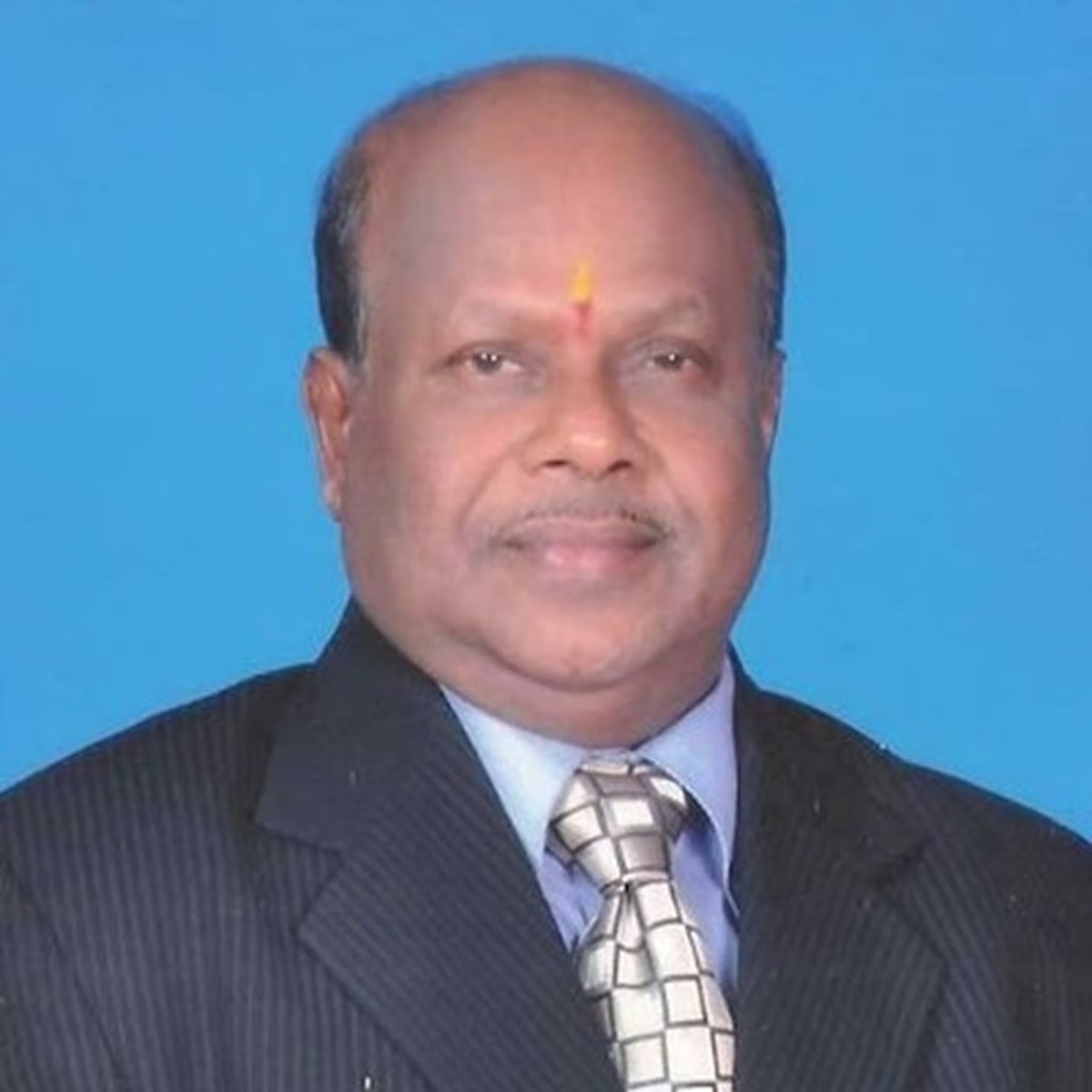
The first time I met Palpu Pushpangadan was when he was the director of the National Botanical Research Institute (NBRI) in Lucknow. It was in the early 2000s, and he was full of energy as he displayed the herbal products NBRI was preparing at the time. There was a wine prepared from mangoes, lipsticks based on Ayurvedic herbs and so many more things. He was sure that these would soon become popular.
At that time, the line that Down To Earth had carried in its 1998 cover story had flashed through my mind: “Pushpangadan is a pushy seller of ideas”.
He was. His work with a medicinal plant found in the Western Ghats is the first and the most cited example of access and benefit sharing.
This is one of the three pillars of the Convention on Biological Diversity that was adopted in 1992. This principle mandates that benefits earned from biodiversity should be shared equitably with the communities that have protected it and hold the knowledge about its use.
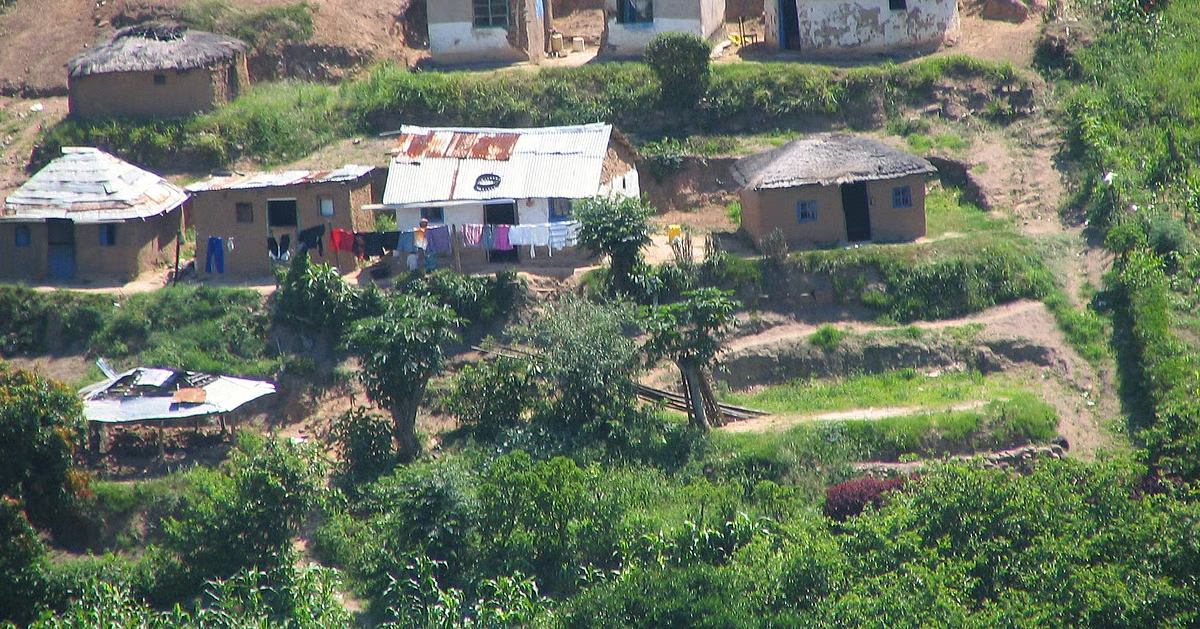
Here’s what happened: Pushpangadan and his colleague S Rajasekharan had gone to the forests of Agastya hills in Thiruvananthapuram in 1987 to document the biodiversity of the area. Their local guides from the Kani tribe offered them the fruit of a plant to fight tiredness. As they ate the berries, the scientists felt an instant surge of energy. This plant was arogyapacha (Trichopus zeylanicus) and the tribe used it to increase immunity and treat a variety of diseases.
The researchers used the plant to prepare a tonic called Jeevani, and in November 1995, as director of Tropical Botanic Garden and Research Institute (TBGRI), Pushpangadan sold the rights of the drug to Arya Vaidya Pharmacy (AVP) of Coimbatore for a licence fee of Rs 10 lakh to produce the drug for seven years. This licence fee and a royalty of 2 per cent on the profits from the sale of the drug was to be shared equally by TBGRI and the Kani tribe. This was an unprecedented win for the tribals. Members of the tribe won the Equator Initiative Award in 2002 for this benefit sharing model. Over the last three decades or so, the Kani experiment has failed as the tribals could not access the plant from the reserve forest.
Pushpangadan served as the director of the TBGRI in Kerala, NBRI, Lucknow and Rajiv Gandhi Centre for Biotechnology, Thiruvananthapuram. He also served as the Director General at Amity Institute for Herbal and Biotech Products Development, Thiruvananthapuram post-retirement. He was a fellow of the National Academy of Sciences, India and National Academy of Agricultural Sciences. He was awarded the Padma Shri by the Government of India in 2010.
He has written articles for Centre for Science and Environment’s First Food series of books and his enthusiasm for each of the articles was infectious. My interactions with him were always full of learning and laughter and he will be missed. He passed away on December 19, 2025, due to age-related medical issues. He was 81.