- India’s agricultural price support system, built during the Green Revolution to maximise grain output, has never recognised the ecological functions that farms perform.
- Guaranteed procurement prices and subsidised inputs have kept much of North India in rice-wheat cycles. These cycles reduce soil organic matter, drain aquifers, and simplify the biological communities that help control pests and support pollination.
- Crop diversification, now central to government strategy, will not reduce ecological risk unless the biophysical processes that underpin long-term productivity are recognised and supported alongside income measures.
- The views in the commentary are those of the authors.
A farm that rebuilds soil carbon, supports pollinators, and conserves groundwater is treated no differently from one that depletes all three.
In India’s agricultural economy, this is not a failure of awareness. Rather, ecosystem services have entered the vocabulary of agricultural policy, as in the National Mission for Sustainable Agriculture (NMSA), launched under the National Action Plan on Climate Change, which explicitly frames soil health, water-use efficiency, and biodiversity conservation as agricultural priorities. The NITI Aayog’s strategy documents for doubling farmer income reference ecological sustainability. The PM-PRANAM scheme, introduced in 2023, acknowledges that chemical input reduction has landscape-level value worth incentivising.
It is a failure of institutional design: the mechanisms that actually determine farm income have never been revised to reflect what policy language now routinely acknowledges.
The MSP system began in 1966-67 during the Green Revolution, aiming to stabilise grain output when food was scarce. It worked. Over time, it grew to include 23 mandated crops. However, India built pricing around output and input costs only, so the system measures quantity produced, not how it is produced. To calculate MSP, the Commission for Agricultural Costs and Prices (CACP) uses A2 (direct cost borne by the farmer), A2+FL (family labour), or C2 (A2+FL+rented value of owned land). But it does not consider ecological outcomes, positive or negative.
Ecological processes like soil formation, water regulation, pollination, and pest control support every harvest. They are not side effects of farming — they are its foundation. Yet, they are missing from MSP, procurement, or farm income calculations. This system ignores ecology on purpose, since it was created for a different challenge and never updated.
The invisible balance sheet
Soil organic carbon is one of the most consequential variables in dryland and rainfed farming. It affects water retention, root development, and yield stability under drought. Fields with higher organic matter recover faster after moisture stress and require fewer external inputs to sustain productivity across seasons.
In North India’s rice-wheat belt, the MSP has consistently rewarded output over soil quality. Growing paddy on poorly drained soils, encouraged by guaranteed procurement, has lowered soil organic carbon in Punjab and Haryana.
India has no national system for tracking soil carbon change at the farm or landscape scale in a form that could be linked to price or support mechanisms.
Similarly, the depletion of groundwater in Punjab is well documented. Between 2000 and 2019, groundwater depletion in Punjab averaged 8.91 m, with Barnala district recording the steepest decline of 20.38 m. The share of the state with a water table deeper than 10 m expanded from 24.35% in 2000 to 79.04% in 2017, signalling a shift of most of the state into the critical category for aquifer sustainability.
MSP for paddy, combined with subsidized electricity for groundwater extraction, effectively decouples water use from cost. Farmers face no price signal to moderate extraction, and the incentive structure points consistently toward maximizing planted area and yield.
A 2024 study found that MSP-backed rice procurement may account for around 50% of the decline in the groundwater table in Punjab. Institutional choices, made and maintained without ecological accounting, are depleting the aquifer.

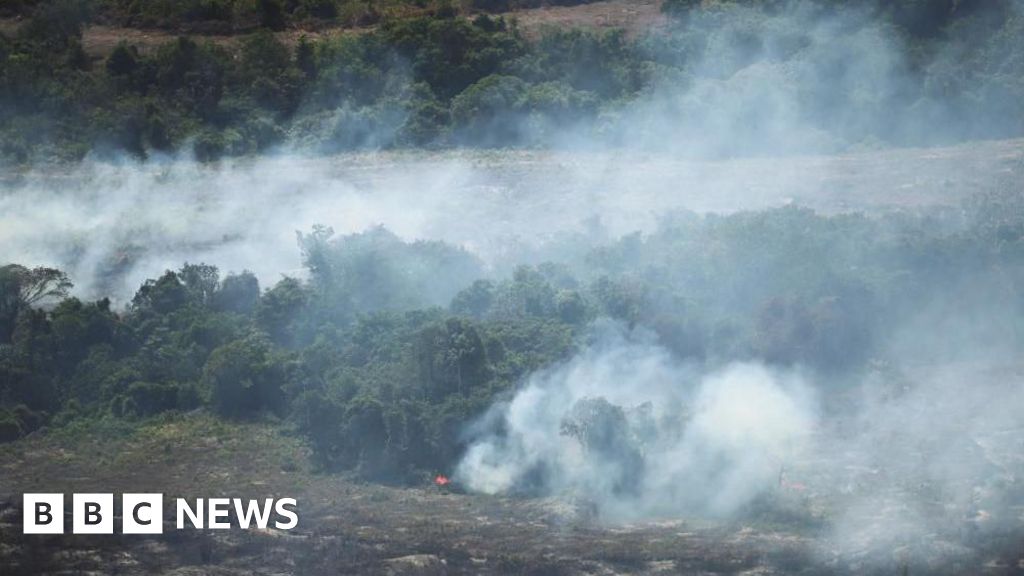
The same price architecture that drives groundwater depletion also determines how farmers manage crop residue at harvest. PUSA 44, a long-duration paddy variety that became dominant across Punjab partly because its higher yields translated into better MSP realization, leaves a narrow window between paddy harvest and the wheat sowing deadline. When there is insufficient time for mechanical incorporation or field decomposition, in-situ burning becomes the default. Estimates place annual paddy straw burning in Punjab alone at roughly 20 million tonnes, with substantial additional burning in Haryana and western Uttar Pradesh, releasing particulate matter, black carbon, and nitrous oxides at levels with documented effects on regional air quality and long-term soil organic carbon.
Pest regulation is an ecosystem service provided by predators like birds, reptiles, amphibians, and arthropods, which reduce pest populations. This service is not bought or measured. It works only if farm landscapes have enough biological diversity and structure to support these predators.
Monocropping at scale, sustained by price incentives that consistently reward a narrow set of crops, simplifies agricultural landscapes. It reduces structural heterogeneity, eliminates refuges for predator populations, and creates conditions that favour pest outbreaks. The chemical response to those outbreaks further disrupts the biological communities that would otherwise deliver control.
Pollination services follow the same logic. The contraction of floral diversity in intensively farmed landscapes reduces pollinator abundance and foraging range. For crops dependent on insect pollination, including vegetables, pulses, oilseeds, and fruits, this is a direct constraint on yield stability.
Read more: Roadsides, farms may shelter native bees in the northwestern Himalayas
What valuing ecological functions actually requires
Though ecosystem services in agricultural policy are present throughout India’s policy vocabulary, the challenge is institutional: translating acknowledged principles into measurement systems, inter-ministerial protocols, and payment architectures that do not yet exist.
The first is measurement. Soil carbon stocks, pollinator abundance, and pest suppression rates all vary across farms, seasons, and landscapes. Measuring them at a scale and frequency that could support any incentive or support system requires monitoring infrastructure that does not currently exist in India. Remote sensing can detect vegetation cover and broad surface conditions, but it cannot replace ground-level biological assessment. The gap between landscape-level signals and farm-level ecological outcomes is wide and largely unresolved.

The second is verification. Any outcome-based system needs independent proof that the ecological outcome has actually happened. India’s agriculture and environment ministries do not share data, monitor in the same way, or have matching goals. This makes scaling up difficult. India currently lacks a coordinated, farm-scale system that links ecological outcome measurement to farmer support mechanisms.
The third is the risk of simplification. Incentive systems built around a single, most-discussed measurable indicator, such as soil carbon, can inadvertently undermine other ecological functions. A farming system optimised for one visible metric may not maintain the broader biological complexity that simultaneously delivers pest control, pollination, and hydrological regulation.
A further risk, specific to contexts where ecological language has already been adopted, is tokenism: the incorporation of ecosystem service terminology into policy documents without any corresponding investment in the monitoring infrastructure or in the redesign of incentives that implementation would require. India is currently in this position. The concepts are named; the systems to act on them have not been built.
From acknowledgment to architecture
The institutional obstacles documented above are real. They are, however, not permanent features of the policy landscape. Three entry points within current frameworks could begin translating acknowledged principles into operational mechanisms without waiting for comprehensive institutional redesign.
The first is a tiered MSP premium for organic and low-external-input cultivation. Currently, farmers growing certified organic or conservation-agriculture-compliant crops — such as pulses, millets, and oilseeds — receive the same MSP as those using synthetic inputs where procurement occurs, and no guaranteed organic premium in open-market transactions, even though they produce better soil health, reduce nitrate leaching, and lower pesticide loads across watersheds. A premium of 10–20% for verifiably organic produce, tied to the Participatory Guarantee Systems (PGS) — a peer-reviewed, low-cost organic certification framework operated under the Ministry of Agriculture under the Paramparagat Krishi Vikas Yojana (PKVY), would recognise this ecological work without new institutions. The PGS framework already includes thousands of farmer groups in India and uses peer verification, which could be adapted for MSP premium eligibility at low administrative cost.

The second is embedding the logic of payment for ecosystem services (PES) into the CACP’s cost-of-production methodology. The commission reviews MSP parameters annually; no legislative change would be required to add an ecological performance component that draws on soil health card data, Central Ground Water Board monitoring records, and verified residue management practices at the district level.
India’s Carbon Credit Trading Scheme (CCTS), notified in 2023, already creates a regulatory pathway for valuing verified emissions reductions in agriculture. Linking CCTS credits to MSP bonuses for farmers adopting shorter-duration varieties, reducing chemical inputs, or maintaining documented groundwater discipline would align two existing instruments rather than constructing new architecture from scratch. The example of stubble burning in Punjab is illustrative: the ecological service delivered by a farmer who avoids burning and incorporates residue is real, measurable, and currently uncompensated. A PES-linked MSP differential is among the most direct mechanisms available to correct that.
The third is designating a subset of PKVY-enrolled districts as PES pilot zones with dedicated, non-divertible budget allocations to measure, verify, and compensate ecological outcomes. Both PKVY and PM-PRANAM acknowledge that ecological practice has value beyond the farm gate; neither currently connects that acknowledgment to the price system farmers engage with daily. An explicit mandate to share data among the Ministry of Agriculture, the Central Ground Water Board, and the Ministry of Environment, Forests, and Climate Change would establish the monitoring baseline these pilots require.
In India’s agricultural policy environment, demonstrable district-scale precedent has historically been the precondition for national reform, as seen in the Soil Health Card scheme, which was piloted in selected districts under NMSA before its 2015 national rollout, and the Price Deficiency Payment component of PM-AASHA, which was piloted in Madhya Pradesh as Bhavantar Bhugtan Yojana before being adapted for wider application. The precedent set by the Price Deficiency Payment Scheme (PDPS), introduced in October 2017 for eight kharif crops, shows that it is administratively feasible to compensate farmers for the gap between market prices and MSP — even with challenges such as mandi-level price manipulation. This same underlying logic can be extended to pilot Payments for Ecosystem Services (PES), where farmers are compensated for ecological outcomes. The institutional mechanism already exists; what remains is the political will to repurpose it for environmental objectives.
The Green Revolution made India food secure. It did so by making the ecological costs of production invisible. Half a century later, those costs are appearing in depleted aquifers, compacted soils, and simplified biological communities across the country’s most productive farming landscapes. Closing that gap requires not new language but new infrastructure — monitoring systems, inter-ministerial data flows, and support architectures that treat ecological functions as economic variables rather than aspirational footnotes.
Citation:
- Lohan, S. K., Jat, H. S., Yadav, A. K., Sidhu, H. S., Jat, M. L., Choudhary, M., Peter, J. K., & Sharma, P. C. (2018). Burning issues of paddy residue management in north-west states of India. Renewable and Sustainable Energy Reviews, 81, 693–706. https://doi.org/10.1016/j.rser.2017.08.054
- Bhardwaj, M., & Dutta, T. (2025). Analysis of determinants of groundwater depletion in rice-wheat ecosystems of Punjab: A case of India. Environment, Development and Sustainability, 27, 29969-29987. https://doi.org/10.1007/s10668-024-04902-0
- Chatterjee, S., Lamba, R., & Zaveri, E. D. (2024). The role of farm subsidies in changing India’s water footprint. Nature communications, 15(1), 8654.
- Commission for Agricultural Costs and Prices (CACP). (2023). About CACP: Background and mandate. Ministry of Agriculture and Farmers’ Welfare, Government of India. https://cacp.da.gov.in/Home/AboutUs
- Sidhu, B. S., Sharda, R., & Singh, S. (2021). Spatio-temporal assessment of groundwater depletion in Punjab, India. Groundwater for Sustainable Development, 12, 100498.
- Ministry of Finance, Government of India. (2018, February 1). Union Budget 2018-19: Budget speech of Finance Minister Arun Jaitley. Press Information Bureau. https://www.pib.gov.in/Pressreleaseshare.aspx?PRID=1518569
- Ministry of Finance, Government of India. (2026, February 1). Union Budget 2026-27: Budget speech of Finance Minister Nirmala Sitharaman. Government of India. https://www.indiabudget.gov.in/doc/budget_speech.pdf
- Pingali, P. L. (2012). Green revolution: impacts, limits, and the path ahead. Proceedings of the national academy of sciences, 109(31), 12302-12308.
- Swaminathan, M. S. (2006). An evergreen revolution. Crop Science, 46(5), 2293-2303.
Deepanjana Saha is a doctoral researcher, Prasanna N.S. is a postdoctoral research associate, and G. Ravikanth is a senior fellow and academy convenor at the Ashoka Trust for Research in Ecology and the Environment (ATREE).
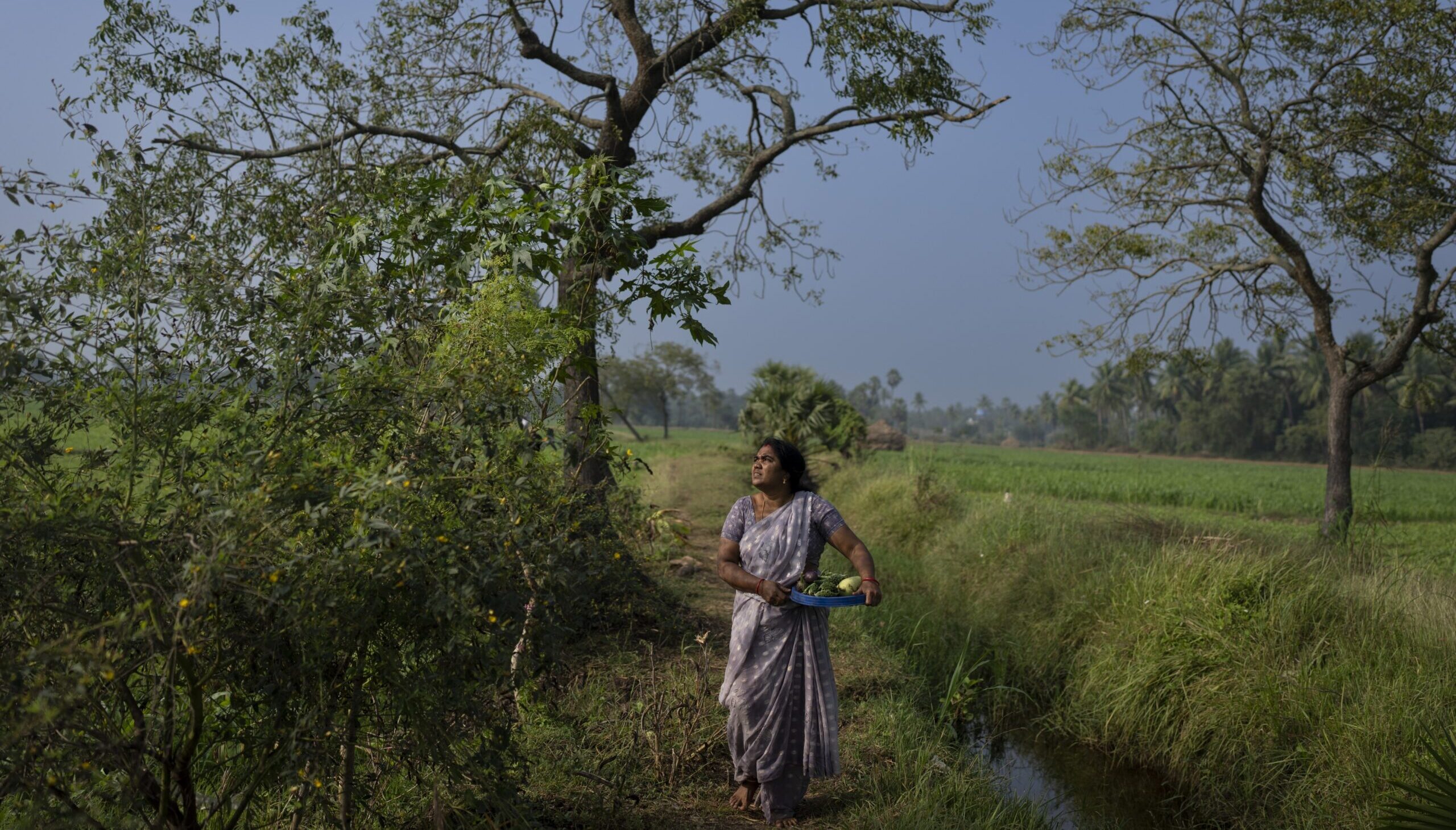
Banner image: A natural farming practitioner works at her farm in Guntur district, Andhra Pradesh. The National Mission for Sustainable Agriculture frames soil health, water-use efficiency, and biodiversity conservation as agricultural priorities. Representative image. (AP Photo/Altaf Qadri)