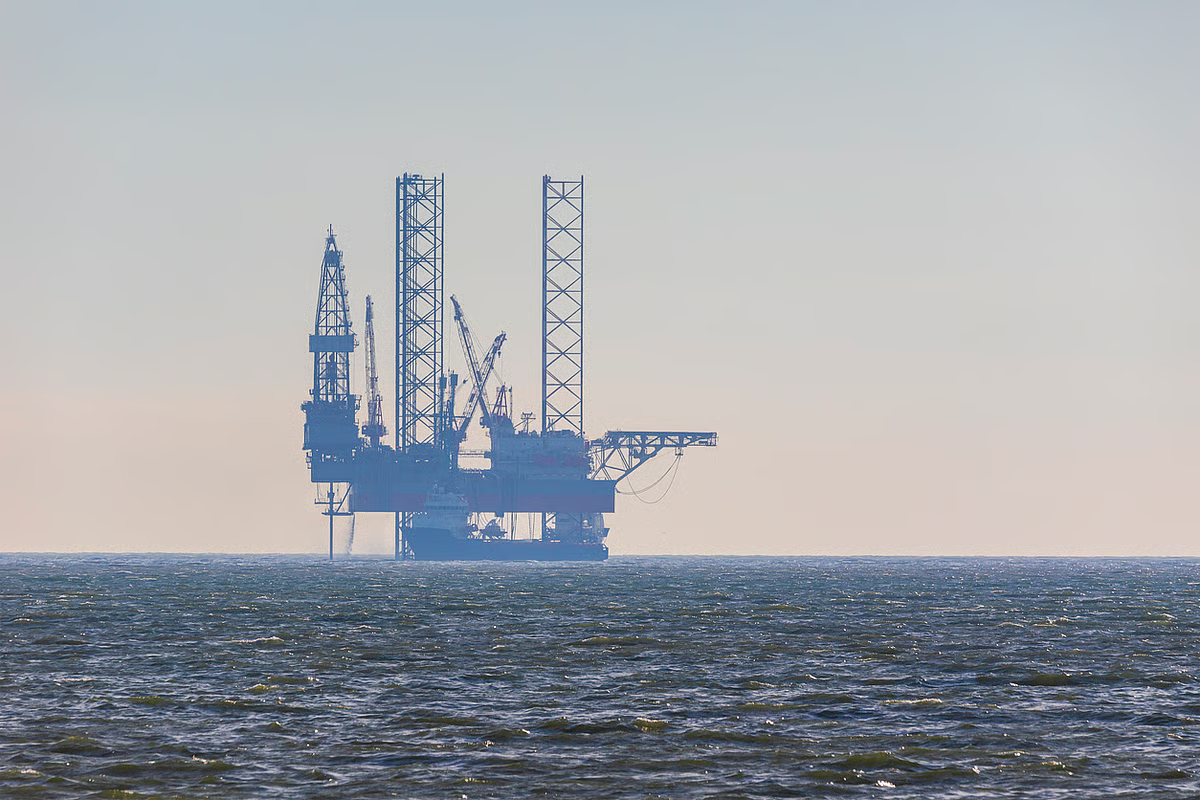
Supply urgency drives deepwater shift
Indonesia’s non-associated offshore gas production has declined by over 12 per cent from its 2018 peak, while Brunei will need an additional 500 million cubic feet per day (mmcfd) of gas post 2030 to sustain LNG output. Malaysia is expected to source 20 per cent of its gas from deepwater by 2027.
The new wave targets roughly 5 billion barrels of oil equivalent across key developments including North Ganal, Rapak and Ganal in Indonesia’s Kutei Basin; South Andaman projects (Tangkulo and Layaran) in North Sumatra; Kelidang in Brunei; and Rosmari-Majoram in Malaysia.
“These projects will deliver critical gas supply into domestic markets and LNG export plants to replace declining legacy production,” Kumar said.
The operator mix includes majors such as Eni and Shell, alongside national oil companies like PETRONAS and newer deepwater entrants such as Mubadala Energy. Eni is advancing three deepwater hubs in Indonesia’s Kutei Basin, while farm-down opportunities from Eni and Harbour Energy in North Sumatra could attract additional investors.
Thin margins, high risks
Wood Mackenzie’s modelling shows most projects clustered around a 15 per cent IRR under base-case assumptions — significantly lower than comparable deepwater plays globally.
Sensitivity analysis highlights the risks: A 20 per cent increase in capital costs or a 20 per cent drop in gas prices or output could wipe out roughly 150 per cent of net present value. A three-year delay would halve project value.