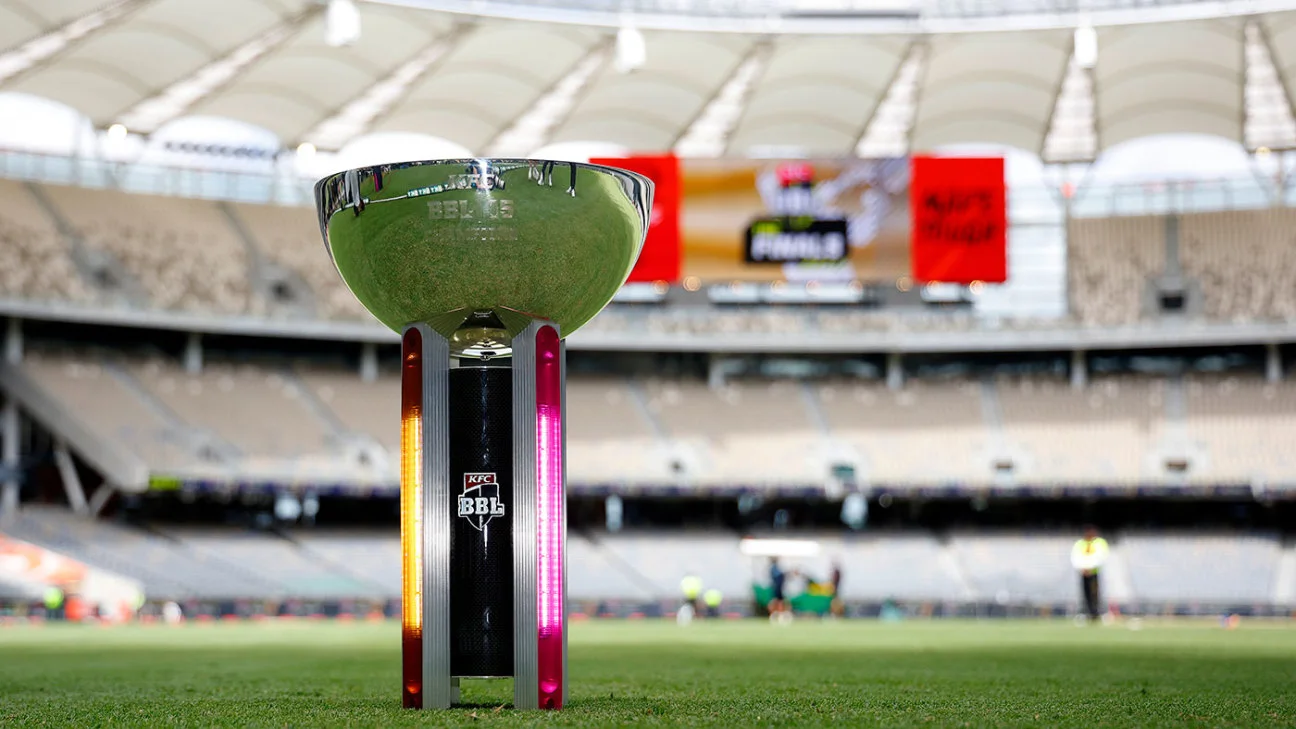
Cricket Australia (CA) are looking to move to the next phase of their BBL privatisation plan by testing Melbourne Renegades, Perth Scorchers and Hobart Hurricanes on the open market to see what sales valuations they could yield, despite defiance from New South Wales (NSW) and Queensland stalling the process last week.
Queensland joined NSW last Wednesday in rejecting CA’s proposal to privatise the BBL clubs, though the two states have done so for different reasons. CA confirmed that Victoria (who run Melbourne Stars and Melbourne Renegades), Western Australia (who run Perth Scorchers) and Tasmania (who run Hobart Hurricanes) were all keen to move to the next phase of testing the global market to see what prospective private investors might offer for a percentage stake in each team.
South Australia, who run Adelaide Strikers, have not said no to privatisation but are not keen to have Strikers as part of the initial sale, with a preference to possibly sell later if the initial sales go well.
CA chief executive Todd Greenberg said last week that privatisation “was inevitable” but admitted the initial preferred plan of putting all eight BBL clubs up for sale at the same time was not an option and that CA would look at alternative options, including moving some teams through to the next phase while others did not participate.
That plan is set to be enacted quite quickly, though at this stage it remains only a testing of the market with a formal selling process still a long way off.
What is being tested to be sold?
NSW claimed there was some misconceptions about their proposal to self-fund the BBL as opposed to seeking private capital from outside sources. There is also an argument to be made that there are public misconceptions about what is going to be sold.
The states do not own any of the BBL franchises. CA own all eight while the states have 30-year leases to operate each team. Those leases are exactly halfway through their lifespan having started when the BBL began 15 years ago.
CA had proposed that the states could sell between 49% and 75% percent of their franchises to private investors, with the option for Victoria and NSW to sell 100% of their second franchise. In the case of selling 49%, the state would then own the other 51% outright (rather than control it under lease) and would also receive a cash injection from CA which would be an agreed upon percentage of the total sales pool.
With that sale, however, future revenues for the individual franchises get split between the state and the investor/s. In that scenario the investors would not control any of the cricket decision-making with the franchise and would not have anything to do with state cricket or CA’s running of cricket at large, chief among the fears of those against privatisation. They would have a say in the BBL if the states sold more than 50% and also relinquished control of the running of the BBL team, but only as one voice among eight as the states are now when CA ask for submissions on BBL schedules, player contracting rules and competition issues.
Testing the market means that CA will ask prospective investors for expressions of interest in purchasing a stake and to nominate a non-binding valuation estimate of what the team might be worth. CA and the states have been keen to avoid putting a figure on each of the teams but estimates have ranged from AUD$80-180 million per team depending on the percentage and the team.
For reference, Trent Rockets, owned and run by Nottinghamshire, and Birmingham Phoenix, owned and run by Warwickshire, are the closest comparisons to Australian states who wish to keep control of the cricket decision-making and sell just 49%. Those clubs were valued at roughly AUD$155.2 million and $149.6 million, respectively, with two non-cricket investors in Knighthead Capital, and Cain International/Ares Management Credit purchasing 49% of those two clubs for AUD$76 million and AUD$73 million.
The interesting case will be Renegades if they are sold at 100%, which means the club will be owned entirely by the investor who would run its entire operations. This is where the IPL franchises will be interested in operating a team in Melbourne and possibly playing home games at the MCG. Renegades’ home ground has been Marvel Stadium at Docklands but that agreement has ended and they are currently looking at a new home while playing one game next year in Geelong and possibly one at Junction Oval.
The lure of owning a team at Lord’s sparked an all out bidding war for London Spirit that saw a US tech consortium pay 49% of roughly AUD$558.6 million. The MCC owns the other 51%. Sun Group, the media conglomerate who own Sunrisers Hyderabad, bought 100% of Yorkshire’s franchise Northern Superchargers for roughly AUD$189 million. They have rebranded it to Sunrisers Leeds and will play at Headingley but have nothing to do with Yorkshire Cricket Club and its cricket program.
The entire sale of all eight Hundred franchises netted the ECB AUD$1.846 billion (£975 million). Ten percent of that revenue was to be invested in recreational cricket. The rest was to be split as follows: the first £275 million was to be divided 19 ways between the 18 first-class counties and MCC; the next £150m was to be divided 11 ways between the non-host counties; and anything over £425m is divided 19 ways again. The Raine Group, Deloitte and the ECB’s lawyers will also take a percentage for their role in the sale.
CA had a similar plan to divide up the proceeds on a full sale of eight teams but that now has to be rethought. They are also considering how to fairly weight the distributions to the early adopters of private investment if other states decide to sell later and yield far more money due to the overall value of the league going up.
Why have some states said no to the proposal?
There appear to be several reasons, although there has been a reluctance from either side to explain them in detail. NSW have offered an alternative self-funding proposal for the BBL and articulated those in a letter to its members last week.
“There are many line items, including broadcast, ticketing and commercial partnerships, to be optimised within our sport,” the letter said. “Cricket NSW is not seeking to strengthen ties to wagering operators via advertising, sponsorships or increased betting offerings to fund the game. This is aligned to our belief that the enjoyment of sport should not be predicated on wagering on it.
“Australian Cricket, like other sports, currently receives income from wagering. Cricket NSW has asked Cricket Australia whether it is currently receiving fair value for its product fees.”
CA has been firm in not increasing wagering revenue from product fees or otherwise on ethical grounds and believes it is optimised on other streams while still running losses in non-home Ashes seasons.
Greenberg suggested Queensland did not believe player pay needed to increase despite part of the reason for the sale being to get BBL player salaries to a competitive level globally alongside SA20, the ILT20 and the future NZ20 if salaries in those competitions continue to rise.
There is a sentiment within parts of Australian cricket circles that the BBL, and Australian cricket more broadly, isn’t broke and does not need financial fixing given it has been a profitable league without Australia’s best players playing in it regularly.
There is also a clear line of division between the states that need financial support due to debt on recent major ground projects.
Finally, there is certainly a concern about IPL owners coming into the BBL as stakeholders and what that might entail both for the BBL and CA’s future. It is noteworthy that NSW chairman John Knox, who signed the letter to the members last week, has been a major objector despite being an investor in Trent Rockets through Ares Management Credit
Three IPL owners with stakes in the Hundred – Sun Group, RPSG Group, who bought 70% of Manchester Originials, and Reliance Industries Limited, who bought a 49% stake in Oval Invincibles – have already rebranded those teams with IPL names and colours and are set to run the teams with their IPL coaches and backroom staff.
The fourth, GMR Group, the Indian conglomerate which co-owns Delhi Capitals, bought a 49% stake in Southern Brave. They have not rebranded the team but they have bought Hampshire in a separate deal that includes the county team and their ground.
There has been a suggestion that the IPL owners have already thrown their weight around regarding player retention and auction rules and there was a concern that Pakistan players being blacklisted. But there has been no suggestion that there has been any influence on the county game or England’s home international schedule to-date.
What happens next?
The valuations from the market test will provide CA with some more definitive figures to work off. It will also provide CA and the states keen on selling with a list of prospective buyers and what the ideal terms of sale would be for those buyers. Victoria, WA and Tasmania would then need to work out if those terms are agreeable before going to an auction process.
There has been some surprise that two states have rejected the process before testing the market, with some suggesting it would actually make more sense if they tested the market and saw the value of the return wasn’t worth the sale and rejected it at that point. But the states against it would argue momentum may be too heavily in favour of CA by that point and would prefer to explore other alternatives before they get to that stage.
Alex Malcolm is an associate editor at ESPNcricinfo