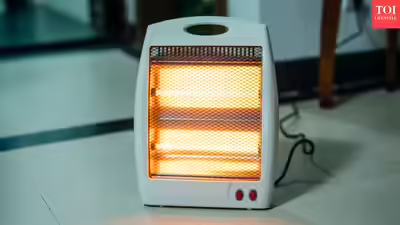
Common household gadgets quietly pump trillions of ultrafine particles into indoor air each day. Researchers at Pusan National University in South Korea tested popular items like toasters, air fryers–and hair dryers, uncovering emissions that slip deep into lungs and carry hidden dangers.The team set up a sealed lab chamber to capture exact particle counts from these devices. Ultrafine particles, or UFPs, measure under 100 nanometers, too small for noses to block. They burrow into lung tissue-and bloodstream, with children at higher risk due to narrower airways where particles linger longer.
Heavy metals such as copper, iron, aluminum, silver–and titanium showed up in the mix, probably scraped from heating coils–and motors during operation. These contaminants raise concerns about inflammation and cell damage once inhaled.
Worst offenders exposed

Empty pop-up toasters proved the biggest culprits, releasing about 1.73 trillion UFPs per minute from their glowing coils alone. Air fryers followed with steady output during cooking cycles, while hair dryers with brushed DC motors spewed bursts of particles.Switching to brushless motors in dryers dropped emissions by 10 to 100 times, highlighting how simple engineering fixes curb pollution. The study focused on South Korean models, but similar tech appears worldwide, suggesting broad implications.While direct health tests stayed out of scope, prior research connects UFPs to asthma attacks, cardiovascular strain, hypertension, diabetes–and even cancer risks. Indoor exposure builds quietly, especially as remote work and warmer weather keep people inside more.
How particles harm the body

These tiny invaders cross from lungs into blood, sparking widespread inflammation. Metals amplify toxicity, potentially hitting heart, brain, and immune systems over time. Electric coils shed flecks as they heat, and brushed motors generate nucleation bursts through friction.Lab simulations traced particle paths, showing adults and kids breathe in varying doses based on height and activity. Children inhale more per breath relative to size, facing prolonged retention in developing lungs.Real-time monitors and chemical analysis pinned down particle sizes, from fresh nucleation mode to aged Aitken mode, painting a full emission profile.
Practical fixes now
Professor Changhyuk Kim pushes for appliances designed with emissions in mind, plus air quality rules tailored to kids. Manufacturers could add filters, use cooler materials, or prioritize brushless tech across lines.Users gain quick wins, too. Run toasters or fryers near open windows with exhaust fans pulling air out. Choose newer brushless dryers, limit empty runs–and monitor indoor levels with affordable sensors.Longer term, regulations might mandate UFP testing for appliances, much like energy labels today. Extending research to irons, vacuums, or space heaters builds a fuller safety map.
Broader push for cleaner air
This work spotlights indoor pollution as a modern threat, rivaling outdoor smog in daily impact. With global shifts toward home-centric lives, tackling appliance emissions protects vulnerable groups first.The findings appeared in the Journal of Hazardous Materials in late 2025, fueling expert calls for policy and innovation. Small habit tweaks — and informed purchases—pave the way to healthier homes, one device at a time. Families deserve air as clean as their intentions.