
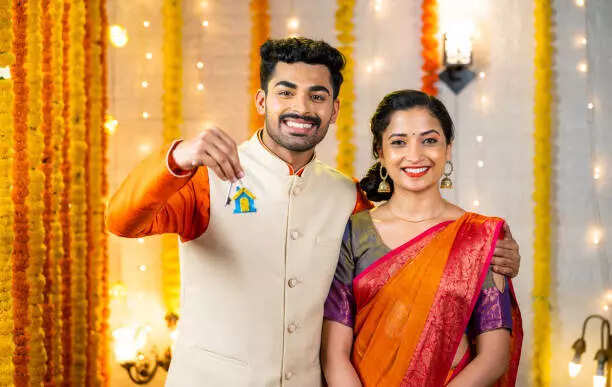
Most marriage conversations in India begin with dates, venues, guest lists, and menus. Rarely do they start with something as practical as a house. But a story recently shared by Ankur Warikoo flipped that script and got people talking, not about outfits or décor, but about priorities.The story was about a couple, Amita and her partner, whose parents laid down a single condition before the wedding. No grand ceremonies. No rush. First, buy a home together. Only after that could the marriage happen.So they waited.Instead of rushing into a wedding in their early twenties, the couple spent years saving every possible rupee. Vacations were skipped, expenses were trimmed, and the focus stayed firmly on one shared goal. By the time they turned 30, they had their house. Only then did they tie the knot.And when they finally married, it wasn’t a spectacle. The celebration was as stripped-down as it gets. Guests were offered one samosa and a cold drink. No elaborate spreads. No show. Just a wedding that marked a decision they had already lived for years.
Warikoo called it a win, not because it was unusual, but because it showed clarity. The post quickly took off, and the reactions made it clear that this wasn’t just about money. It was about how people view marriage itself.For some, the story struck a familiar chord.One person shared how their own marriage had followed a similar path, though with a few bumps along the way. When they were getting married nine years ago, they believed renting made more sense than buying a house early. Their partner disagreed and wanted a place they could call their own in Gurgaon.Rather than turning it into a long-term argument, they chose alignment over ego. They bought a small independent house and took on a massive loan, even though both were earning modestly at the time. The first couple of years were tight. Every expense was measured. Having a child was postponed. Work took centre stage.But slowly, things shifted. Incomes grew. The loan started shrinking. And the value of the house climbed far beyond what they had imagined. This year, they sold that first home and upgraded to a bigger one. With young children now in the picture, life feels calmer. In hindsight, they felt the early sacrifices had strengthened their marriage rather than strained it.Not everyone saw the original story through the same lens.Some felt that serving only a samosa and a cold drink crossed an unspoken social line. In Indian culture, weddings are often about two families coming together, and food plays a central role in that bonding. To them, the celebration felt incomplete. A few even argued that if simplicity was the goal, a court marriage would have made more sense.

Warikoo responded by bringing the focus back to the heart of marriage. At its core, he reminded people, weddings were meant to be about blessings, support, and shared joy, not multi-course meals or borrowed extravagance.That response didn’t end the debate. It only widened it.Some worried about the social cost of such choices. Would friends and relatives see this as disrespect? Would such a couple be welcomed warmly at future functions? Others felt inviting people without offering a proper meal blurred the line between being mindful with money and being overly stingy.But there were also voices that admired the couple’s courage. They saw two people who chose stability over spectacle. People who didn’t borrow money just to impress guests for one day. To them, owning a home by 30 and starting married life without debt pressure was a far bigger celebration than any buffet.What this story really revealed was how differently people view marriage today.For some, marriage is still deeply social, rooted in tradition, community, and shared rituals. For others, it’s a partnership built on alignment, long-term planning, and tough but honest decisions. Neither approach is wrong. But stories like these force an uncomfortable question: is marriage about pleasing everyone else, or building a life that works for two people?In a country where weddings can cost more than homes, this couple quietly flipped the equation. And whether people loved or hated their choices, one thing was clear—the conversation had moved beyond food and finances. It had become about what marriage truly means in modern India.