For more than a decade now, James Cameron’s Avatar films have been built on the reassuring idea that the universe is alive, connected and spiritually pure. Part of the pleasure of making it to the end credits of one of them is the comforting feeling that we are nothing like all those evil humans who want to destroy Pandora’s gorgeous bioluminescent utopia of giant blue cat people and navel-gazing whale creatures. Cameron wants to remind us that if we only spent less time chasing profit and more listening to nature, everything would probably be fine.
Fire and Ash is where that reassurance starts to curdle. It is still recognisably an Avatar movie: the tech is absurd, the sincerity remains weaponised, and the creatures appear to have been designed by a benevolent god with a doctorate in marine biology. But something has shifted. Harmony is no longer guaranteed; nature does not reliably pick a side. What emerges is a threequel that feels oddly argumentative, sometimes with the audience, sometimes with itself. The saga that once promised balance now seems fascinated by fracture. Avatar has started asking much harder questions than it ever has before.
The Na’vi who broke with the song
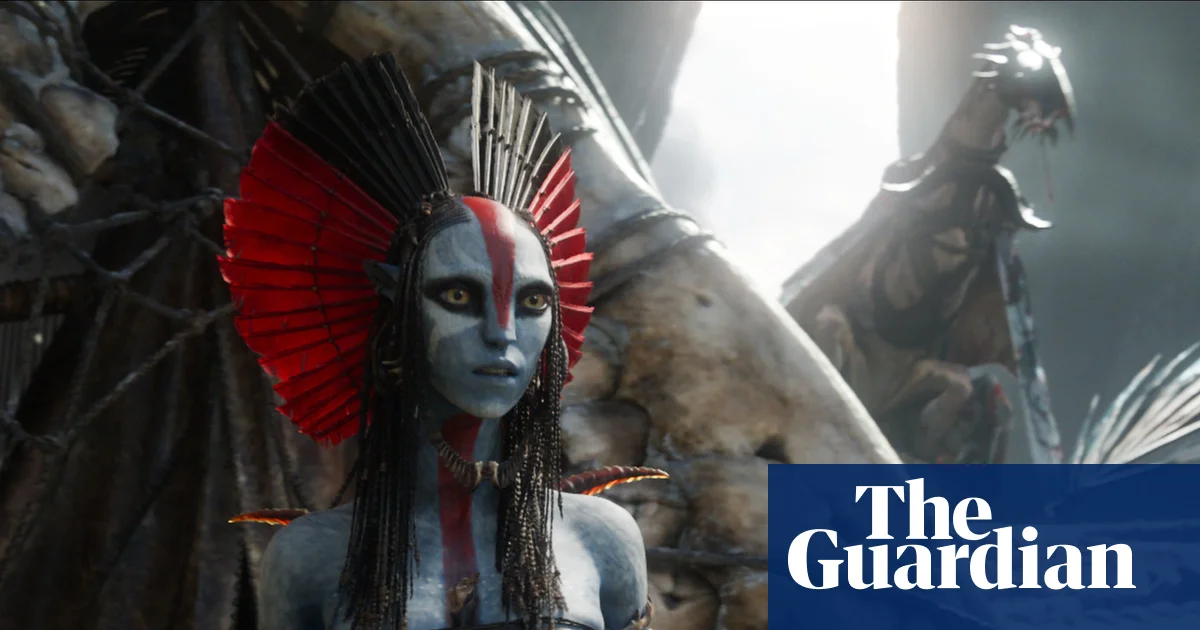
The volcano-dwelling Mangkwan clan, led by Oona Chaplin’s ferociously unimpressed Varang, demonstrate that not all Na’vi are peaceful hippies. The Mangkwan are a people who believe Eywa has ghosted them, who have unplugged entirely from Pandora’s deity-cum-neural-network, and who would rather spend their days torching sky-ships, looting the wreckage and enthusiastically murdering anything that still believes in harmony.
What’s striking is the way the film treats their violence as coherent. The Mangkwan aren’t a corrupted offshoot or a temporary obstacle to be spiritually corrected; they are a culture shaped by abandonment. Their aggression isn’t presented as a moral error so much as a survival strategy; their violence a response to Eywa’s apparent failure.
Suddenly the luscious forest moon has acquired sectarian conflict, resource raids and the unsettling realisation that spiritual abandonment can make even a bioluminescent paradise go full Mad Max. Cameron has waited three films to suggest this internal fracture and, when it arrives, it quietly detonates one of Avatar’s most comforting assumptions: that harmony is the default state and that conflict only ever arrives from outside.
At least this is something new. Fire and Ash may still repeat a few familiar Cameron moves – megafauna rising up to swat human technology out of the sky via spiritual wifi – but few would have predicted Stephen Lang’s Colonel Miles Quaritch spending much of his second life forging a romantic attachment with a volcano witch.
If Eywa is just a neural network, why does it behave like an Old Testament god?
Earlier episodes of Avatar went all in on the idea that Pandora’s deity is not just a vague spiritual presence, but a fully functioning, physically connected defence system against destructive outsiders. Eywa was real. You could interface with it. You could appeal to it, and – if the narrative stakes were high enough – it would respond with overwhelming force.
And yet Fire and Ash spends most of its three-hour running time hinting that even a god who can bring people back from the dead remains something of an enigma. Eywa doesn’t vanish, but it stops behaving predictably. As well as Varang’s Blakeian discontent, there are long stretches in which Sigourney Weaver’s Kiri is simply unable to convince the deity that now would be a really good time to stop messing about and unleash the megafauna on the human baddies.
This is a crucial tonal shift. Intervention, when it comes, is late, blunt and indiscriminate. Prayers go unanswered. Connections fail. Eywa no longer behaves like a responsive system so much as a vast, ancient presence operating according to priorities nobody else can access. It turns out that the only thing more frustrating than having no physical proof that god exists is having absolute proof that they do – and still not being able to get them to respond.
The moment humanity stops being temporary
Eywa’s silence doesn’t mean nothing is happening. It’s just that whatever is happening no longer happens in ways anyone can read. When Spider’s oxygen fails, the planet doesn’t answer a prayer or send a sign. Instead, it edits him: Kiri enters a trance, the ground responds, and Spider is enveloped and invaded by living mycelia, his body quietly retrofitted for Pandora without explanation or consent.
This is where the franchise’s moral clarity finally collapses. If Eywa is defending itself against invasion from beyond the stars, why demonstrate – in such explicitly biological fashion – how humans might live on the forest moon without masks, avatars or the pretence of becoming Na’vi? Spider isn’t assimilated spiritually; he’s upgraded. The intervention isn’t framed as blessing or punishment but as simple adaptation. This is a solution that sidesteps morality altogether.
The consequences are obvious and chilling. The Resources Development Administration may not understand why Spider was altered, but they now know that adaptation is possible. Humanity’s problem has never been ethics, it’s been scalability. How long before someone works out how to repeat the trick without Eywa, without Kiri, and without asking permission at all?
Jake Sully and Neytiri nearly lose the moral high ground
Sam Worthington’s Jake Sully has always been Avatar’s stabilising central hero: the human who saw the light, switched sides and proved that moral clarity could survive first contact. But what happens when saving the planet from humanity starts to look like killing one of your own? When Jake seriously considers murdering Spider – not in anger, but with grim calculation – it is one of the most unsettling scenes Cameron has ever allowed into this universe. Spider isn’t a villain, but for a moment we’re invited to see him as little more than an inconvenient, defenceless proof of concept – a ticking time bomb that can be quietly defused.
That Jake and Zoe Saldaña’s Neytiri ultimately decide this is a sacrifice they are not willing to make just about stops the saga sliding into seriously uncomfortable territory. But the damage is done: the decision to let Spider live doesn’t restore moral clarity, but instead exposes how fragile it has become. From this point on, righteousness no longer looks clean. Survival means living with unacceptable risks, compromised ideals and people who don’t fit neatly into anyone’s story of good and evil.
Quaritch could be the ultimate survivor
All of which brings us to Lang’s former scourge of the Na’vi. The leader of humanity’s invasion forces has morphed into something much more complex by episode three, to the point where it’s hard to imagine where he’ll end up if he did survive that fall at the tail end of Fire and Ash. Whereas Jake and Spider are humans who have learned to live like natives in order to survive on Pandora, Quaritch continues to exploit the planet’s resources without ever really learning anything about the place he has made home. His alliance – and romance – with Varang is little more than a marriage of nihilistic convenience. He doesn’t believe in Eywa, harmony or belonging. He believes in leverage.
In a saga that is increasingly about survival through adaptation, Quaritch represents the most dangerous species of all: a man who will never open his eyes to Pandora’s wonders because he is spiritually colourblind. We can only hope that parts four and five don’t lean into a continuing redemption story, because that would be a character arc to make Vader turning to the good side look like a gentle retcon by comparison.