Most of the time, people never question the colour of water. It feels invisible in a glass, like air you can drink. Then a holiday comes around, someone stands by the sea, and suddenly the water looks blue or green or something in between. It’s the same substance, yet it behaves differently depending on how much of it you see at once. A cup gives nothing away, but the sea refuses to hide. The colour tells you something about what light does inside water, and how the depth and surroundings change what reaches the eye.Scientists have taken careful measurements to determine why this happens, rather than guessing. In a peer-reviewed study by Applied Optics, researchers measured how water absorbs light across the visible spectrum and found something important: water absorbs longer wavelengths, such as red, far more than shorter wavelengths, like blue, and the change becomes noticeable when light travels through enough water to be significant. In short, a glass hides this behaviour, but the sea exposes it.
How the colour of water changes with depth, and why small amounts hide it
Hold a glass of water up to the light and almost nothing seems to happen. The distance between one side of the glass and the other is so tiny that light loses almost none of its red wavelengths. Human eyes can’t pick up the microscopic change, so the water looks clear. It feels like a trick until you start thinking about scale. A few centimetres of water is nothing, and nothing is exactly what the eyes see.
Why does the sea look blue even when the water isn’t dyed
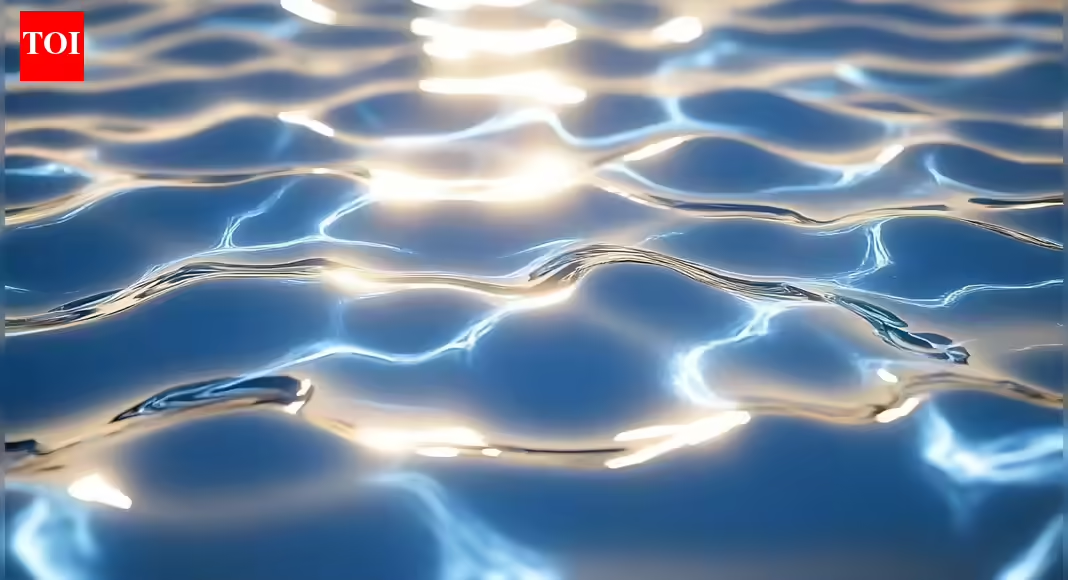
Now stretch that distance into metres. Walk toward a lake edge or stand over a boat railing and stare down. The light has to travel through a lot more water, so red wavelengths get eaten up little by little, over and over again. What returns to the surface, or what reaches your eyes from beneath it, leans toward blue because less of that colour is removed. The water didn’t turn blue; it lost red. What stays behind is what we see.
How particles and life inside water shift the colour again
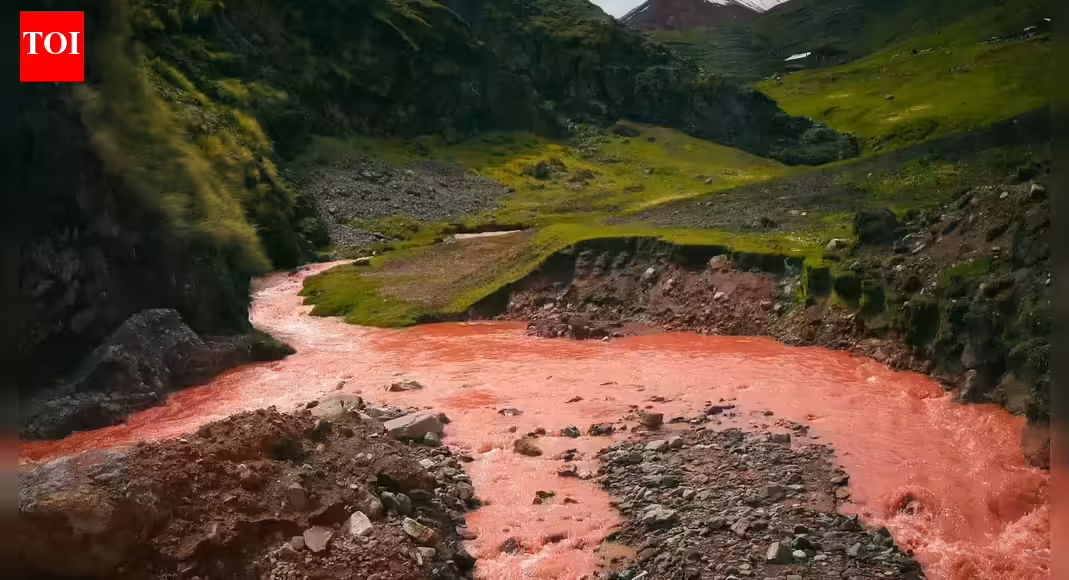
Real water outdoors almost never stays perfectly pure. After rain, rivers drag soil from hillsides and carry it along, and everything turns brown. In warm months, algae bloom, and the water suddenly looks green, because plant pigments reflect green wavelengths back at you. Shallow beaches with pale sand look bright turquoise because the ground underneath bounces extra light upward. A glass of tap water can’t show these things. The sea and lakes have more stories to tell.
How light and reflection complicate what the eyes notice
Sky reflection adds another twist. Calm water can behave like a mirror, picking up the blue of the sky or the grey of clouds. But reflection is not the whole explanation, and the colour of water doesn’t disappear on cloudy days. The absorption behaviour described in the study remains underneath whatever the sky paints on top. Reflection adds flavour, not the main ingredient.
Why do different places show different shades even with the same water
Walk along one coastline and see deep indigo. Travel a bit, find a shallow cove, and everything turns pale blue or green. River mouths look muddy when soil washes down, and mountain lakes look milky when crushed rock from glaciers stays suspended in the water. Nothing magical, just light travelling differently depending on what’s in the way, how deep things are, and what the ground underneath looks like.In small amounts, water gives nothing away. Light barely changes, and the result looks clear. Give light enough distance to travel and red wavelengths slowly fade while blue ones stay strong enough to reach you. Add soil, algae, minerals or reflection from the sky, and the palette expands. The colour of water becomes a mix of physics, environment and depth, not dye. A glass keeps the secret. The sea tells the truth.Also read| NASA confirms a bus-sized asteroid passed Earth on 22 December 2025, and what to expect next