Megan, a 24-year-old from the Isle of Wight, is very familiar with saying goodbye. She decided university wasn’t for her and remembers how, one by one, she waved off her friends who left the island to study. Many never came back.
“I was 18, working in a pub, and I thought, ‘what am I going to do next?’” she says.
Megan secured an apprenticeship and now works for an arts organisation on the island, but says her situation is unusual among her friendship group.
“I’m definitely an anomaly in that I have a job that I am really passionate about and I really want to be doing,” she says. “Some of my friends here work in very seasonal, part-time employment, centred around hospitality and tourism. They work loads over the summer, but then over the winter they’re on fewer hours and a very low income and are still living at home.”
She says there are few affordable housing options and as lots of properties are second homes or Airbnbs, the number of rental properties is limited, “particularly for young people, as most landlords prioritise families or ‘working professionals’”.
“There’s also not a lot of opportunity here in terms of social activities for my age group – there are no nightclubs, for example,” she says. “There is an older demographic, with lots of retirees, and it feels like 18- to 35-year-olds are a missing group here.”
Between the last two censuses in 2011 and 2021, the number of people aged 65 to 74 on the island rose by 26.7%. The average age in the area is 51, markedly higher than the average in England of 40.
Megan says that the prevailing narrative encouraging young people to “escape” is frustrating.
“Adults saying you have to leave the island to succeed and if you don’t leave that you’re ‘settling’ is unhelpful,” she says. “Then they complain there are no young people here.”
At the other end of England, in Berwick-upon-Tweed, which borders Scotland, the two phrases often uttered by Colette, 23, and her friends are: “I need to get out” and “we’re so lucky to live in a place like this.”
“There is an urge to leave and go to see the rest of the world, to leave a town with an ageing population, an empty high street, closed-minded views, and a place where everyone knows each other,” she says.
“But there is also a pull to stay: the increase of independent businesses, the supportive community, the festivals, the increased funding into the arts, and of course the beautiful beaches and hills.”
Many of Colette’s friends moved away from Berwick because of a lack of jobs. Others have pursued training or education away from the town.
Of those, many won’t be coming back.
“Most young people don’t want to leave because they hate the town,” she says. “Everyone I know absolutely loves Berwick. They leave because they don’t have opportunities or their friends have already left.”
Colette did return to Berwick after her degree at the University of Bristol. She has been working in a clothes shop and has applied for jobs in the town, but says others were better qualified for the roles. This has prompted her to return to university, this time to study for a master’s degree.
“Can I see myself coming back here long term if there were more jobs in the creative fields? Yes. But am I studying with the idea of staying? No, I’m probably studying to leave,” she says.
Jacob, 28, who is from Gorleston-on-Sea in Great Yarmouth on the east coast of Norfolk, felt “disconnected” from his home town growing up.
“My memory of looking back isn’t sunny days on the beach – it’s cold, harsh and foggy walks,” he says.
“I’m a gay man, but I came out very young, when I was around 12 or 13, and I’m from a conservative town. There is a kind of culture of conservatism in the area, and so being openly gay very early meant I felt a big disconnect from my local place.
“I spent a long time when I was younger with an angry mind space because leaving felt more like ‘getting out’. It felt like, ‘this place offers nothing for me.’”
After his BA degree, he moved back home and briefly worked at a college.
“When you ask young people what they want to do when they grow up, they don’t know because they don’t have a frame of reference,” he says. “A lot of people will be interested in fashion or photography, but they don’t want to move away. It’s a confidence thing and a sense of inertia that comes with the depression of the place.”
Jacob moved to London to do his MA, and is now trying to make a career as an artist in the capital.
Tom, 23, believes he would struggle to live and work in his home town of Ilfracombe, north Devon, without support from his parents.
“Ilfracombe is a wonderful place to live if you enjoy outdoor sports like I do,” he says. “Every time I go up on the cliffs at sunset I feel extraordinarily grateful to live here.
“But there are challenges. There is a distinct lack of job opportunities in the area, and combined with the high cost of housing, it feels almost impossible for someone like me, who grew up here, to have a sustainable living without my parents’ support.”
Central Ilfracombe is the most deprived neighbourhood in Devon and among the 20% most deprived areas nationwide, according to the Index of Multiple Deprivation, as reported by Devon Community Foundation.
Tom had been looking for jobs in Manchester and Bristol, but secured a temporary position with a local authority close to home, and then landed a permanent role.
“I feel very lucky to have a steady and salaried job, as there aren’t many like it here,” he says.
“I am living at home, my expenses are very low, and I am saving money, so I could possibly have a deposit a few years down the line, but a lot of people are renting and in low-paid seasonal work, living hand to mouth, so they are just not able to save and are unable to buy a property. In terms of big career prospects, it’s pretty dire. That’s a big problem in these areas, unless you can move away, build a career and then maybe come back.”
It’s not just young adults who got in touch. Marty, a teacher from Eastbourne, has two children: one 19-year-old son and a daughter who is at university.
“There are no opportunities here for young kids,” she says. “I told my kids you’ve got to go to university, you’ve got to get out.
“I have been here 25 years and throughout that time there’s been talk of better transport links – that hasn’t happened. Eastbourne has been ‘the next Brighton’ and ‘up and coming’ without anything actually changing.”
As for what Eastbourne will be able to offer her children in the future, she is not optimistic.
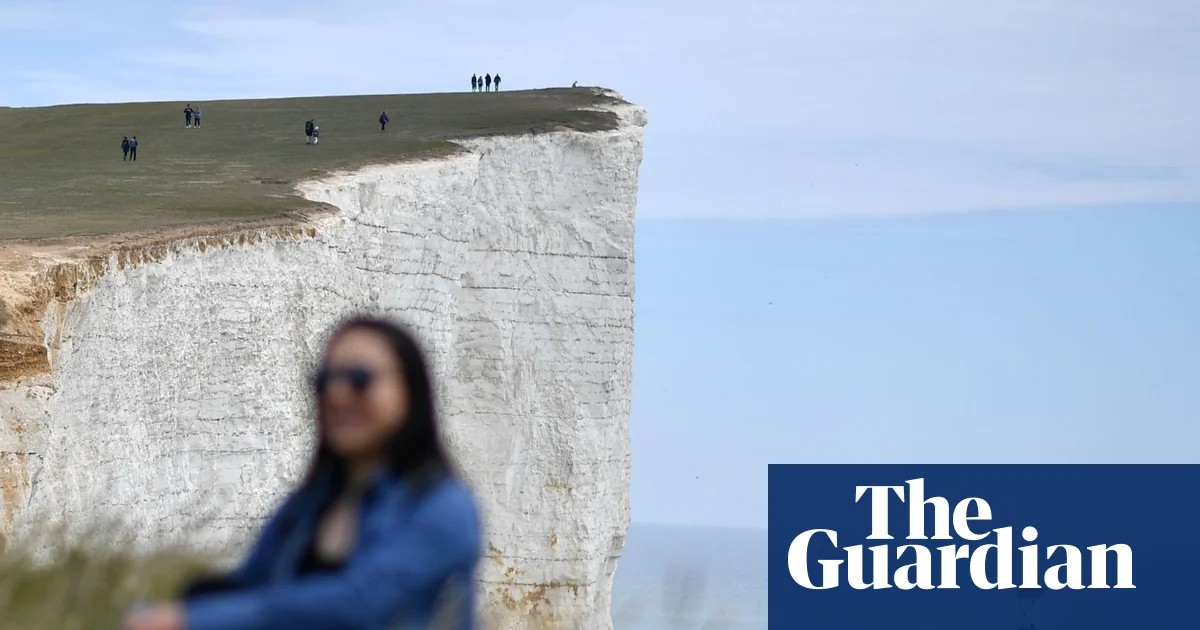
“I’m glad I brought my kids up here, but I worry about what is there for them as they grow into adulthood. I have to tell them, ‘there’s life beyond the Downs.’”
The Against the tide series is a collaboration between the Guardian and the documentary photographer Polly Braden and reports on the lives of young people in coastal communities across England and Wales