
MEXICO CITY — Don’t mess with my bolillos!
That was the universal message here after disparaging remarks about Mexican bread surfaced from a British celebrity chef who ridiculed the beloved bolillo: An oval-shaped, white bread roll that is a culinary and cultural staple, a mainstay in tortas (sandwiches), pan con chocolate (bread with chocolate) and other essentials, a go-to comfort food with a spiritual caché.
Mexicans “don’t really have much of a bread culture,” the chef, Richard Hart, who runs a popular Mexico City bakery, said in a podcast that recently resurfaced online. He labeled Mexican wheat “not good … highly processed, full of additives,” adding: “They make sandwiches on these white, ugly rolls that are pretty cheap and industrially made.”
That frontal assault on el bolillo came just as many Mexicans are getting ready to stock up on the fluffy loaves for the holidays. Judging by the reaction, Hart might as well have dissed the national soccer team.
“The bolillo is a sacred food in Mexico, it’s part of our daily life,” said an astounded Carlos López, 32, who was in line at a stand awaiting his daily torta de tamal — a sandwich composed of a cornmeal tamale stuffed inside a bolillo.
“This is breakfast for millions of Mexicans!” López declared of the bulging cholesterol bomb, typically dripping in hot sauce. “I think this English cook should close his shop and go back home to his country.”
Defenders of the bolillo ascended the ramparts of the internet to defend their humble fare. Many posted under #ConElBolilloNo.
“The bolillo is everything: It’s a food, a remedy, it’s homeland,” said one indignant commentator on X.
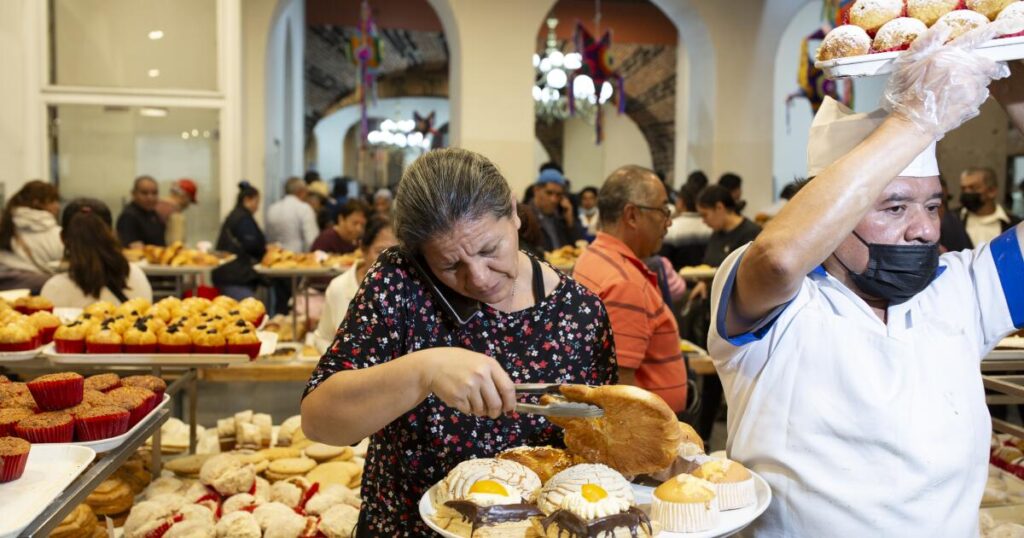
A neighborhood bakery in the Colonia Cuauhtemoc neighborhood in Mexico City sells a wide variety of pan dulce.
(Lisette Poole/For The Times)
The insult seemed to rankle many because it touched both a current issue — gentrification in Mexico City — and an old sore spot: foreigners citing supposedly elevated European standards to judge Mexico, where Hart now makes his living.
Another poster voiced the hope that the highbrow Euro-chef had learned his lesson with the bolillo, and would not dare to cast scorn on other favorites like the concha, a ubiquitous seashell-shaped sweet bread featuring a sugary topping.
“If you’re gonna mess around with the vanilla or chocolate concha, think twice about it,” the user warned.
The London-born Hart, who honed his sourdough skills during seven years at San Francisco’s acclaimed Tartine Bakery, issued an apology online last week after his comments, which were made months ago, went viral.
“Since I arrived in Mexico, I have fallen in love with the people of this city,” Hart wrote. “Nonetheless, my words didn’t reflect this respect. In this country I am a guest and I forgot to act accordingly.”


A worker restocks shelves of pan dulce and other kinds of bread at the Ideal bakery in Mexico City.
(Lisette Poole/For The Times)
The culinary kerfuffle was unusual for Mexico, which boasts a world-renowned cuisine that includes dozens of varieties of breads and pastries, both savory and sweet. Many are elaborations on European originals, often carrying suggestive names such as: banderilla (banner), bigote (mustache), tortuga (turtle) and colchón (mattress).
Mexico is especially known for holiday breads such as pan de muerto (for Day of the Dead), often left on the graves of loved ones; and Rosca de Reyes, a round sweet loaf eaten on Jan. 6, Three Kings Day (the Epiphany), traditionally with a figure of the baby Jesus hidden inside.
“Mexico doesn’t replicate European bread because it doesn’t have to,” Edgar Nuñez, a celebrated Mexican chef who studied in France, wrote on X in response to the bolillo dustup. “Here there is a proper tradition of bakeries, with its own history, identity, technique, and a social connection that many cultures lack.”
Hart didn’t return messages left at his bakery, the Green Rhino, in the capital’s shabby-chic Roma Norte district.
Reports that the Green Rhino had been vandalized were untrue, workers at the eatery said. There was no sign of exterior damage Friday afternoon.
The Green Rhino, which opened in June, employs about 50 people, staffers said. Business seemed slow Friday afternoon. Some would-be customers lingered outside the premises, seemingly wondering whether it was all right to go inside.

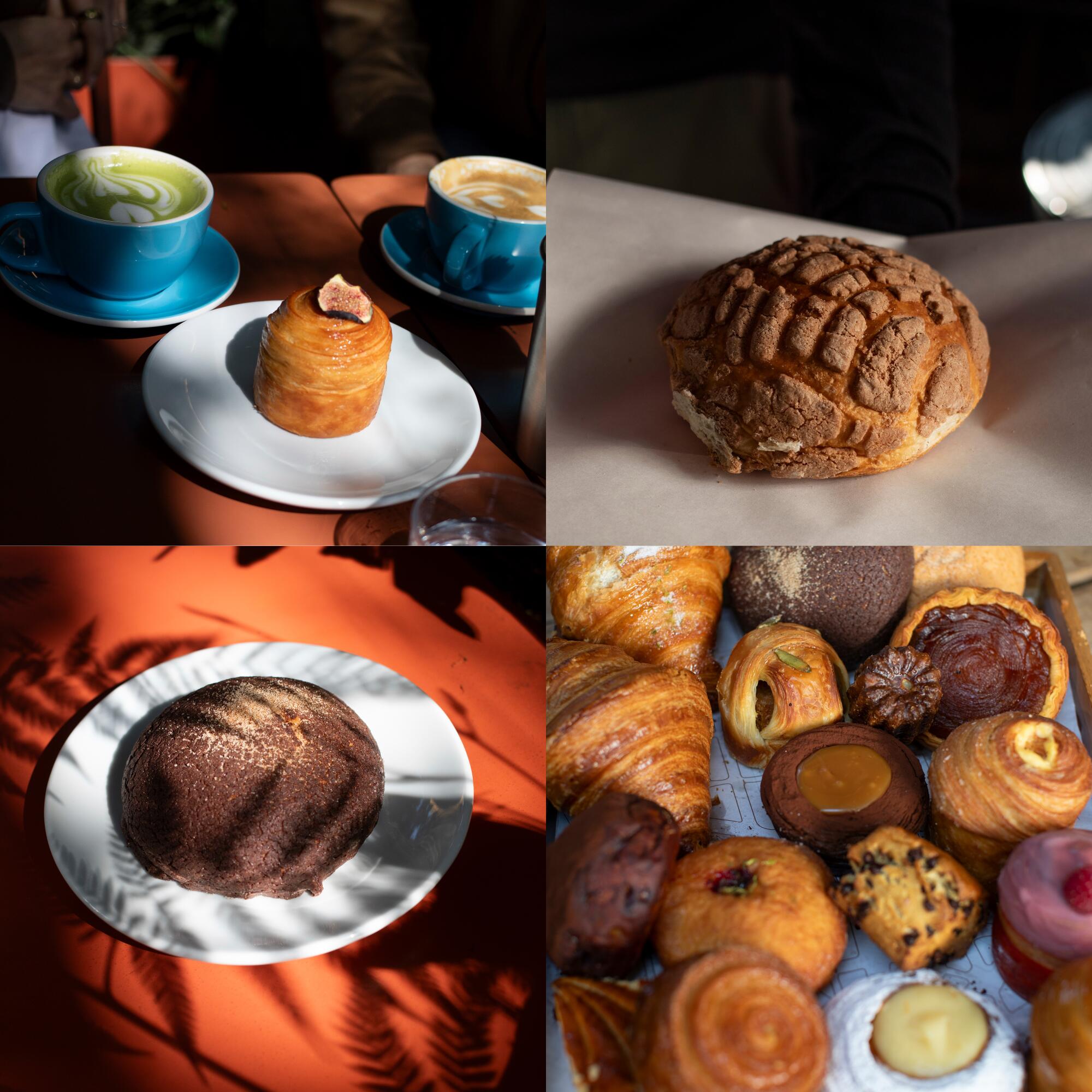
Clockwise from top right: A concha sweetbread, sold at a food stand in Mexico City’s La Roma district, and various offerings from the Bou bakery.
(Lisette Poole / For The Times)
“I think it’s all a misunderstanding,” said Sofía, 28, a regular client who, like others interviewed, declined to give their full names for privacy reasons. “Yes, I think I’ll go back. It’s a nice place.”
The bolillo brouhaha quickly became part of the raging debate about gentrification in Mexico City.
Critics have blamed rising rents and the displacement of longtime residents and businesses on a wave of digital nomads and other expatriates from the United States, Canada, Europe and elsewhere. Foreign visitors, mostly young, are seen daily wandering through gentrified neighborhoods gazing at their cellphones, following directions to the latest hip spots hyped on Instagram and TikTok. Many trendy bakeries feature European-style breads and pastries.
In July, angry Mexican protesters, predominantly young, marched through the trendy Roma neighborhood and adjoining Condesa district denouncing gentrification driven by foreigners. Some vandalized restaurants and cafes, breaking windows and overturning outdoor tables at various businesses, including at a popular Starbucks with a mostly Mexican clientele.


A worker restocks bread supplies at the Ideal bakery.
(Lisette Poole/For The Times)
Despite complaints about gentrification, there is a clear upside to foreign — and Mexican — customers drawn to pricey establishments such as the Green Rhino. The bolstered business has helped spur an economic comeback in Roma and Condesa, ground zero for gentrification. Both districts suffered extensive damage in the 2017 earthquake and saw business plummet anew during the COVID-19 pandemic.
Still, the attack on el bolillo clearly touched a nerve in a capital otherwise in a festive mood. Christmas decorations adorn most storefront bakeries, which stand as community anchors throughout Mexico City.
“He really said that?” asked Roberto Celorio Díaz, a retiree who was buying bread at his “local,” the Lupita bakery, when informed of Hart’s comments.
“That’s very upsetting for Mexicans,” he said. “The foreigners come, they live in our city and they criticize our food, our culture. Maybe it’s better they stay in their own countries where, according to them, everything is better.”
McDonnell is a staff writer and Sánchez Vidal a special correspondent.