
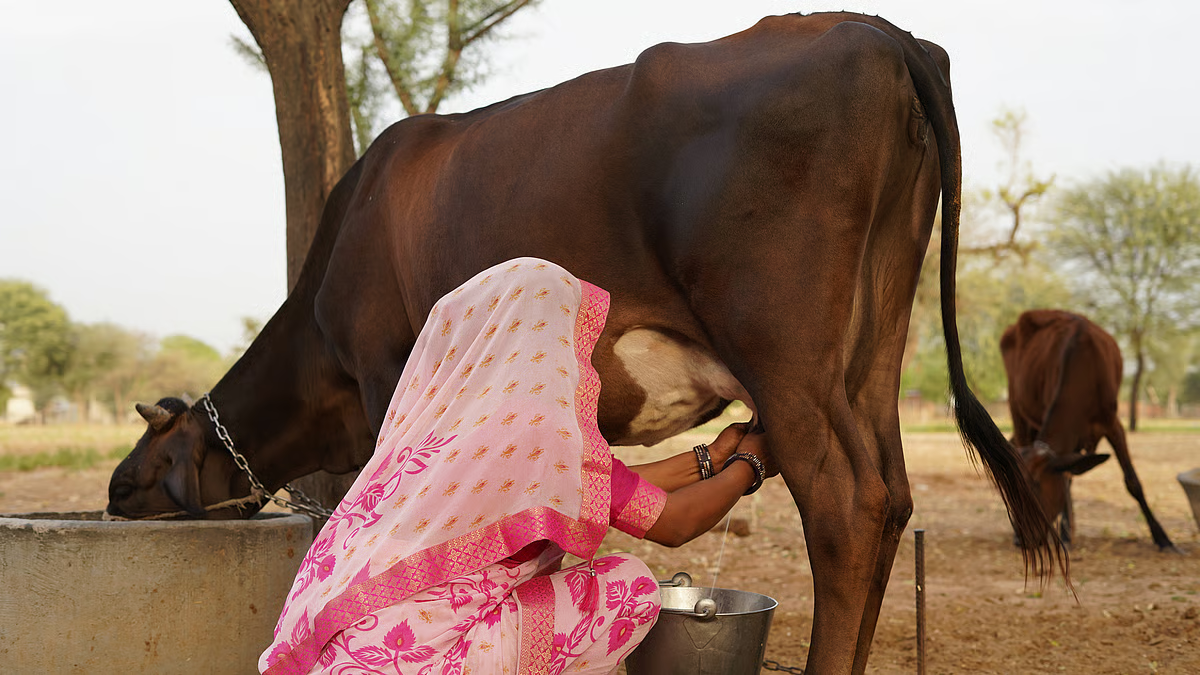
Some images stay with you. One of mine dates back several decades, to a village in Rajasthan. I remember waking up very early, while mist still hung over the settlement, to trek to a nearby dairy that I thought would be out of western films; rows of cows and buffaloes being milked by hand (this was before the age of the automatic milking machines). Instead, we arrived at a rather unremarkable building. Inside, women wrapped in traditional shawls stood in a queue. One by one, they placed their utensils on a small weighing machine, received a printed slip and poured the milk into a large container.
None of them could read or write. Yet, they showed me, with confidence, that the slip recorded not just the quantity of milk supplied but also its fat content, which determined how much they would be paid. The containers were swiftly loaded onto smaller vehicles that moved from village to village, collecting milk before delivering it to district or state dairies. This is the famous Amul model, now replicated across India. A dairy with many cows or a household owning one or two, all could be part of the cooperative.
That image feels relevant today, as the world drifts towards an economic order shaped by rivalry and built on the tombstones of globalisation. In this emerging order, as I wrote in my column last issue, each country has to secure its own future, drawing on domestic resources and economic strengths. So, it is time we too drilled down on what is the best way for us to grow, and why its path must differ from that of the old rich world, which is struggling to find its economic relevance.
Let’s stay with dairy. The western approach to the sector has been no different from the rest of economy — it is about scale, industrial enterprise, heavy mechanisation and heavy use of external inputs. The logic is deliciously simple: larger operations produce more, so that you can sell more and generate higher returns.
Such gains came at a price. Increased reliance on external inputs, such as pesticides and antibiotics led to environmental contamination and food-safety issues. Regulation followed, pushing costs up further. To keep milk affordable, governments stepped in with subsidies. But the problem has compounded as milk supply now outpaces demand. So, producers need new markets.
The result is today’s skirmish over which country opens their market to this distortedly priced product and over how such imports would impact domestic production and their farmers. European farmers say the European Union-Mercosur trade agreement will put them out of business — Latin American farmers after all have perfected intensive industrial farming. In India, the most contentious issues in recent trade agreements with the EU and United States are agriculture and dairy. Rightly so.