Founded in 2024, this start-up wants to be the ‘investigation fabric’ that powers how organisations understand, connect and act on their data.
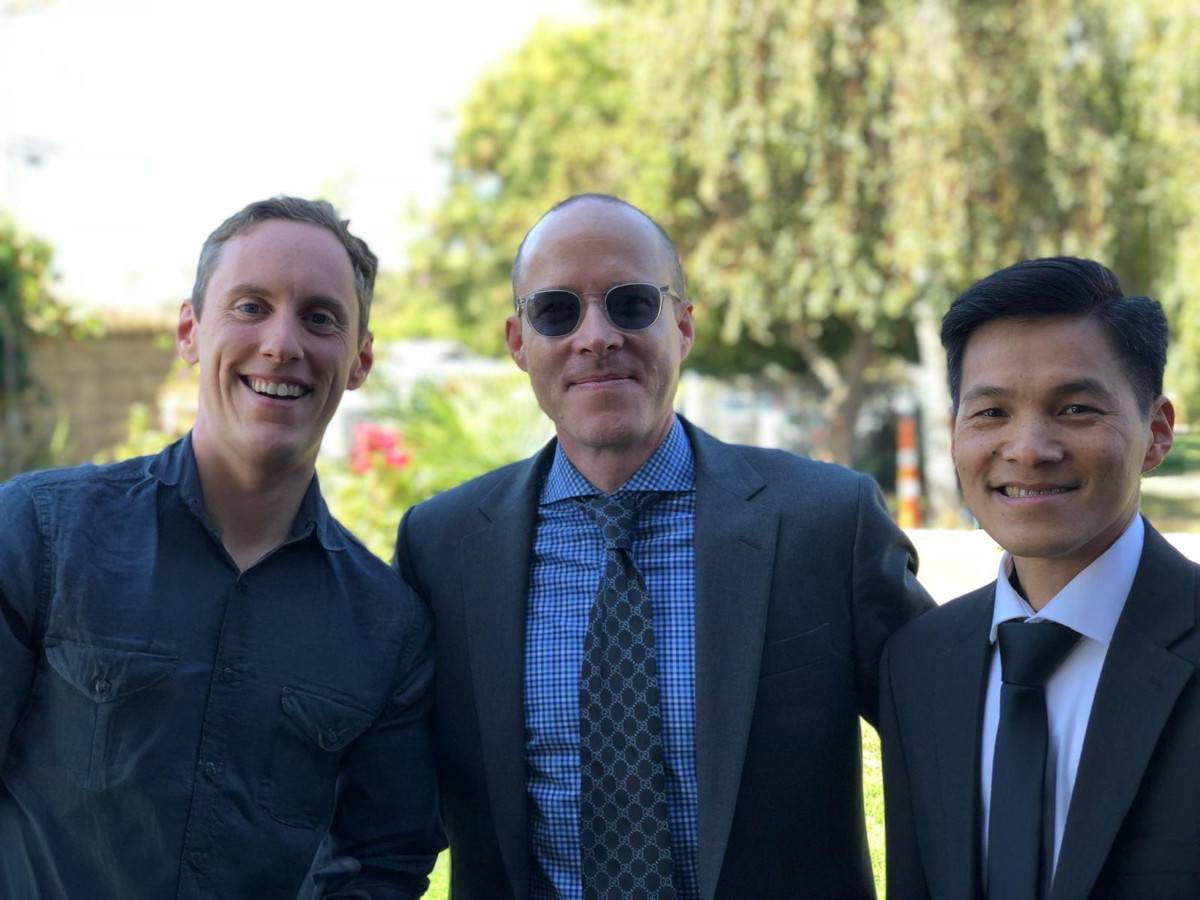
In 2009, three cybersecurity professionals – Eoghan McKee, David Pigott and Quang Pham – met while working at e-commerce giant eBay, where they built and ran a unique intelligence and eCrime function that blended cyber defense, national security practices, and large-scale infrastructure expertise.
This specific experience gave each of them a glimpse into how investigations need to work at scale – balancing technical depth with real-world operational pressure.
Over the following years, McKee, Pigott and Pham departed eBay but continued to collaborate across the industry, sometimes formally on the same teams and sometimes as partners from different vantage points.
In 2024, the trio – inspired by that foundational experience at eBay – decided to formally reunite to establish our Start-up of the Week, Miru.
Miru is a US-based cybersecurity start-up that has developed a platform which gives analysts and AI agents tools to perform cybersecurity, trust and safety, and national security investigations.
“We unify fragmented security and intelligence data into a graph-native workspace and pair it with AI copilots and autonomous agents,” says Irishman McKee, who is also CEO of the company. “The result: faster triage, deeper correlation, and investigations that can scale far beyond what human teams can achieve alone.”
The tech
Collectively, Miru’s founding team has held leadership positions United States Secret Service, Facebook, DocuSign, Uber, Rackspace/ObjectRocket, Circle and BitMEX.
“That shared history – spanning tech giants, high-growth start-ups, and security-sensitive industries – cemented both our trust in each other and our conviction that the future of investigations needed a purpose-built platform,” says McKee.
As McKee explains to SiliconRepublic.com, the San Francisco-based start-up is targeting the “global investigation market”, which he says spreads across cybersecurity, trust and safety, fraud, and intelligence.
“While the domains differ, the investigative bottlenecks are identical: fragmented data, manual pivoting and workflows that depend too heavily on analyst muscle,” he says.
“We’ve seen this gap first-hand through our own careers – from running cyber incident response in global enterprises, to working on counter-terrorism investigations, to building systems for online safety and trust and safety at scale.
“Across all of these contexts, the challenges repeat: investigations lack a common infrastructure layer, forcing teams to reinvent the wheel with bespoke workflows and siloed tools.”
McKee says that Miru is built on three “pillars of effective investigations”: structured context, memory and intelligence.
“Every entity and relationship is mapped into a graph, far surpassing the fidelity of flat logs,” he says. “This gives analysts and AI a ‘map’ of the investigation space, showing where to pivot next.”
This knowledge graph, according to McKee, turns casework into “organisational memory” and reduces duplication, accelerates future investigations and reveals long-term behavioural patterns.
In terms of intelligence, the Miru platform embeds both external threat feeds and internal knowledge. “This ensures every investigation benefits from institutional expertise, whether human-led or AI-driven.”
McKee adds that unlike legacy tools, Miru queries data at rest rather than warehousing it,0 “avoiding silos, lowering costs and strengthening security”.
“On top of this, we layer federated search, autonomous entity extraction and AI copilots/agents that reason over the graph and take action,” he says.
The journey so far
Despite being in the early stages of enterprise, McKee tells us that Miru is making steady progress.
“We’re working closely with design partners and actively moving into initial customer deployments,” he explains. “Our small but senior engineering team has shipped an MVP in months, and we’re now scaling features like autonomous agents and knowledge graph persistence.
“Interest has been strong across security and trust and safety, spanning industries from healthcare to fintech, and national government entities.”
Miru has also seen its fair share of challenges, according to McKee, such as balancing speed with scale.
“We’ve had to ship quickly to prove value to customers, while also laying down the foundations – in engineering, customer onboarding and internal processes – that will support growth over time,” he says. “Another challenge is prioritisation: in a new category, everything feels urgent.
“We’ve learned to stay disciplined by focusing on what moves the needle for our customers and the category we’re creating, and deliberately postponing the rest.”
Fortunately, the start-up has seen considerable success in terms of funding, which McKee says has allowed the start-up to stay focused on building the product and working closely with early customers.
In September, the company raised $2.7m in a pre-seed funding round led by Dreamcraft, Cadenza and Seedcamp with participation from Inovia, Plug and Play, Notion and Alphagraph.
As for the future, Miru has no shortage of ambition.
“Our ultimate goal is to become the default infrastructure for investigations,” says McKee, “whether you’re an SOC analyst, a trust and safety responder, or an intelligence researcher.
“We want Miru to be the ‘investigation fabric’ that powers how organisations understand, connect and act on their data.”
Don’t miss out on the knowledge you need to succeed. Sign up for the Daily Brief, Silicon Republic’s digest of need-to-know sci-tech news.