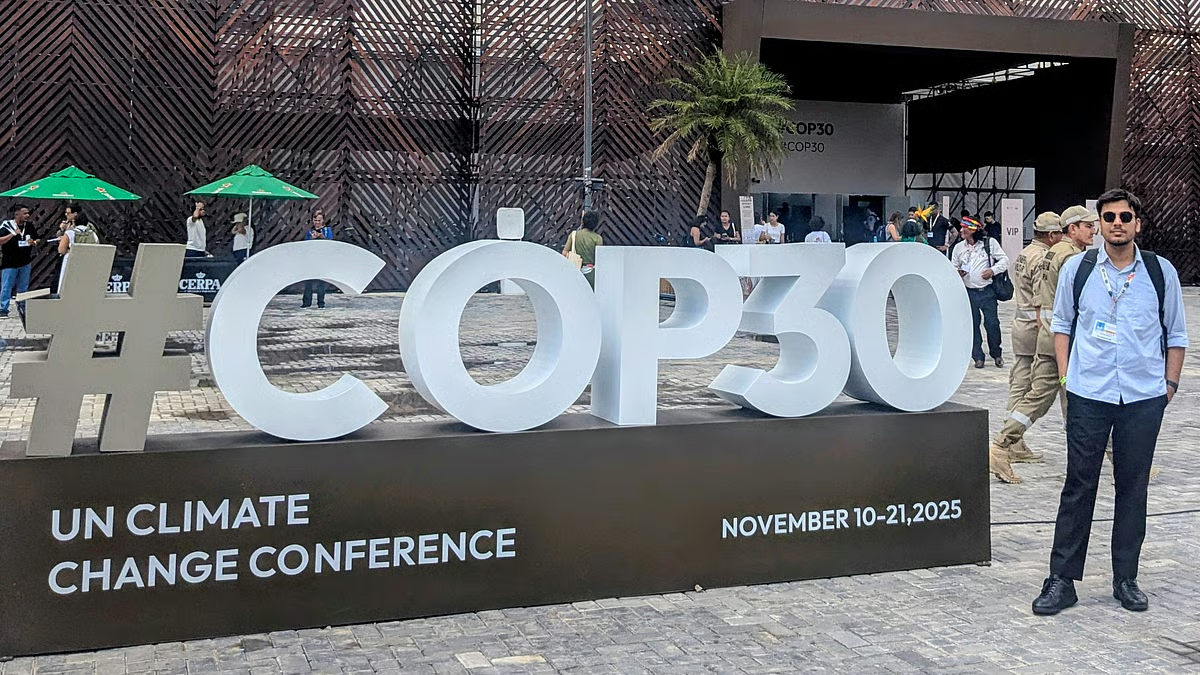
Following COP29 in Azerbaijan and the Bonn climate meeting earlier this year helped me understand the fault lines that exist in the climate process, most prominently the divide between the developed and the developing world. One could sense the disappointment over the outcome in Baku, referred to as the new collective quantified goal, reflected across negotiations in Belém. Developing countries, led by the Group of 77 coalition (G77) and China, were firm in their stance that climate ambition and the means of implementation must go hand in hand, guided by the principle of common but differentiated responsibilities.
In contrast, the bloc of developed countries led by the European Union (EU) championed the goal of limiting emissions in line with 1.5 degrees Celsius, as outlined in the Paris Agreement. However, from the perspective of many developing country negotiators, this emphasis often appeared disconnected from parallel obligations on finance.
In theory, every country has an equal voice, but in practice, geopolitical context and power dynamics play a decisive role in shaping whose priorities gain traction.
In the absence of large historical polluters such as the United States at this COP, the burden of shouldering financial responsibilities fell on a smaller group of developed countries. The pressure on the EU was evident, as it was more vocal in resisting the demands of developing countries. This was perhaps compounded by its proposed and polarising regulation, the Carbon Border Adjustment Mechanism, which was debated throughout the two weeks in presidential consultations and under the Just Transition Work Programme (JTWP).