
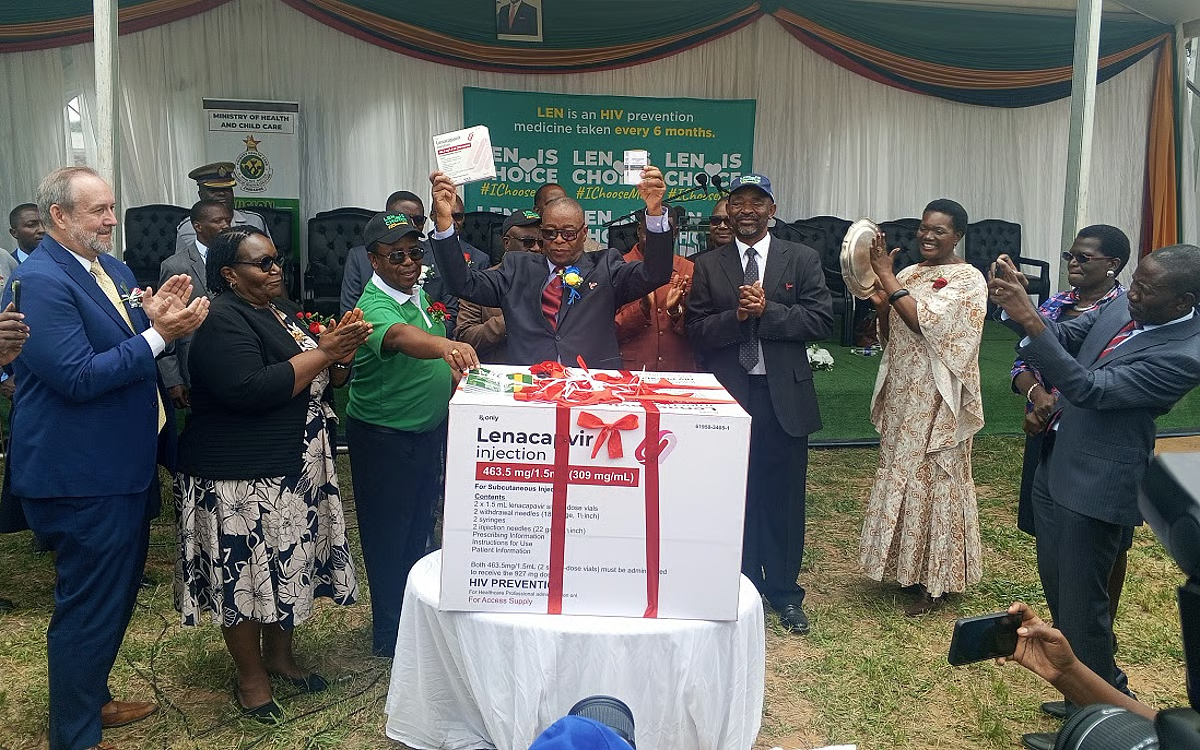
Zimbabwe has started rolling out Lenacapavir, the new long-acting injectable HIV-prevention drug, becoming one of the first countries in the world to do so.
Lenacapavir is the first twice-yearly injectable pre-exposure prophylaxis (PrEP) for HIV, offering a highly effective, long-acting alternative to daily oral pills. With only two doses per year, experts say it provides a practical option for people who face challenges with adherence, stigma, or limited access to healthcare. It also expands available choices in HIV prevention services.
Seeking to curb worrisome new infections, the roll-out, which took place on February 19 in Epworth — a shanty settlement some 20 km south of the capital Harare — started with 46,000 doses and is seen as a major milestone in the southern African country’s HIV prevention response.
Targeting new infections
Launching the new drug, Zimbabwe’s Health and Child Care minister Douglas Mombeshora said the programme, funded by the United States government and the Global Fund, would initially target more than 46,000 people at high risk of contracting HIV across 24 sites nationwide.
“Lenacapavir is a long-acting injectable option for HIV prevention and demonstrates our commitment to protecting lives and ending HIV/AIDS as a public health threat,” Mombeshora said.
He revealed that despite concerted efforts to curb the disease, new HIV infections continue to occur, especially among adolescents, girls and young women and other populations at increased risk.
“This tells us something important, prevention must fit into real life. Not everyone finds it easy to take a pill every day. Life gets busy, sometimes people forget, and stigma can make it harder to be seen taking pills,” he said.
He emphasised that Lenacapavir does not replace existing HIV prevention options such as abstinence, being faithful to one’s sexual partner, the consistent use of condoms, oral PrEP, and other injectables, but rather complements them. He also encouraged the public to rely on trained health professionals for accurate information, noting that health services are there to help and not to judge.
Speaking at the launch, Deputy Chief of Mission at the US embassy in Harare, Phil Nervig highlighted how this world-class American innovation is driving meaningful progress toward an HIV-free generation.
“LEN (lenacapavir) is a ground-breaking HIV prevention innovation developed by American scientists at Gilead Sciences — designed to make protection from HIV simpler, more private, and easier to stay on track with just two doses every six months,” Nervig said.
First phase targeting 46,000
Zimbabwe, one of the African countries that were ravaged by HIV/Aids at its peak and still has one of the highest infection rates in the world, is among the nine countries selected by World Health Organization (WHO) for the early receipt of this breakthrough next generation HIV prevention injection.
This first phase of the drug’s roll-out programme will target just over 46,000 people at high risk of HIV infection in districts recording high rates of new cases. Health authorities say those given priority include adolescent girls and young women, sex workers, homosexuals, pregnant and breastfeeding women, and others whose social or economic circumstances increase their risk of contracting HIV.
To complement existing HIV prevention tools
Health authorities in Zimbabwe stressed that Lenacapavir is not being introduced to replace existing HIV prevention tools, but rather to strengthen the country’s combination HIV prevention strategy by complementing these existing tools that have helped drive down new infections over the years.
The director of the AIDS and TB Unit in the Ministry of Health and Child Care, Owen Mugurungi, said Zimbabwe’s HIV response has long been guided by the principle that no single intervention can end the epidemic.
“When I say combination prevention, I mean that one tool might not be enough to prevent the acquisition of HIV,” he explained. “For many years, Zimbabwe has been guided by this simple principle that no magic bullet or single intervention can end HIV. However, we can reduce new HIV infections by combining different proven biomedical, behavioural, and structural interventions,” he said.
Mugurungi pointed out that available behavioural interventions include abstinence, monogamy and reducing concurrent sexual partnerships, while biomedical approaches cover HIV testing and counselling, treatment, proper and consistent condom use, management of sexually transmitted infections, post-exposure prophylaxis (PEP) and pre-exposure prophylaxis (PrEP).
He said PrEP has become a key pillar of Zimbabwe’s prevention toolkit, with the country progressively adopting all four options recommended by WHO.
Zimbabwe introduced oral PrEP in 2016, the dapivirine vaginal ring in 2021 and long-acting injectable cabotegravir in 2024. Lenacapavir becomes the latest addition to this HIV prevention tool kit.
“It does not come to replace, but to complement the existing options, and thereby strengthening our prevention package,” Mugurungi said.
PrEP is strictly for people who test HIV negative and is designed to prevent infection. It is not for people who are already living with HIV.
“It is not a vaccine. And most important, it does not replace your responsibility to make responsible decisions to protect yourself and those that you love,” Mugurungi added.
Another welcome drug
The chief executive officer of the National Aids Council, Bernard Madzima said the new drug is important especially for young women.
“As we all know, they are not empowered when it comes to negotiating safe sex, like the use of condoms, so we urge out communities to embrace this drug together with other preventative measures that are already available,” Madzima said.
Reverend Maxwell Kapachawo, an HIV/AIDS activist and the first pastor to come out in the open about his HIV positive status in 2005, welcomed the launch of the new drug, telling DTE that so far Zimbabwe has done good in its fight against HIV/AIDS and can still do better.
“It is indeed a milestone, but it is also important that we teach our people who are already of ART (antiretroviral treatment) that this injection has nothing to do with those who are already living with HIV, who are doing well on their tablets, because I tell you there has been a lot of misconceptions around this drug since it was announced.”
He expressed fears that because of these misconceptions, some people who are already on ART may default on their treatment thinking that a new super-drug has some to relieve them of the drudgery of taking pills daily.
2030 AIDS-free target
Targeting to end AIDS by 2030, Zimbabwe has made significant progress in tackling HIV, achieving the 95-95-95 treatment targets set by UN programme UNAIDS, which means 95 per cent of people living with HIV know their status, 95 per cent of those diagnosed are on treatment, and 95 per cent of those on treatment have suppressed viral loads. The disease peaked in 1997 when nearly 27 per cent of the country adult population was HIV positive, with deaths peaking up between 2002 and 2004 when over 4,000 people were succumbing to HIV/AIDS-related illnesses on a weekly basis.
A Sub-Saharan African menace
The HIV/AIDS pandemic has killed more than 44 million people since it started in the early 1980s, most of them in Africa. With about 27 million of the 41 million people living with HIV (PLWH) being found in Sub-Saharan Africa, the region is the global epicentre of the pandemic, holding roughly 67 per cent of the PLWHs even though the region is home to about 12 per cent of the global population. While globally new infections have declined by over 33 per cent since 2005, the region still accounts for most global cases, with particularly high, disproportionate prevalence among young women (15-24). Major challenges that the region face include high rates of new infections of about 700,000 annually, significant numbers of AIDS-related deaths of around 300,000, and the need for continued expansion of preventative measures and antiretroviral treatment.
It is for this reason that the region is given preference when it comes to new HIV prevention and treatment initiatives.