
Snakebite envenoming continues to pose a serious yet under-recognised public health challenge in rural India, according to a recent retrospective study from Raichur district in Karnataka. Analysing snakebite case records from a secondary healthcare facility from January 2020 to April 2023, the study sheds light on who is most at risk, how bites occur, and the gaps that exist in medical care.
Out of the 366 snakebite cases examined, one-third were found to be venomous bites, with young adults disproportionately affected. The average age of patients was just under 30, and nearly 60% were men, reflecting occupational exposure linked to agriculture and outdoor work. Most bites occurred during morning hours, when people were active in fields or around their homes.
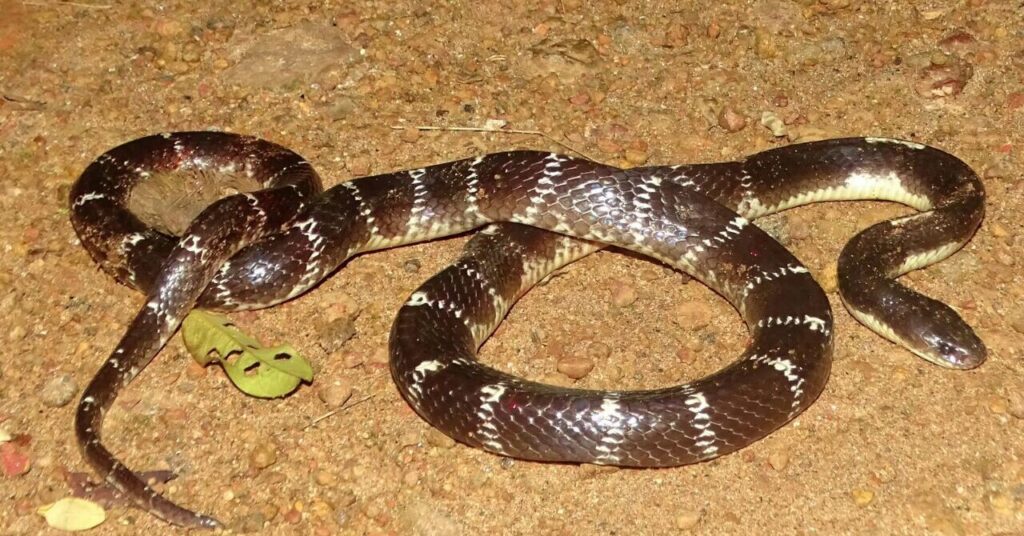
The common krait (Bungarus caeruleus), a highly neurotoxic snake and recognised as one of the “Big Four” medically important snake species, emerged as the leading cause of envenoming. Neurotoxic bites are particularly dangerous as early symptoms may be subtle, yet can rapidly progress to respiratory failure if untreated.
According to one of the authors, Dr. Chandan N. of ICMR- National Institute of Traditional Medicine, one of the key highlights of the study is that some of the secondary medical facilities like Hutti Gold Mines Hospital where the study was conducted, keeps a robust record of snakebite envenoming which can be used to study gaps in dealing with snakebites. “It’s only in 2024 that the Karnataka government declared snakebite as a notifiable disease. Most envenoming data comes from medical colleges. The study, however, shows that some of the secondary medical facilities can also provide useful data to further medical research into snakebite envenoming,” he says.
Another critical finding of the study is the delay in accessing medical care. About one-third of patients first sought help from traditional healers, losing valuable time before reaching hospital. Such delays significantly increase the risk of complications and death, despite the availability of effective treatment in health facilities. “Almost 70%-80% snakebites are non-venomous which gets better through traditional healing which, in turn, boosts people’s faith in non-medical interventions,” he points out.
The study observed that while around 78% of patients improved with hospital management, nearly 17% required referral to higher centres. Mortality stood at 1.6%, underscoring both the lethality of snakebite and the life-saving potential of timely intervention.
The authors stress that snakebite should be treated as a public health priority rather than an isolated medical emergency. They call for strengthening awareness, timely administration of antisnake venom, and improved documentation to reduce morbidity and mortality from snakebites.
Banner image: Common krait. Image by Manoj Karingamadathil via Wikimedia Commons (CC BY-SA 4.0).