Globally, monitoring, reporting and verification (MRV) systems have become central to climate transparency. Under the Paris Agreement, countries must track emissions, adaptation progress, and climate finance to show movement towards their Nationally Determined Contributions. COP30 reinforced this through the Global Implementation Tracker, the Belém Mission to 1.5°C, and voluntary indicators for the Global Goal on Adaptation.
India aligns with this direction, emphasising that stronger domestic MRV is essential both for transparency and for unlocking climate finance, while also underscoring that developing countries need substantial financial and technical support to build such systems. Also, climate finance must not only increase in scale but also shift power downwards to frontline communities like the Indigenous Peoples, and local communities. These communities who observe climate change daily and bear its greatest impacts must lead monitoring efforts, govern funds, and access resources that support local adaptation and environmental stewardship.
Yet, MRV systems still rely heavily on remote sensing, administrative datasets, and external expertise, leaving little room for community-generated insights. It is in this context that Tamil Nadu’s community-based environmental MRV (CbMRV) initiative becomes relevant. It makes community-generated environmental intelligence a formal part of climate governance.
The CbMRV model
Across Tamil Nadu, climate change is reshaping daily life: in Erode, farmers describe rains collapsing into short, intense bursts, and increasing heat waves; along the Cuddalore coast, salinity is moving inland and shifting tides are affecting fish catch; and in the Nilgiris, tribal foragers report thinning forest moisture and erratic flowering cycles. These signals emerge first at the smallest ecological scales, yet policymaking relies on coarse datasets as climate intelligence has rarely been produced locally.
CbMRV was created to change exactly that. It enables villages to generate systematic, science-ready environmental data. It weaves traditional ecological knowledge with field-based monitoring of rainfall, temperature, soil and water health, biodiversity, fish catch, cropping patterns, livelihoods, and even carbon stocks and emissions. This evidence is integrated into a digital dashboard that informs decision-making across village, district and State levels. CbMRV thus reframes governance as a partnership between communities and institutions, rather than a top-down exercise.
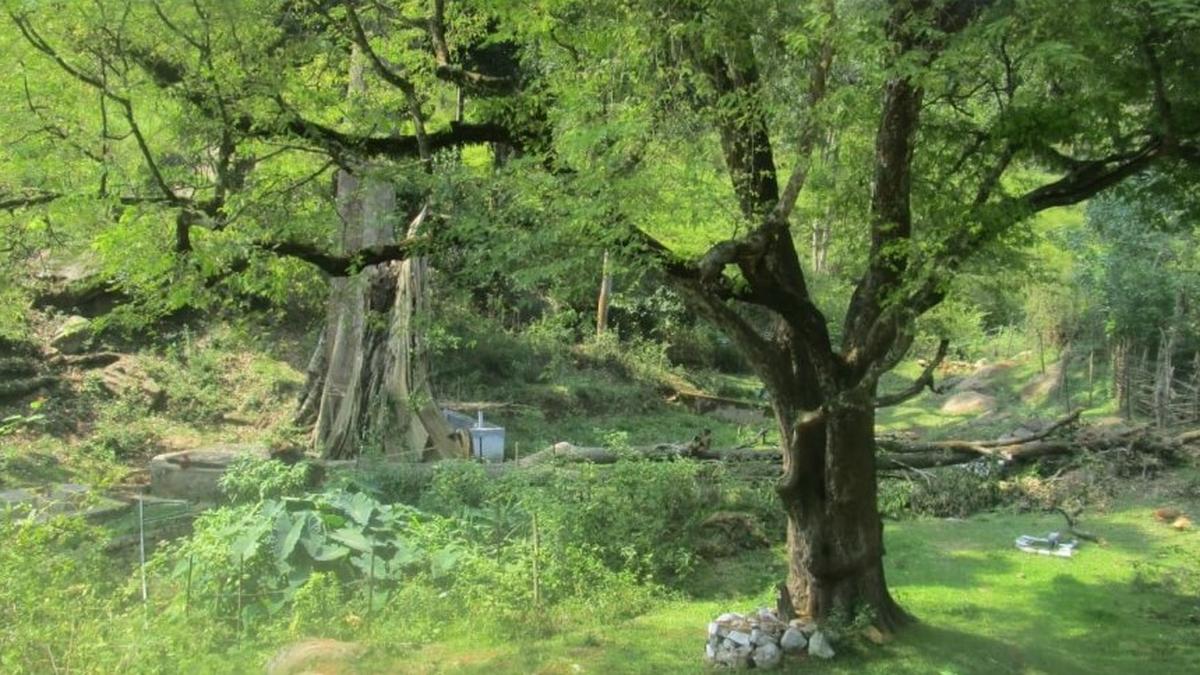
The initiative began in 2023 under the UK PACT programme, which enabled Tamil Nadu to pilot a community-based MRV system that could support just transition goals. In collaboration with Keystone Foundation and other scientific partners, three ecologically distinct landscapes were selected: Aracode in the Nilgiris (mountain forests), Vellode in Erode (agriculture and wetlands), and Killai in Cuddalore (mangroves and coastal fisheries).
In these locations, communities contributed generational knowledge that shaped the indicators, monitoring protocols and digital tools that now underpin CbMRV. Carbon feasibility studies were conducted in parallel to assess how reliable village-scale data could support future community-centred carbon projects. In less than three years, each pilot village has developed into a functional environmental knowledge hub, with trained monitors, field instruments and digital systems capable of generating real-time data.
Community climate stewards
A defining achievement of the initiative is the emergence of 35 key community stakeholders (KCS) — farmers, fishers, women, youth, elders, and tribal knowledge-holders — who now serve as first community climate stewards. They collect and interpret environmental data, and can identify trends, work with local institutions, and help translate information into daily decisions in the near future.
CbMRV is also reshaping how data flows through governance systems. At the panchayat level, it can complement Gram Panchayat Development Plans and programmes such as the Climate Resilient Village, strengthening vulnerability assessments, crop diversification decisions, and natural resource management. At the block and district levels, village-scale evidence can support watershed development, agricultural advisories, and disaster preparedness. At the State level, CbMRV can enhance the evidence base for the Tamil Nadu Climate Tracker, the State Action Plan on Climate Change, the Green Tamil Nadu Mission, coastal adaptation programmes and climate investment pathways under the Tamil Nadu Green Climate Company.
A key aim is long-term institutionalisation and the creation of a permanent green workforce. Training modules, applications, field protocols and dashboards developed under CbMRV are being proposed for integration into community colleges, Industrial Training Institutes, forestry and agricultural institutions, Panchayat Raj training centres, and State skill development programmes. With sustained support, community monitors can maintain long-term environmental baselines and eventually replicate the system across wider geographies.
When the tools of science are shared rather than concentrated, and when governance grows from the ground up, climate action becomes both more democratic and more resilient.
Supriya Sahu, Additional Chief Secretary, Environment, Climate Change and Forests Department, Government of Tamil Nadu; Pratim Roy, Co-founder of Keystone Foundation and a rural development expert and ecologist; Tabinda Bashir, Advisor, Climate Change and Energy – Foreign, Commonwealth and Development Office, U.K. Government
Published – December 15, 2025 01:39 am IST