

- A night safari has been proposed in the Kukrail Reserve Forest in Uttar Pradesh, home to the Gharial Rehabilitation Centre and several vulnerable species.
- Recent policy changes, including the Forest (Conservation) Amendment Act, 2023, weaken forest protection and enable such projects to bypass environmental scrutiny.
- Turning Kukrail into a night safari and an ecotourism zone risks changing not only the forest’s ecology, but also its social fabric.
- The views in the commentary are of the author.
The Uttar Pradesh government has proposed a night safari in the Kukrail Reserve Forest. While it is being planned as an eco-tourism project, artificial lighting, noise, and constant human presence threaten the very species it aims to protect.
Located on the capital city — Lucknow’s northern edge, Kukrail is more than a patch of green; it is the city’s green lung, home to owls, reptiles, migratory birds, and the nation’s most prominent gharial rehabilitation centre. Several studies describe light pollution as an “ecological pollutant” that alters animal behaviour, navigation, and reproduction, breaking the natural rhythm that species like owls, bats, and jackals depend on.
Dilution of environmental laws
The first phase of the project, covering 6.5 hectares (about the size of two to three cricket grounds) will include enclosures, walking trails, a 7D theatre, an art gallery, and other visitor facilities. What might have required a comprehensive Environmental Impact Assessment (EIA) under the 2006 notification could now, in practice, bypass rigorous scrutiny because the Forest (Conservation) Amendment Act, 2023, redefines what counts as “non-forest use” for certain government projects like safaris and zoos. This reclassification can allow such projects to proceed without triggering the EIA process, even if their ecological footprint remains significant. However, the exemption given to safaris under Section 5(a) of the Forest (Conservation) Amendment Act, 2023 is itself under challenge in the Supreme Court.
Moreover, in its February 2024 order in the Corbett Tiger Reserve case, the Supreme Court further restricted the construction of safaris in forest areas without prior wildlife and forest clearances, making Kukrail’s legal position even more precarious.
As we contemplate the impact of what this proposed project will mean, it is important to also note that the legal status of the Kukrail Night Safari remains contested. Cases related to permissions and clearances are pending before the National Green Tribunal (NGT) and the Supreme Court of India. In its hearing on August 29, the Supreme Court sent the matter to the Central Empowered Committee (CEC) for a review. The CEC was asked to examine the issue and submit a report within four weeks and the next hearing was scheduled on October 8. However, the case is still pending before the Supreme Court.
There has been public opposition to the project. Citizen-led group – There Is No Earth B has launched the Save Kukrail campaign urging the government to halt construction and protect Kukrail’s forest ecosystem. Through a letter to the Central Empowered Committee (CEC), the campaign recommended the CEC to consider the ecological impact of the night safari.
Bhawna Tanwar, a campaigner with the group, explains what drives their work: “We keep hearing about ‘eco-tourism,’ but there’s nothing ‘eco’ about cutting down 1,500 trees or displacing the wildlife that makes this place so special.” Her words echo the growing sentiment across Lucknow that conservation cannot come at the cost of the very ecosystems it claims to protect.
Conservation versus tourism
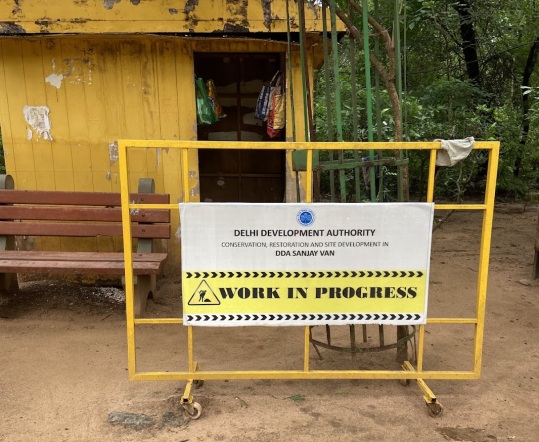
Kukrail’s fate is not an isolated case. Across India, forests and wildlife habitats, from tiger reserves to elephant corridors, are being turned into tourist zones rather than protected spaces. Urban forests like Sanjay Van in Delhi face similar pressures, with legal protections bent to accommodate roads, beautification drives, and recreational “upgrades.” What is unfolding across the country mirrors what is at stake in Kukrail: the slow erasure of natural forests under the rhetoric of eco-tourism, where aesthetics and tourism are prioritised over ecological integrity.
Often these projects are justified in the name of “development”. This constant urge to monetise the green spaces comes from seeing these forests as “empty lands”. Kukrail, and other such urban forests are anything but empty lands. Kukrail is home to 39 amphibian and reptile species, including 14 species of frogs, two turtle species, one crocodilian, eight lizard species, and 14 species of snakes. Some of these species feature on the Red List of the IUCN as endangered, near threatened, or vulnerable.

Kukrail Gharial Rehabilitation Centre was created in 1978, when gharials were on the brink of extinction. Here, eggs are rescued from riverbanks, incubated with care, and the young are released back into India’s rivers such as the Ganga, Chambal, and Ramganga.
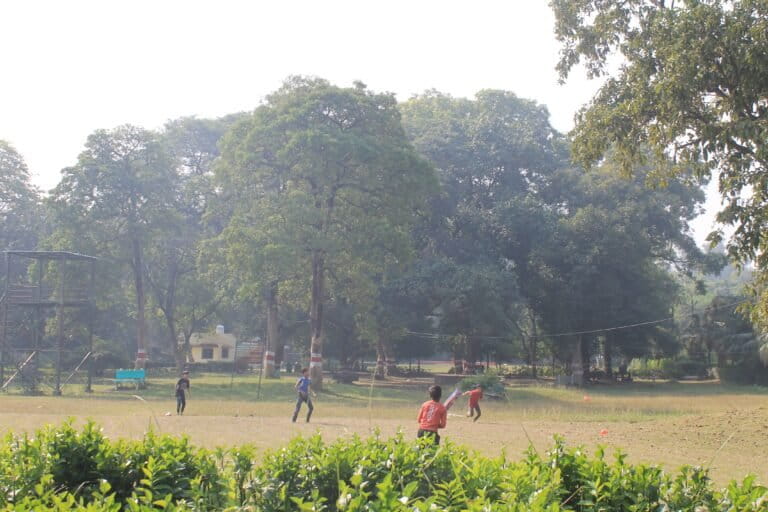
Kukrail now serves as a truly public space, visited by school children on field trips, local families seeking respite from the city’s heat, morning walkers, birdwatchers, and nature enthusiasts. It functions as a democratic green commons, accessible to all without cost or privilege. When Azma Khan, another campaigner with There Is No Earth B, went on a field visit to Kukrail, some local residents told her that they were not consulted about the night safari. They were also worried about the presence of predators and their safety. They also worried if the space would be ticketed for entry.
Turning it into a night safari and a high-end ecotourism zone risks changing not only the forest’s ecology but also its social fabric. Before we treat it as an empty land up for monetisation, we need to question what we are putting at stake.
The biodiversity of Kukrail
There have been talks of compensatory plantation elsewhere to make up for the loss in Kukrail. However, it is important to keep in mind that Kukrail Forest, established in the 1950s as an urban plantation, is now approximately 75 years old. Originally created to serve as a green lung for Lucknow, it has matured into a complex ecosystem, supporting diverse flora and fauna.
While tree-planting initiatives and urban afforestation projects are often celebrated as solutions to deforestation, they cannot replicate the intricate ecological web of a forest that has developed over decades.

Kukrail’s 75-year-old canopy is not just a collection of trees, it is a living ecosystem, one that cannot be duplicated by mere saplings, fancy landscaping, or urban development masquerading as conservation. Planted trees also need intensive care in their early years to survive. Projects like the Kukrail Night Safari may risk undoing decades of ecological growth, and no amount of planting elsewhere can replace what is lost.
In Mumbai’s Aarey forest case, a Supreme Court affidavit revealed that only about half of the saplings planted as “compensatory” trees had actually survived, despite thousands being planted on paper.
For Kukrail, the trees were planted deliberately, species were selected and nurtured, and the grounds have been actively managed to maintain ecological balance. The gharials in the rehabilitation centre, the rescued eggs, and the carefully nurtured young released into rivers are all evidence of sustained conservation intervention. The richness of Kukrail’s flora and fauna is because of these human efforts, not in spite of them. This distinction matters: the problem is not human involvement per se, but interventions that disturb or commodify the ecosystem like night safaris. The problem is not human touch, but the intention behind it.
Conservation over spectacle
Kukrail is more than a forest; it is survival infrastructure for a city that’s already choking. Lucknow has repeatedly reported PM2.5 RSPM from 148.74 to 323.05 lg/m3, several times higher than WHO guidelines, and regularly features among India’s more polluted cities during winter. Forests like Kukrail help trap dust and pollutants, cool surrounding neighbourhoods, and offer rare pockets of clean air in an otherwise toxic landscape.
Kukrail also acts as a natural heat shield. As heat waves intensify across north India each year, cities like Lucknow experience urban heat island effects, built-up areas trap and radiate heat, while vegetated areas stay significantly cooler.
If we lose Kukrail, we lose more than trees or gharials; we lose a blueprint of coexistence, a reminder that some spaces are too precious to commercialise. The choice is ours: exploit for spectacle, or defend for life.
The author is a researcher with There Is No Earth B, a volunteer movement focussed on climate action and advocacy.
Banner image: Young gharials at the Gharial Rehabilitation Centre at Kukrail. Image by Azma Khan.

