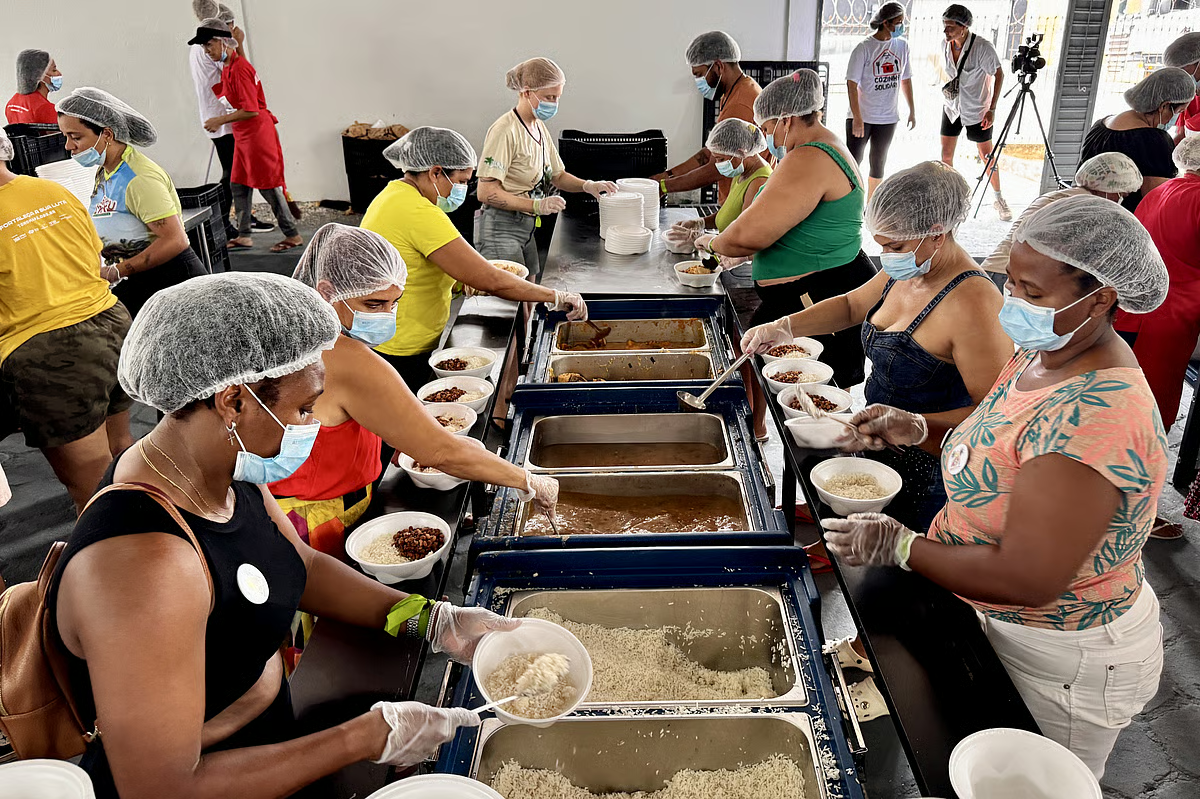
“This was delicious, nutritious and culturally rooted food, for less than €7 a full plate. The food came from 60 cooperatives, associations and networks, and all that money was shared by the operators. No financial services were available, so they took all the risks,” he said.
Another major outlet, Lacitata, was also closely linked to local family farming networks. The menus brought together ingredients from Brazil’s diverse biomes. Indigenous produce featured prominently, with Açaí and Brazilian nuts harvested by the Kayapó people forming key ingredients, chosen both for their cultural significance and their capacity to meet the scale demanded by the conference.
“We never imagined our food would reach so far. It brings joy to know that our work is part of something so significant,” Ana Cláudia Souza, a farmer associated with the Agricultural Cooperative of Producers of Belém do Pará (Copabel), was quoted by COP30 in a statement.
The road to 30%
The initiative established a new benchmark for how major international events can transform their food systems, one that civil society organisations hope will become the standard for future climate conferences.
But securing this outcome was far from straightforward. It all started with a stark realisation during another high-profile gathering.
In August 2023, Belém hosted the Amazon Cooperation Treaty Organization Summit, bringing together heads of state from eight countries in the Amazon along with 25,000-30,000 participants. As attendees searched for lunch options, they found only fast food chains, a single overwhelmed restaurant that could barely serve 500 people, and three food trucks.
“It was clear that nobody took care of that. We had to leave the venue for lunch. Simply, there were no good options for people to eat,” Muriana recalls.
During one such lunch break, he was speaking with a local farmer leader who posed a question that would catalyse the entire Na Mesa da COP30 campaign: “We have catering services of our own, and we could serve local food — why didn’t they ask us?”
That question resonated deeply. When COP28 took place in Dubai later that year, Muriana and his colleagues began asking a pointed question of their own: “When will COPs ever offer low carbon emission foods?”
Anticipating government scepticism, Instituto Regenera and partners began an extensive year-and-a-half-long mapping exercise across Pará state in 2023. More than 80 producer networks were mapped, documenting what farmers grew, their production cycles, idle capacity, infrastructure needs, certification status and access to transport and storage. The exercise also identified what support farmers would need — from advance purchase commitments to technical assistance to supply food at scale.