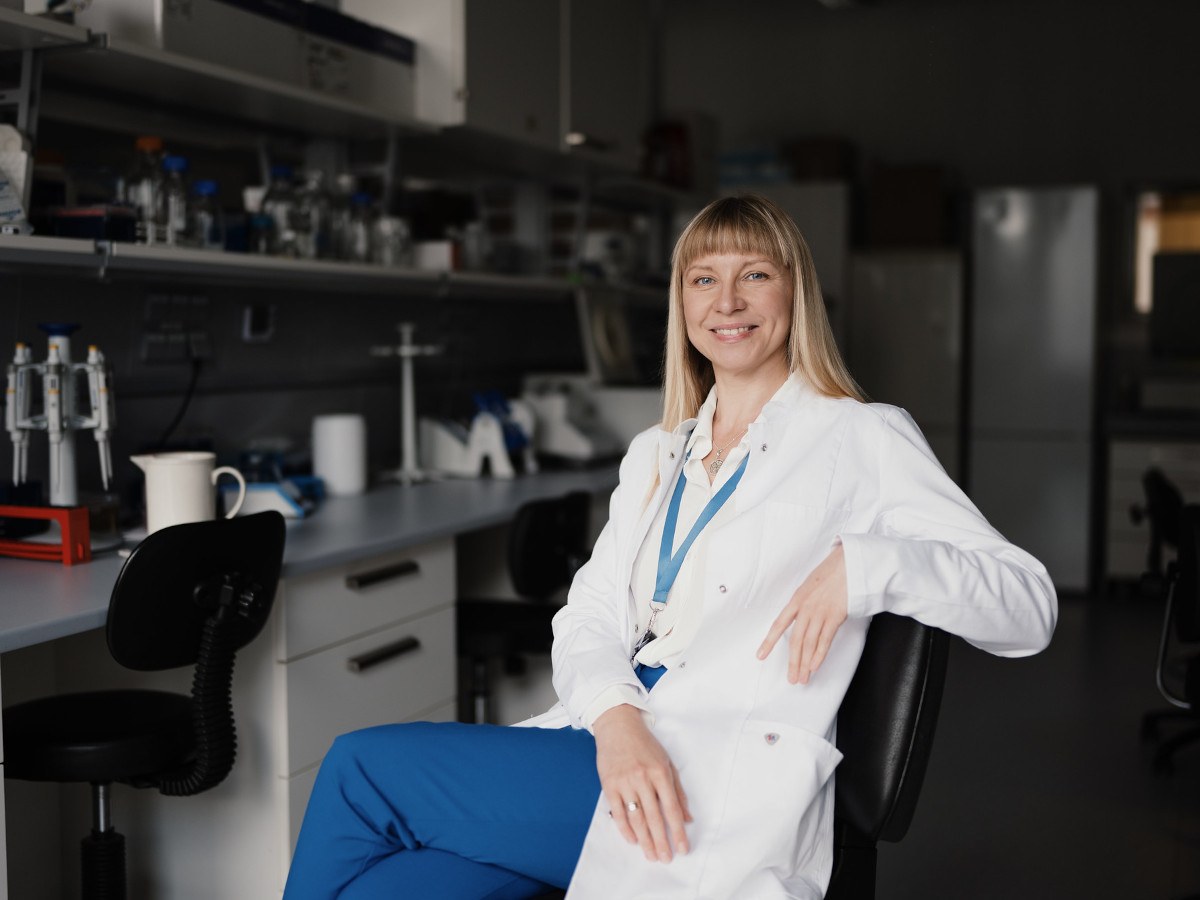
Dr Miglė Tomkuvienė discusses how our bodies are, on a molecular level, something of a miracle.
We should all love the bodies we were born into, says Dr Miglė Tomkuvienė, a senior researcher at Vilnius University. “It is a miracle, built of tens of thousands of genes, playing in harmony in every tens of trillions of cells,” she explained, and for a single bacteria, the gut can seem like an entire universe.
“After decades of studies, I still sometimes find myself in awe contemplating how it works, organised through layers of complexity from nanometer long molecules to those a bit more than 1.6 meters, my height,” she says.
Tomkuvienė and her team, in collaboration with doctors in the medical field, study the effects of rare mutations and deviations in select patients, in order to better understand the mechanisms of gene regulation. This is defined as the process used to control the timing, location and amount in which genes are expressed.
“That helps us to understand human body development, molecular pathways of disease and pave new ways for next-generation diagnostics and therapies for diseases with underlying epigenetic causes,” says Tomkuvienė.
Who added, “Every cell of the human body carries the same genome, but, amazingly, they form a variety of different organs. It comes down to tiny molecular machines that are called epigenetic regulators which act on our DNA. They fine-tune different gene expressions for the needs of every cell.”
So, when this harmony created by gene orchestration fails, so does our health, she explains.
Breaking down complexity
Tomkuvienė finds that sometimes, for the human mind, it can be difficult to grasp just how complex our bodies and the systems that power them, truly are.
She asks that you try to imagine it and states that as of yet the most up to date information we have has shown that the human body has 78 recognised organs. These are built of roughly 200 tissue types, creating 30 to 40trn cells in total, all operating on the genetic information of 20-30 thousand protein-coding genes and regulatory DNA sequences.
“And this is only a fraction, which I’m giving as an example, of the complexity our body has to deal with everyday,” she exclaims.
“For us to be healthy, all these parts and layers have to function in harmony. As scientists, we usually take a reductionist view, thoroughly studying one gene, one protein, one organ”, but all of it is in fact interconnected. As a result, generating new findings and treatments can be difficult.
She notes, the issues of ageing and cell degeneration are not new. Rather, they are woven into our evolutionary history, beginning likely at the time that complex life first appeared on the planet and therefore are not going to be resolved by decades of vigorous scientific research. But that doesn’t mean that progress isn’t crucial to how we live now.
“Life expectancy nowadays is around 80 years old in the Western world”, says Tomkuvienė, who adds that often people can only expect roughly 65 of those years to be disability or disease free. The chronic, usually age-related diseases that diminish the quality of our lives is a huge burden not only for a person, but also has vast implications for the medical system, economics and social environment.”
She states, “If we all, not only scientists, but the whole of society, seek to extend the expectancy of healthy life, that would bring benefits for all. People would stay active, productive and hopefully, happier for longer, the funds that are now spent on medical care would be available for other needs, altogether leading to a more prosperous society.”
In collaboration with medical doctors, fellow scientists and other key industry players,Tomkuvienė is hopeful that her team can not only reach a wider audience with their findings, but also paint a broader picture of life, health and longevity.
And of the aspects of a biochemistry career that excite her personally, she explains, “It’s still the miracle of life – how it’s built, programmed using the genetic language of DNA, how it interacts with the environment, learns even at the molecular, epigenetic level and evolves.”
She cites in particular, “The moment when you find out something new about the biochemistry of life and you know that this is the time when you are the only person in the world who knows it and then you go share it with colleagues, peers and society.”
Don’t miss out on the knowledge you need to succeed. Sign up for the Daily Brief, Silicon Republic’s digest of need-to-know sci-tech news.