Companies are seeking out data centre deals to feed the unprecedented energy requirements needed for AI.
Alphabet caps the year off with a new data centre business acquisition, as global investments into the market hits $61bn.
The tech giant is acquiring Intersect, a data centre and energy infrastructure solutions provider. The transaction includes a $4.75bn cash deal plus the assumption of debt. Google is already a business partner and a minority stake holder in Intersect.
With the transaction, Alphabet is gaining ownership of Intersect’s workforce, and multiple gigawatts of energy and data centre projects in development, or under construction, from its existing partnership with Google.
Although, the company’s operations are set to remain separate from Alphabet and Google under the Intersect brand. Its existing operating assets in Texas and its operating and in-development assets in California, will not be part of the acquisition, the companies said in a statement. These will operate as an independent company, supported by existing investors TPG Rise Climate, Climate Adaptive Infrastructure, and Greenbelt Capital Partners.
“Intersect will help us expand capacity, operate more nimbly in building new power generation in lockstep with new data centre load,” said Sundar Pichai, the CEO of Google and Alphabet. Sheldon Kimber, the founder and CEO of Intersect commented, “Modern infrastructure is the linchpin of American competitiveness in AI.”
The battle for data centres
The unprecedented scale at which AI systems are trained and deployed is, in turn, putting pressure on businesses to seek out data centre deals to support the massive growth.
This hunger for data centres has pushed the global investment in the data centre market to $61bn, marked by a “construction frenzy that shows no signs of slowing”, according to a recent S&P report. 2024’s investment into the market was just marginally lower, at $60.8bn.
Data shows that there are around 4,000 data centres in the US, compared to the UK that has roughly 500 and Ireland that has more than 130.
Meanwhile, a McKinsey report estimates that data centres worldwide need around $6.7trn by 2030 to keep up with the pace and growing compute power needed for the technology. This, as the electricity demand from data centres is set to more than double from 415TWh in 2024 to 945TWh by 2030.
2025 year saw dozens of new, massive data centre deals. In November, Microsoft and Google made in total more than $16bn in data centre commitments in Europe.
While a month earlier, Ireland-based international data centre infrastructure developer Echelon Data Centres acquired a 37-acre site with grid power near Milan, with plans to invest up to $3bn into it.
Earlier this summer, Amazon announced a A$20bn investment into its Australian data centre infrastructure in Sydney and Melbourne.
Meanwhile, in Ireland, as the data centre hunger consumed 22pc of the country’s total metred electricity in 2024, Equinix acquired BT’s Irish data centre operations for €59m. While this year, Echelon announced a €3.5bn investment into two new data centres in Co. Wicklow.
And OpenAI announced its first European data centre in Norway, in participation with UK data centre infrastructure provider Nscale. Bloomberg reported that the company is also planning for a massive new data centre in India, in what would be a push for its ‘OpenAI for Countries’ venture under Stargate.
According to a Rest of World report, data centres in 21 countries around the world, including India, Singapore, several South American and North African countries, operate in hotter than ideal temperatures, placing heavier burden on cooling systems and reducing the efficiency of power transmission.
Don’t miss out on the knowledge you need to succeed. Sign up for the Daily Brief, Silicon Republic’s digest of need-to-know sci-tech news.
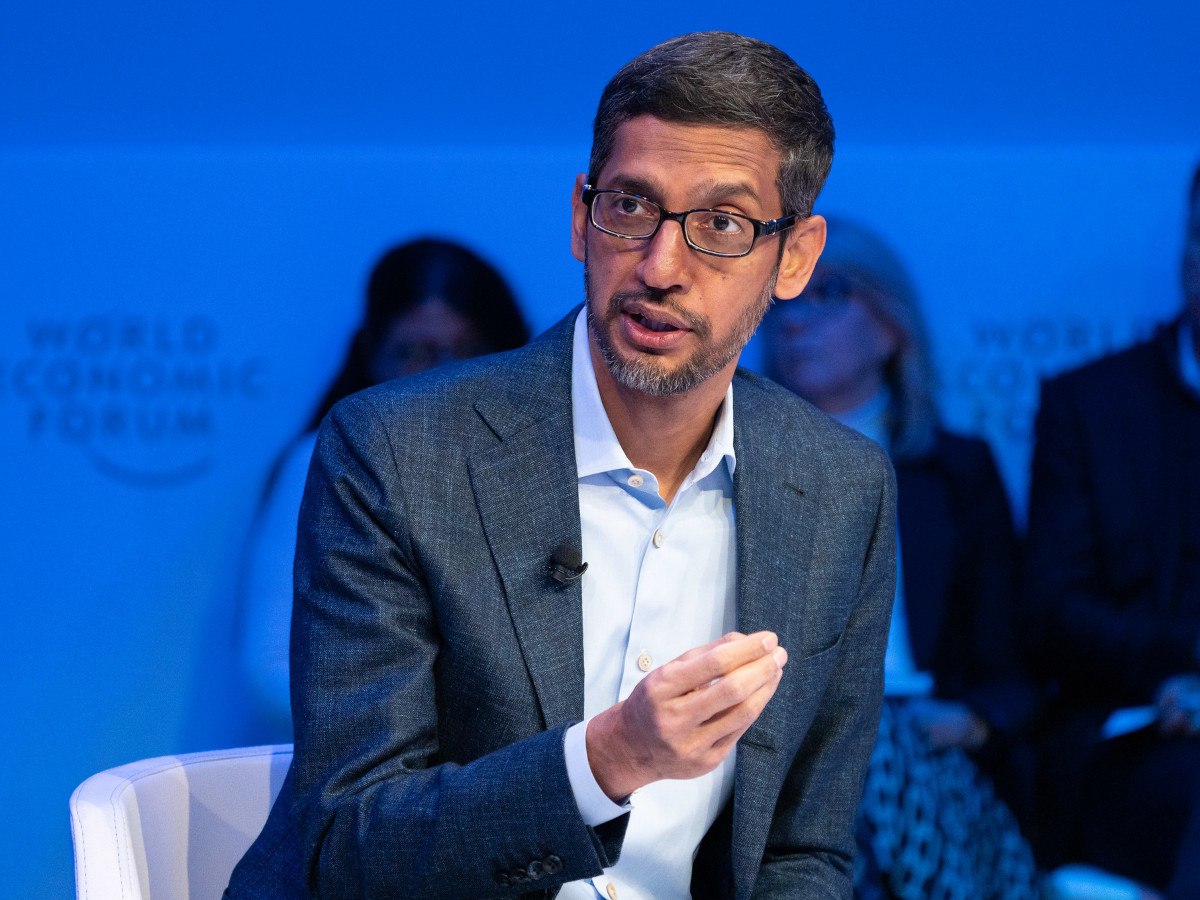
Sundar Pichai at the World Economic Forum Annual Meeting 2020 in Davos-Klosters, Switzerland. Image: World Economic Forum Annual Meeting/ Flicker (CC BY-NC-SA 2.0)