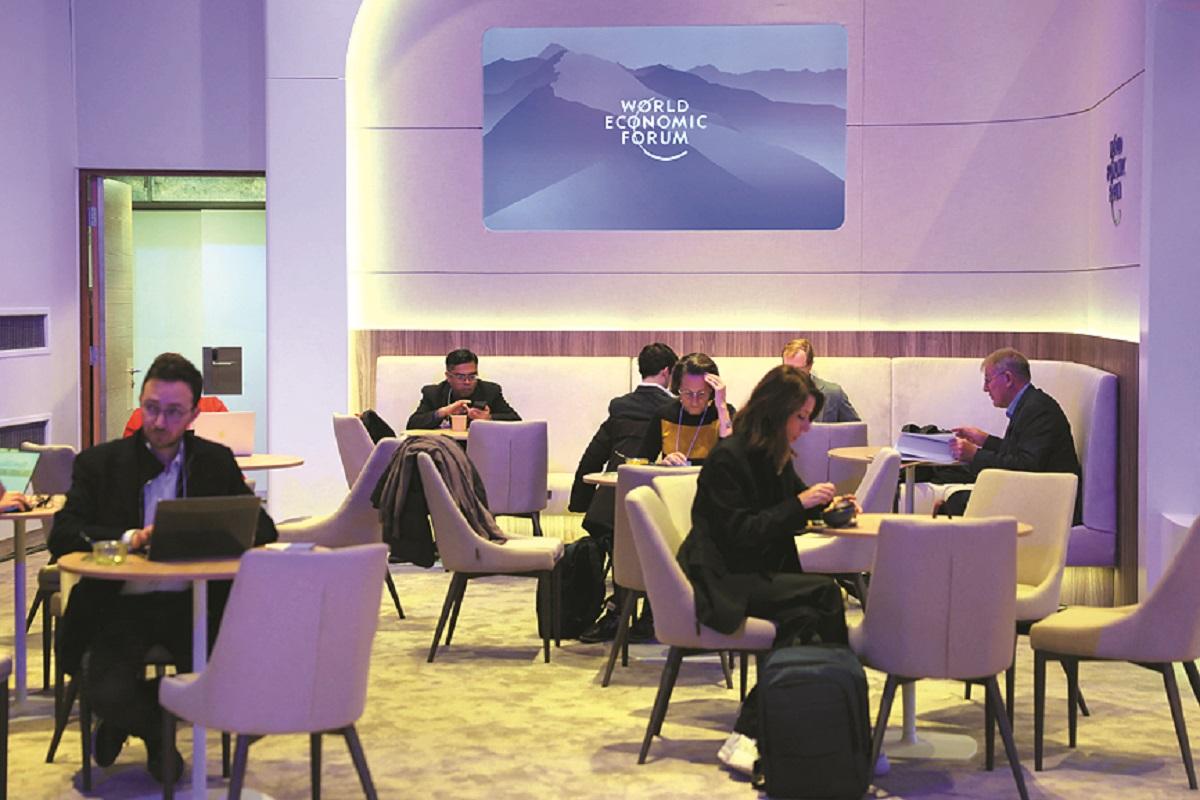
Even in the heyday of the liberal democratic order, the conceit of the World Economic Forum induced skepticism: Once a year, the wealthiest, most powerful people on earth gather in a village in the Swiss Alps to devise solutions to the most critical problems in modern life.
The slogan of the forum, “Committed to Improving the State of the World,” has long encapsulated the reason for doubt. People with the greatest stake in the status quo are cast as change agents, uniting with world leaders to pursue the betterment of humanity.
But this year, with the world seized by geopolitical turmoil, and the United States ruled by a president who is hostile to multilateral cooperation, Davos seems especially challenged by internal contradictions.
The event’s most prominent attendee, US President Donald Trump, has applied his authority to pursue a global trade war while threatening to seize Greenland from Denmark. Organisers are accustomed to the contortions of packaging a gathering of executives and world leaders as a vision quest.
This year they appear to have induced surrender, an acceptance that no set of principles can unite the people flocking to Davos. Forum organisers noted the need for discussion “amid the most complex geopolitical backdrop in decades,” one “marked by rising fragmentation and rapid technological change.” In contrast with previous years, there was no mention of climate change or the need for an energy transition, to say nothing of promoting trade.
Buzzwords that once got a strenuous workout — fair taxation, sustainability and social justice — were largely absent from the forum’s official pronouncements. It was an implicit recognition of the changing values governing the global economy as forum organizers readied the red carpet for their star attraction, Trump, who is expected to speak on Wednesday.
His administration has replaced a previous focus on clean energy with a return to fossil fuels, while prosecuting a campaign to root out “woke” tendencies in government and business. He has been gathering donations for the construction of a White House ballroom from crypto executives engaged in business deals with his family enterprise — the sort of conflict of interest that once animated forum leaders.
Faced with the reality that the world is increasingly run by people who oppose its customary objectives, the forum appears to have reduced itself to its central purpose: a business meeting.
The slogan of the forum, “Committed to Improving the State of the World,” has long encapsulated the reason for doubt. People with the greatest stake in the status quo are cast as change agents, uniting with world leaders to pursue the betterment of humanity.
But this year, with the world seized by geopolitical turmoil, and the United States ruled by a president who is hostile to multilateral cooperation, Davos seems especially challenged by internal contradictions.
The event’s most prominent attendee, US President Donald Trump, has applied his authority to pursue a global trade war while threatening to seize Greenland from Denmark. Organisers are accustomed to the contortions of packaging a gathering of executives and world leaders as a vision quest.
This year they appear to have induced surrender, an acceptance that no set of principles can unite the people flocking to Davos. Forum organisers noted the need for discussion “amid the most complex geopolitical backdrop in decades,” one “marked by rising fragmentation and rapid technological change.” In contrast with previous years, there was no mention of climate change or the need for an energy transition, to say nothing of promoting trade.
Buzzwords that once got a strenuous workout — fair taxation, sustainability and social justice — were largely absent from the forum’s official pronouncements. It was an implicit recognition of the changing values governing the global economy as forum organizers readied the red carpet for their star attraction, Trump, who is expected to speak on Wednesday.
His administration has replaced a previous focus on clean energy with a return to fossil fuels, while prosecuting a campaign to root out “woke” tendencies in government and business. He has been gathering donations for the construction of a White House ballroom from crypto executives engaged in business deals with his family enterprise — the sort of conflict of interest that once animated forum leaders.
Faced with the reality that the world is increasingly run by people who oppose its customary objectives, the forum appears to have reduced itself to its central purpose: a business meeting.