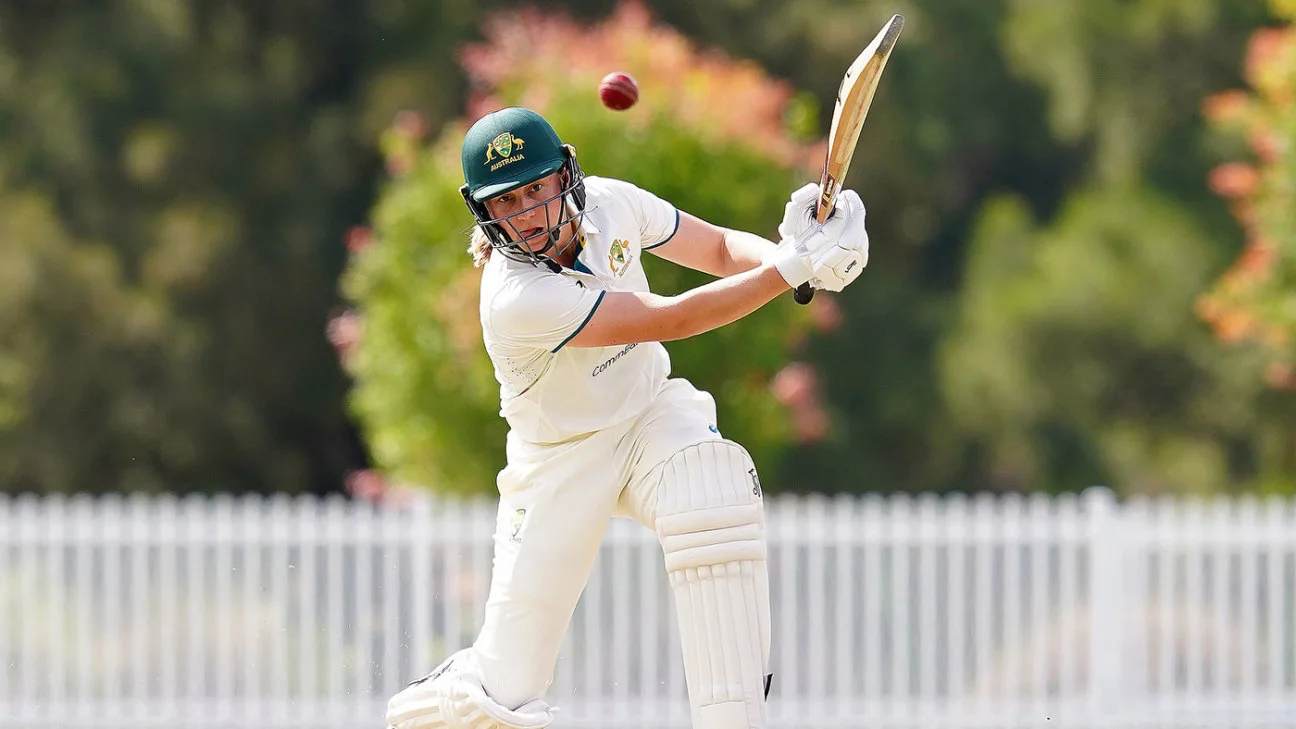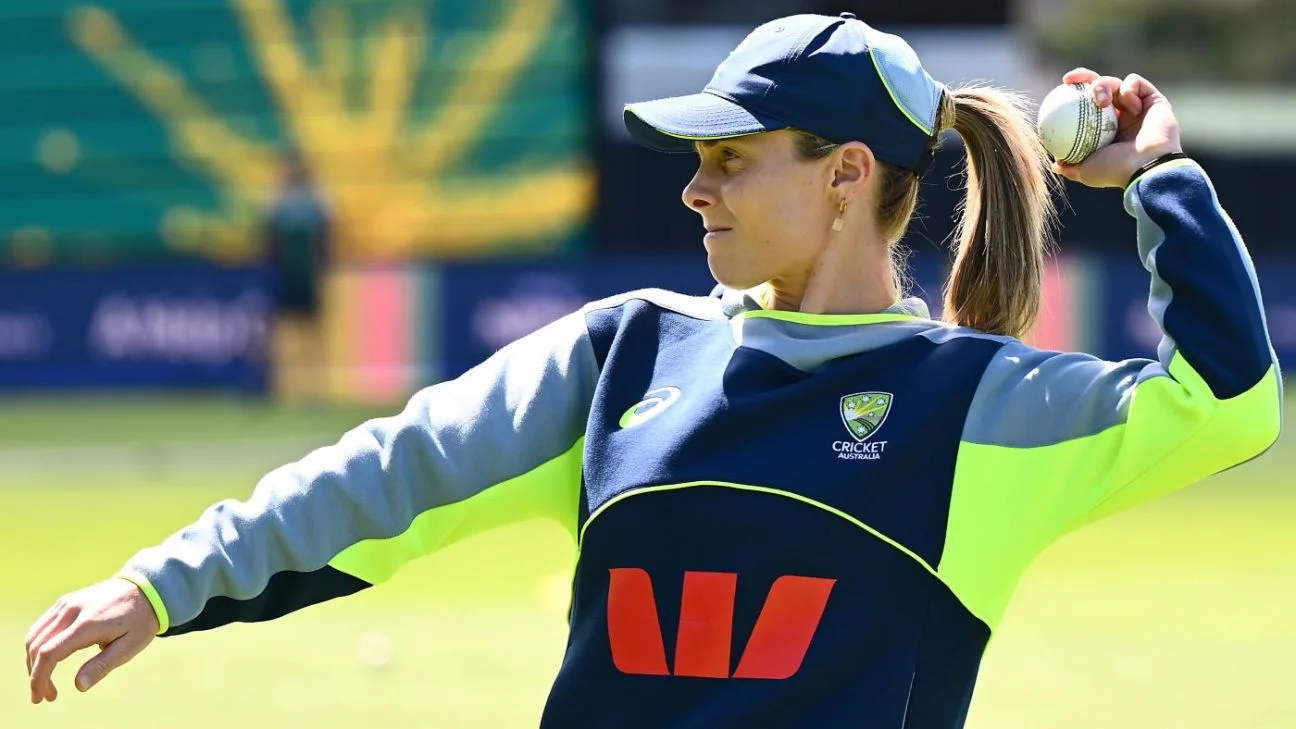
Molineux, who has previously had extended periods on the sidelines with foot and ACL injuries, was named as Alyssa Healy’s successor across formats earlier this year before taking charge in stages, beginning with the T20I series against India and then full-time for the tour of the West Indies following Healy’s retirement.
However, by then Molineux had already been struck with a stress reaction in her back and was unable to bowl in the Caribbean, which Flegler termed a “setback”, during which she played as a batter-only during the three T20Is and in the first ODI before being rested for the rest of the series.
Molineux’s appointment came ahead of a period where T20 cricket will be a major focus: this year’s World Cup is followed by the new Champions Trophy in 2027 and then the 2028 Olympic Games and next T20 World Cup.
“So, yeah, the stress reaction in the back during the Indian series, not ideal, but things do happen. We just made decisions around that and we decided we could either push through with it, take a big risk and see if she got through, or we just pull back a little bit.
“We decided to pull back, but we still thought it was important that she was around the group [in the West Indies]. She’s on track for the T20 World Cup and that’s what the goal was at the start. It’s probably a fair point to say it’s unprecedented. But we think, on balance, she was the candidate that was the best option for a number of reasons: her on-field experience and success that she’d had, her off-field connection and a vision for the team.
“We’ll be judged on that as time goes on, but we think it was the right decision at the time. I think she’s done really well in the games that she has captained and the way she’s been around the group so far. I guess we’ll see how that ends up in the T20 World Cup and how it goes in the future as well.”
Flegler added that Molineux would not be considered for a non-bowling role at the World Cup. “We’re certainly not looking at her as a batting captain,” he said. “She’ll be playing as a bowling allrounder to be available.”
“These conversations took place over 12 months, essentially,” he said. “Soph was picked as a 20-year-old initially and her leadership capabilities were recognised very early. So if she wasn’t injured, you could easily have seen her being captain a couple of years earlier.
“I guess it’s hard when you’re not on the inside, you don’t get to see all the stuff that does happen with team dynamics and how the group operates and what energy is around. When you’re seeing decisions made and from an external point of view you go, that doesn’t make sense, but we’re comfortable internally that was the right decision for this group at this time. So we’re happy to be judged on that down the track.”
There is potentially a scenario where it’s tough even fitting all four of them into the 15-player squad depending on the final balance between an extra batter, quick or spinner. A World Cup in England during June may not be conducive to such a spin-heavy attack, with Flegler noting Australia had two group matches starting at 10.30am when they face Bangladesh at Headingley and Netherlands in Southampton.
“One of the things we need to look at is conditions,” Flegler said. “We spoke to Alana about this as well… but she’s certainly put her hand up. I think with Sophie’s injury, that does come into the discussions about what’s the best fit in the squad if we have four spinners or are we comfortable with three that we’ve got. Whoever misses out is going to be really unlucky because I think there’s a number of players who have put their hand up.”
Australia’s squad is expected to be named early next month and there will be a series of camps in Brisbane before the tournament. They will then have a three-match warm-up series against South Africa when they reach the UK followed by two official ICC practice matches.
Andrew McGlashan is a deputy editor at ESPNcricinfo