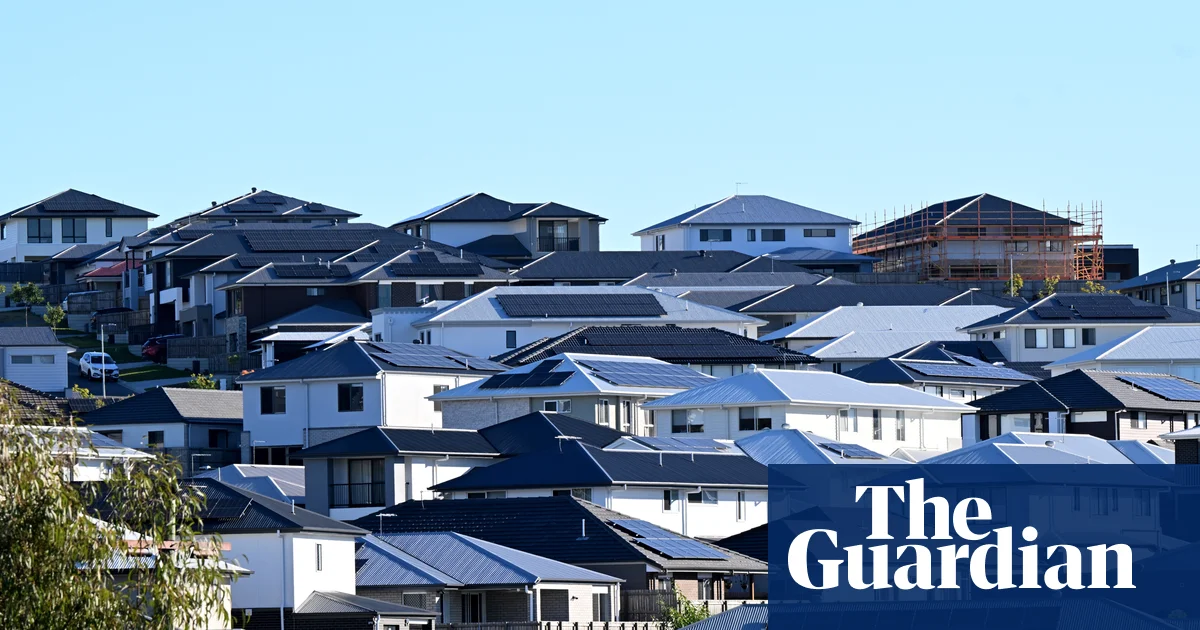
Australian residential property values are expected to rise by at least 5% over the next 12 months – on top of the 8.6% increase seen in 2025 – exacerbating a housing affordability crunch across the country.
Every state and territory capital city recorded increases last year, according to Cotality data, led by a dramatic 18.9% rise in Darwin, 15.9% in Perth and 14.5% in Brisbane.
Australia’s biggest city, Sydney, recorded a more modest gain of 5.8%, although it is by far the country’s most expensive location, with a median value now above $1.28m.
The annual rise in home values across the country is the largest since 2021, although the pace of increases slowed towards the end of the year.
Sign up: AU Breaking News email
Most property watchers expect prices to rise across the country in 2026 as demand continues to outstrip supply, although affordability constraints and possible interest rate rises should limit gains.
Cotality’s research director, Tim Lawless, said some momentum had left the market after expectations of further rate cuts were replaced with a chance of hikes.
“A ‘higher for longer’ setting on interest rates, alongside a resurgence in cost-of-living pressures and worsening affordability pressures, looks to have taken some heat out of the market,” Lawless said.
“However, we are unlikely to see a material supply response in 2026 either.”
Lawless said that supply issue should “help to offset” the risk of substantially slower growth in house prices.
Two of the four major retail banks also expect a rate increase at the first Reserve Bank meeting of the year, in early February, while none is forecasting additional rate cuts.
SQM Research has forecast capital city home prices to rise by between 6% and 10% in 2026, led by double-digit gains in Perth, Brisbane, Adelaide and Darwin.
AMP’s chief economist, Shane Oliver, expects home price growth to be in the 5-7% range.
Generational gap
The relentless rise in property prices is weighing heavily on younger generations, pushing home ownership out of reach for many.
Nationally, rents increased by 5.2% in 2025, according to Cotality. They have risen at an average annual rate of 7.4% over the past five years.
Meanwhile, analysis by financial comparison site Finder shows that just over 40 years ago, the average Australian could buy a home that cost 3.3 times their annual income.
This has increased to more than 10 times annual income.
The cost of an average city home has increased from about $64,000 to almost $1m during that period.
Homeowners spend much more on interest repayments as a proportion of their incomes than they did during the 1980s, according to the analysis, even after taking into account the double-digit interest rates that were then prevalent.
Finder’s personal finance spokesperson, Taylor Blackburn, said many Australians were able to buy a home while earning an average income in the 1980s.
“Today, Aussies face more years of saving, higher deposits and larger debt, all while pay packets haven’t really kept up,” Blackburn said.
“For previous generations, home ownership was achievable with steady work and discipline.”
Extreme rises
Australian property prices have experienced extreme price rises over the past five years, amid low to moderate borrowing costs and limited supply.
While prices across the country have risen by 46.8% over that period, the Perth and Brisbane markets are up by 89% and 86.7% respectively, according to Cotality.
Investors have also taken full advantage of favourable policies, including negative gearing and a capital gains tax discount, creating increased competition and tension between speculators and owner-occupiers.
Australia experienced an explosion in lending to investors in 2025, keeping more prospective owner-occupiers in rentals.
Given property price increases have outpaced wage rises, the ability of younger adults to buy a suitable family home is increasingly determined by their parents’ assets, rather than their own job.